
Gould Warns Boakai Strongly-Says Border crisis threatens legacy and elections
MONROVIA – As tensions simmer along Liberia’s northern frontier, the unfolding border dispute with Guinea is rapidly evolving from a territorial concern into a defining political moment. What began as a question of sovereignty is now testing leadership, exposing institutional readiness, and reshaping the national conversation ahead of future elections. Into this charged environment steps opposition figure Cllr. Lafayette E. Orishal Gould, whose stark warning to President Joseph Nyuma Boakai underscores the growing impatience within political circles. His message is clear: how this crisis is handled will reverberate far beyond Lofa County. As THE ANALYST reports, it is not merely about land—it is about legacy, authority, and the future of governance itself.
In a moment of rising national concern, the simmering border tensions between Liberia and Guinea have taken on sharp political significance, drawing strong reactions from key opposition voices and intensifying scrutiny of the Boakai administration’s handling of the crisis.
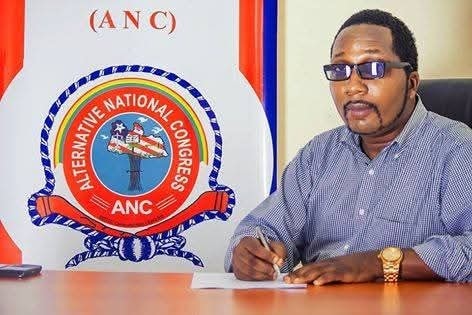
At the center of this escalating discourse is Cllr. Lafayette E. Orishal Gould, Chairman of the Alternative National Congress (ANC), who has issued a pointed and politically charged warning that the outcome of the dispute could define not only the legacy of President Joseph Nyuma Boakai but also the electoral future of the ruling Unity Party.
Speaking during a live interview over the weekend, Gould did not temper his words. His intervention was deliberate, forceful, and framed within both national and political consequences.
“If this happens under this democratically elected president, it will scar and mark his legacy for eternity,” Gould declared, emphasizing that any perceived loss of Liberian territory—particularly in the strategic Lofa region—would constitute a historic failure of leadership.
He went further, issuing a blunt political forecast: failure to act decisively could compel the Unity Party to “kiss future elections goodbye.”
A Crisis Beyond Geography
The border tensions, particularly around areas in Lofa County including Foya, have grown from a localized dispute into a national issue that now touches on sovereignty, diplomacy, and public confidence in government.
Reports of possible Guinean encroachment—though still contested and evolving—have heightened anxiety among citizens and policymakers alike. For communities along the border, the issue is not theoretical. It is immediate, tangible, and deeply unsettling.
For political actors such as Gould, the situation represents more than a territorial concern. It is a test of state capacity and leadership resolve.
“This is not just about land,” one political observer noted. “It is about whether Liberia can assert itself in the face of external pressure.”
Diplomacy Under Pressure
Gould acknowledged Liberia’s historical reluctance to engage in military confrontation, particularly given the country’s painful civil war experience. However, he cautioned that restraint must not be mistaken for inaction.
“Clearly, we are not prepared to engage in armed aggression with our neighbors given our recent history,” he stated. “But in times like these, we must use every available channel—our networks, our connections—to defend our sovereignty.”
This framing reflects a growing consensus among some political actors that Liberia must adopt a more assertive diplomatic posture—leveraging both regional and international alliances to protect its territorial integrity.
International Leverage and Strategic Alliances
In one of the more striking elements of his remarks, Gould pointed to the potential influence of international actors, specifically referencing former U.S. President Donald Trump.
According to Gould, Liberia should capitalize on perceived diplomatic goodwill to amplify its position.
“If Donald Trump can just go on his platform and advise the Guineans to draw back, within two hours they will respond,” he claimed.
While such assertions may be viewed as speculative, they underscore a broader argument: that Liberia must actively engage its international relationships as part of a comprehensive response strategy.
Historical Comparisons and Leadership Accountability
Gould also drew comparisons to past administrations, invoking the tenure of former interim leader Ruth Perry to underscore his point.
“To lose territory now, under a fully constituted democratic government, would be unacceptable,” he said, noting that even during periods of institutional fragility, Liberia did not cede territorial ground.
This comparison serves to heighten the stakes, positioning the current administration within a historical continuum where leadership is judged not only by policy decisions but by outcomes.
A Call for National Unity
Despite the sharp tone of his critique, Gould concluded with a call for unity—urging political actors across the spectrum to rally in defense of national sovereignty.
“This is the only country we have,” he emphasized. “At times like these, we must come together—not just as politicians, but as patriots.”
This appeal reflects a dual strategy: to hold the government accountable while simultaneously projecting a posture of national responsibility.
Growing Pressure on the Boakai Administration
Gould’s remarks have added momentum to an already intensifying national conversation. Political analysts suggest that his intervention reflects a broader impatience within opposition circles, as well as growing public demand for clarity and decisive action.
For the Boakai administration, the challenge is multifaceted. It must manage the immediate realities of the border situation while also navigating the political implications of its response.
Failure to communicate effectively or act decisively could erode public confidence and provide political ammunition to opposition figures ahead of future electoral contests.
The Role of Regional Institutions
Experts in regional diplomacy have pointed to the importance of engaging subregional bodies such as the Economic Community of West African States (ECOWAS).
Historically, ECOWAS has played a stabilizing role in resolving disputes within West Africa. Timely intervention, observers argue, could help de-escalate tensions and prevent the situation from spiraling into a broader diplomatic crisis.
“The mechanisms exist,” one regional analyst noted. “The question is whether they will be activated in time.”
Voices from the Border
Meanwhile, citizens in Lofa County—particularly those in communities such as Foya—are increasingly vocal about their concerns.
Local leaders have called on the central government to provide reassurance, clarity, and visible action. For them, the issue is not abstract diplomacy but immediate security and livelihood.
“We need to know that our country is standing with us,” one community representative reportedly stated.
A Test of Post-War Governance
The crisis has also reignited broader debates about Liberia’s defense and foreign policy posture in the post-war era.
While the country has made significant progress in maintaining peace, critics argue that excessive caution must not translate into vulnerability.
A balanced approach—combining diplomacy with firm territorial defense—is increasingly being advocated as the appropriate path forward.
Implications for Liberia’s Global Standing
Beyond its domestic and regional dimensions, the border dispute carries implications for Liberia’s international image.
A perceived inability to defend territorial integrity could raise concerns among investors and international partners about the country’s stability and governance capacity.
For a nation seeking to strengthen its economic prospects and democratic credentials, such perceptions could have long-term consequences.
Politics and the Road Ahead
Within political circles, Gould’s warning about electoral consequences is already resonating.
Some insiders acknowledge that the administration’s handling of the crisis could significantly influence public perception in the years leading up to the next election cycle.
At the same time, civil society organizations are calling for bipartisan cooperation—arguing that national unity, rather than political division, will send the strongest message to external actors.
A Defining Moment
As the situation continues to evolve, Liberia stands at a critical juncture.
The border dispute is no longer just a question of lines on a map. It is a test of leadership, a measure of national resolve, and a reflection of the country’s capacity to navigate complex challenges.
For President Boakai and his administration, the stakes could not be higher.
For Liberia as a nation, the outcome will shape not only its borders, but its future trajectory.
Comments are closed.