
Lawyer Demands Halt To Home Demolitions-Atty. Jackson Warns Government over Housing Rights
MONROVIA – Concerns are mounting in Liberia over the demolition of homes belonging to low-income residents, as legal advocates and civil society voices begin challenging the government’s handling of land disputes and urban development. The debate has intensified amid claims that vulnerable communities are being displaced without adequate legal safeguards or compensation. At the center of the growing controversy is the interpretation and enforcement of the 2018 Land Rights Act, which was enacted to protect the land and property rights of ordinary Liberians. as THE ANALYST reports, human rights advocates warn that failure to respect these protections risks deepening social inequality and eroding public trust in governance, particularly among citizens already struggling with poverty and housing insecurity.
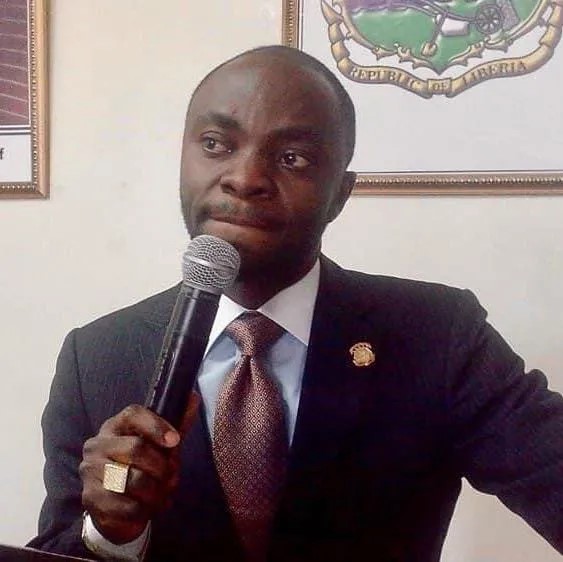
Liberian lawyer and rights advocate Atty. Isaac W. Jackson Jr. has called for the immediate suspension of ongoing demolitions affecting homes belonging to poor and vulnerable citizens, warning that the actions raise serious legal and moral concerns.
In a statement issued Thursday, Jackson said he and others are giving serious consideration to actively advocating for and defending the rights of citizens whose homes are reportedly being demolished under the administration of President Joseph Nyuma Boakai.
According to Jackson, the demolitions threaten the welfare and dignity of some of Liberia’s most vulnerable residents.
“We are giving serious consideration to actively advocating for and defending the rights of the poorest of the poor—citizens whose homes are currently being demolished by the government of President Joseph Boakai and its collaborators,” Jackson stated.
He warned that the destruction of homes extends far beyond physical structures and has devastating consequences for families and communities.
“We firmly believe that a nation cannot be built by destroying the poor. Demolishing homes is demolishing lives,” Jackson said.
“A government that claims to rescue the people must not turn around and render its most vulnerable citizens homeless.”
Legal Concerns Raised
Jackson argued that the ongoing demolitions raise important questions regarding compliance with Liberia’s Land Rights Act of 2018, particularly provisions that safeguard the property rights of citizens.
He specifically referenced Section 5.2(d) of the Land Rights Act, which outlines protections relating to land ownership and property rights.
According to Jackson, the law was enacted precisely to protect ordinary Liberians—especially those with limited resources—from losing their homes without due legal process.
“Now, more than ever, we must compel the government to respect the Land Rights Act of 2018,” Jackson said.
“The law exists to protect ordinary Liberians, especially the poor who often have the least power to defend themselves.”
Jackson emphasized that the legislation should function as a protective shield for vulnerable communities facing displacement.
He therefore called on the government to halt any demolition activities until affected residents receive fair and lawful compensation.
“The government must immediately halt any demolitions unless and until just and fair compensation is provided to those affected,” he said.
Concerns over Role of Private Property Owners
While some reports suggest that the demolitions may be carried out by private property owners reclaiming land, Jackson expressed skepticism regarding the circumstances under which the demolitions are taking place.
According to him, there are concerns that some private actors could be operating in coordination with government authorities.
“We are told that some of the homes are being demolished by private property owners,” Jackson stated.
“While we do not entirely dispute this claim, we believe that some of these so-called private property owners may in fact be collaborating with government authorities.”
He suggested that the involvement of government institutions—directly or indirectly—would raise serious questions about accountability and respect for the rule of law.
Criticism of Public Statements
Jackson also raised concerns about statements attributed to President Boakai regarding land issues, arguing that such remarks could unintentionally encourage actions that harm vulnerable communities.
“Comments attributed to President Boakai, suggesting that God is not creating new land or that the military knows its land boundaries, are deeply insensitive to the plight of the poor,” Jackson said.
He warned that remarks from national leaders can influence the behavior of officials and private actors in ways that may affect the rights of citizens.
“Statements like these risk encouraging reckless behavior that disregards the rights and dignity of poor citizens,” he added.
Warning against Excessive State Power
Jackson cautioned against governance approaches that prioritize the use of force or state authority over the welfare of ordinary citizens.
“Any leader who places the power of the military above the poor people who elected them is moving dangerously close to dictatorship,” Jackson said.
“Liberia cannot afford another dictator.”
He argued that Liberia’s democratic system must be guided by the protection of human rights and the rule of law rather than coercion or intimidation.
Call to Protect Housing Rights
In concluding his statement, Jackson emphasized that housing should be recognized as a fundamental human right that must be protected under both national law and international human rights standards.
“Housing is a basic human right and a matter of human dignity,” he said.
Jackson therefore urged the government to respect the provisions of the Land Rights Act of 2018 and take immediate steps to safeguard the homes and livelihoods of vulnerable citizens.
“President Boakai and his collaborators must respect the Land Rights Act of 2018 and take immediate steps to protect the homes of the poor,” he concluded.
As debates over land ownership, urban development, and housing rights continue across Liberia, Jackson’s intervention adds to growing calls from legal experts and civil society organizations urging the government to ensure that land governance reforms protect—not displace—the country’s most vulnerable communities.
Comments are closed.