
Bility Criticizes Culture Of Political Falsehoods-Calls for honest leadership, integrity politics
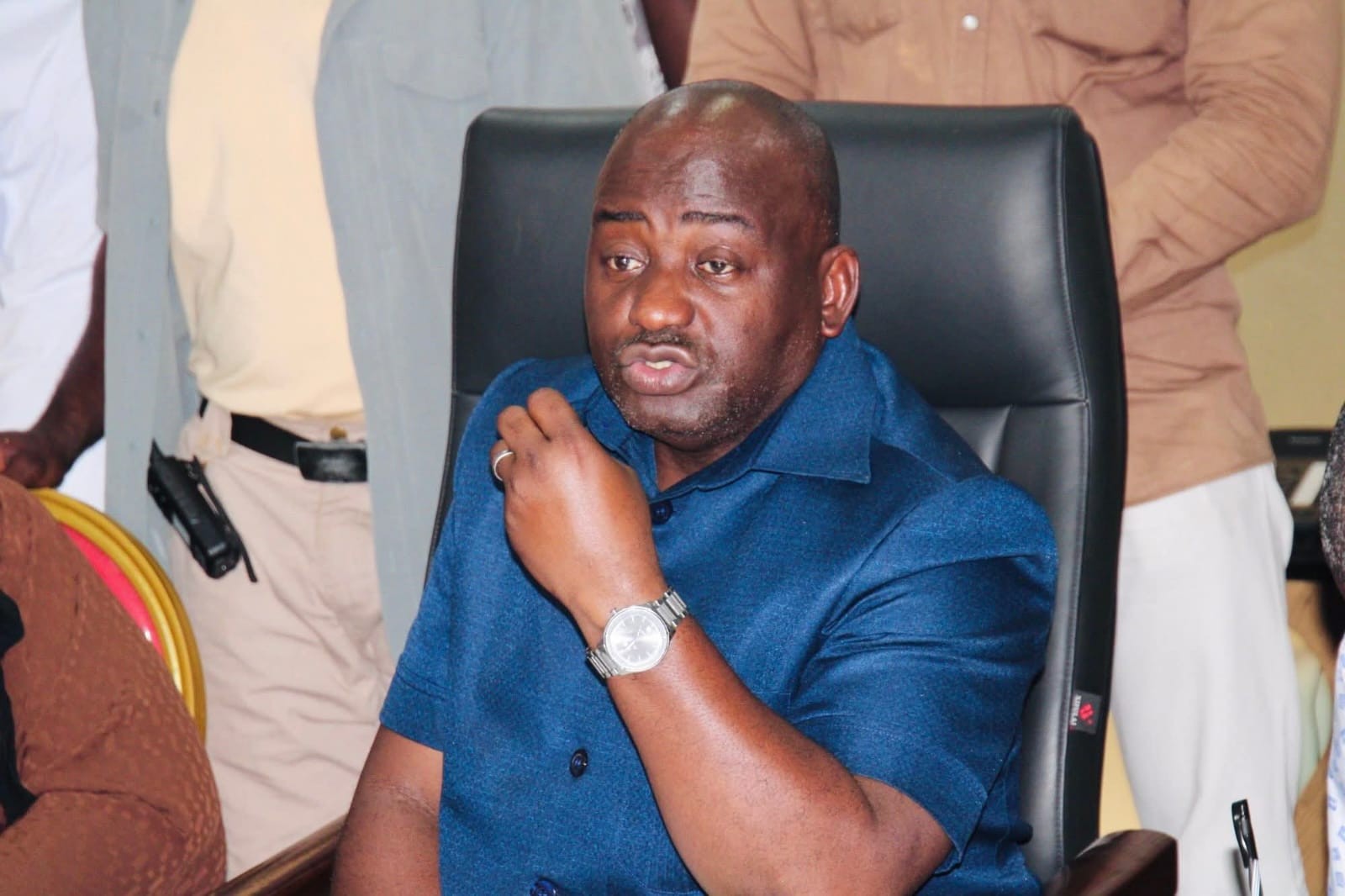
MONROVIA – Liberia’s deeply polarized political environment often rewards sharp criticism and partisan attacks, leaving little room for nuance or balanced judgment. Yet some political voices argue that such a culture ultimately undermines public trust and weakens democratic accountability. Nimba County District 7 Representative and Citizens Movement for Change (CMC) political leader Musa Hassan Bility has now entered that debate with a reflective commentary that challenges what he describes as a dangerous political habit: refusing to acknowledge any positive action taken by political opponents. Writing in his regular column, Letter from Saclepea, Bility argues that honesty in politics must extend beyond partisan loyalty, warning that political movements built on exaggeration, distortion, or denial of obvious realities eventually lose credibility with the very citizens they claim to represent. THE ANALYST reports.
Representative Musa Hassan Bility, political leader of the Citizens Movement for Change (CMC) and lawmaker for Nimba County District 7, has called for a more honest political culture in Liberia, warning that the country’s democracy suffers when politicians abandon truth in pursuit of power.
In a reflective letter titled “Politics, Truth, and the Mind of the Ordinary Liberian,” Bility criticized what he described as a troubling habit in Liberian politics: the tendency of opposition figures to distort reality and refuse to acknowledge positive actions by governments they oppose.
“There is a troubling habit in our politics, one that I have struggled with for many years,” Bility wrote. “It is the habit of abandoning the truth simply because one sits in opposition or seeks power.”
According to the Nimba lawmaker, political competition in Liberia often pressures politicians to exaggerate failures, attack individuals without restraint, and deny any achievements of rival administrations.
“For some, it has become an unwritten rule that if you want to replace a government, you must never say anything good about it,” he said.
Bility emphasized that he has never been comfortable with such an approach and said his refusal to follow that political pattern has sometimes brought personal and political consequences.
“In fact, I have often paid a high price for rejecting it,” he stated.
He noted that individuals who attempt to participate in politics with honesty frequently face discouragement, attacks, and attempts to damage their reputations.
“Good people are discouraged, attacked, and sometimes destroyed simply because they refuse to lie or exaggerate,” Bility said.
Despite these challenges, the CMC leader said he remains committed to speaking truthfully about national issues, even when such honesty attracts criticism from fellow opposition members.
“I criticize when criticism is necessary,” he said. “But I also believe that when something good is done, it must be acknowledged.”
Bility reflected on his experience during the presidency of former President George Weah, recalling that he faced hostility from some members of the Unity Party because he refused to portray the Weah administration as entirely negative.
“At that time, some within the Unity Party worked very hard to destroy my character because I was not prepared to be relentlessly negative about his government,” he wrote.
While acknowledging that the former administration had significant shortcomings, Bility said he refused to deny the existence of any positive achievements.
“Yes, the government had serious problems. Yes, many things were wrong,” he wrote. “But not everything it did was wrong, and I refused to pretend otherwise.”
He observed that Liberia’s political dynamics have now shifted, with the Unity Party currently holding power.
According to Bility, the current government has also shown concerning tendencies, including what he described as signs of intolerance and disregard for the rule of law.
“It has demonstrated a willingness to trample on the rule of law and to treat disagreement as if it were an enemy to be eliminated,” he wrote.
Nevertheless, the lawmaker maintained that even governments with serious shortcomings can take actions that benefit ordinary citizens.
“But even within this government, there are moments when the right things are done,” he said. “There are actions that benefit ordinary Liberians. And to say so is not weakness. It is honesty.”
Bility lamented that many politicians in Liberia believe acknowledging such actions weakens their political position.
“For me, the opposite is true,” he said.
Drawing from his interactions with citizens across rural Liberia, Bility said ordinary people often view political rhetoric differently from the way politicians do.
“Every day I meet ordinary Liberians,” he wrote. “I visit villages and towns. I listen carefully to the people who live far from the noise of political debates in Monrovia.”
According to him, citizens often recognize both the failures and the successes of government policies.
“They tell me what is hurting them, but they also tell me what has helped them,” he said.
Bility warned that politicians who ignore this reality risk losing the trust of the public.
“If a politician cannot distinguish between those two realities, then that politician begins to lose the trust of the people,” he wrote.
“When the ordinary citizen hears you deny what they can see with their own eyes, they begin to doubt your honesty and your capacity to lead.”
He added that nothing damages politics more than the erosion of trust between leaders and the citizens they seek to represent.
“We must learn to tell the truth in full,” he said.
“There may be ten thousand reasons why a government should not be re-elected. But that should never prevent us from acknowledging the ten things it has done right.”
Bility illustrated his point with a simple example drawn from rural life.
He described a scenario in which a village road that was once nearly impassable is repaired, improving daily life for residents.
“How can I stand on the radio and say the road is still bad?” he asked.
“The people who live there know the truth. If they hear me deny it, they will not trust me again.”
For Bility, the opinions of fellow politicians matter less than the judgment of ordinary citizens.
“My concern is about the ordinary Liberian who sees reality and expects honesty from those who seek to lead,” he said.
The Nimba lawmaker further argued that unrealistic expectations created by political rhetoric often create difficulties for governments once they assume power.
He pointed to the experience of the Coalition for Democratic Change (CDC) government under former President Weah, which he said faced intense pressure after taking office.
“In many ways, that pressure came from the unrealistic expectations created by the opposition before it assumed power,” Bility wrote.
He added that the current Unity Party administration may now be confronting similar challenges.
“Today the Unity Party government is facing similar pressure because it climbed to power on exaggerated claims and harsh political attacks,” he stated.
According to Bility, political authority built on distortion eventually collapses under the weight of reality.
“Power built on distortion will always struggle to survive the weight of truth,” he wrote.
As he continues his own political journey, Bility said he intends to remain grounded in the experiences and concerns of ordinary Liberians.
“I continue to visit the people quietly, listening carefully to what they say in small gatherings and private conversations,” he wrote.
From those conversations, he said, come the ideas and policies that can help transform Liberia.
“That is my mission. That is my vision,” he said.
Bility concluded his reflection by reaffirming his commitment to honesty in political leadership.
“I do not wish to be part of a political system that lies in the face of truth,” he wrote.
“A politician who wins power by abandoning principle will eventually lose that power for the same reason.”
“For me, the commitment remains simple,” he added. “I will continue to tell the truth whether it hurts me or benefits my opponent.”
Because when truth lives, a country lives.
“And when truth lives,” he wrote, “our democracy lives.”
Comments are closed.