

GoL Dismisses Sanctions Fears -Assures Stronger U.S. Ties, Opposition Skeptical
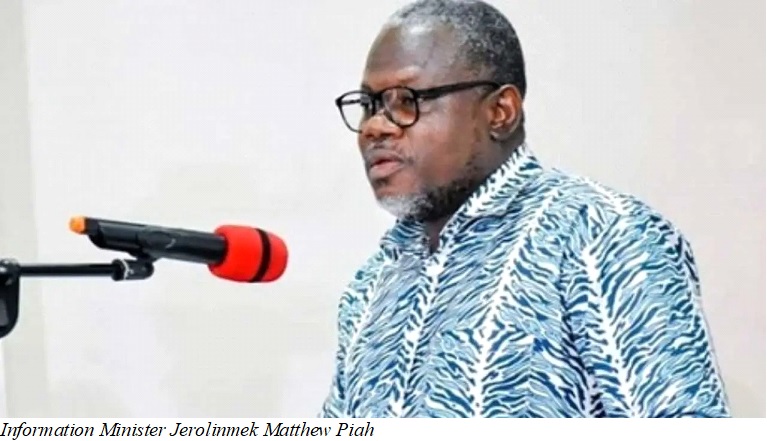
MONROVIA – As public debate intensifies over Liberia’s diplomatic standing and infrastructure priorities, the government and opposition are offering sharply different emphases on reassurance versus results. At a regular press briefing, Information Minister Jerolinmek Matthew Piah sought to calm concerns about U.S. sanctions and visa restrictions, affirming that relations with Washington remain strong under the Unity Party-led administration. However, opposition figures caution that international confidence depends less on assurances and more on sustained accountability and institutional discipline. Alongside the diplomatic debate, Monrovia’s expanding street-lighting project has emerged as a visible symbol of progress, even as critics question its long-term sustainability, transparency, and reach beyond the capital. Together, the contrasting views underscore a broader national test of credibility, governance performance, and public trust. THE ANALYST reports.
The Government of Liberia has reassured citizens that the United States will not impose sanctions on officials of the Unity Party–led administration, citing the government’s commitment to transparency, accountability, and adherence to the rule of law.
Speaking Thursday at the regular press briefing of the Ministry of Information, Cultural Affairs and Tourism (MICAT), Information Minister Jerolinmek Matthew Piah said the conditions that led to U.S. sanctions against certain individuals during the administration of former President George Manneh Weah will not be repeated under the current government.
Minister Piah emphasized that the sanctions previously imposed by the United States were not directed at Liberia as a country but targeted specific individuals accused of criminal wrongdoing and governance abuses.
“The way America sanctioned criminals in the George Weah government will not happen to this government,” Piah stated. “This administration has made integrity, institutional reform, and respect for the rule of law its priority.”
According to the Information Minister, the Unity Party administration believes that strong governance systems and accountability mechanisms are the most effective safeguards against actions that could damage Liberia’s international reputation or invite punitive measures from key partners.
Piah also addressed widespread public concern following recent reports about U.S. visa restrictions affecting Liberians. He dismissed claims suggesting that the United States has imposed a blanket visa ban on Liberian citizens, clarifying that the restrictions apply only to specific categories of immigrant visas.
“There is no general visa ban on Liberians,” the minister stressed. “People must rely on verified information and not rumors that create unnecessary panic.”
He appealed to the public to show empathy toward families affected by the visa restrictions, warning against ridicule or insensitive commentary.
“Many of the people affected are innocent,” Piah said. “They deserve compassion and understanding, not mockery.”
Reaffirming Liberia’s long-standing partnership with Washington, the Information Minister described relations between Liberia and the United States as stable, historic, and mutually respectful.
“The relationship between Liberia and the United States is solid and intact,” he said, noting that cooperation between both countries continues across democratic governance, security, and development.
In addition to diplomatic matters, Minister Piah provided updates on the government’s ongoing street-lighting project across Monrovia, describing it as a key pillar of the administration’s infrastructure and urban renewal agenda.
According to him, street lights have already been installed in most parts of the capital, significantly improving nighttime visibility along major corridors and in surrounding communities. He said the initiative is contributing to enhanced public safety and supporting small businesses that depend on evening economic activity.
“This project is about safety, visibility, and improving the quality of life for our people,” Piah said.
Responding to concerns over delays along the Roberts International Airport (RIA) Highway, the minister explained that work slowed due to the pending arrival of additional electric poles required to complete installations on that route.
He disclosed that the poles are expected to arrive in Ghana on January 29 and will be transported to Liberia approximately one week later. Once delivered, full-scale work on the airport highway will resume, he assured.
Minister Piah described the delay as temporary and reaffirmed the government’s commitment to completing the project as quickly as possible.
He urged Liberians to remain patient, stressing that fully illuminated streets—particularly along the RIA Highway—will enhance road safety, improve nighttime travel, and present a welcoming image to visitors arriving in the country.
As more streets across Monrovia continue to be lit, the street-lighting project is increasingly being viewed as a visible symbol of progress, reflecting the government’s broader focus on infrastructure development, public safety, and urban transformation.
Opposition Reacts
Opposition figures have cautiously welcomed the government’s reassurances on U.S. relations and infrastructure development but urged restraint, accountability, and measurable outcomes rather than assurances alone.
A stalwart of the opposition Coalition for Democratic Change (CDC), speaking on condition of anonymity because he was not authorized to speak on the matter, said while diplomatic confidence is important, Liberia’s international standing ultimately depends on consistent governance practices, not mere declarations.
“Strong relations with the United States are built on actions, not press briefings,” the CDC official said. “The public will judge this administration by how it handles corruption allegations, procurement transparency, and respect for institutions over time.”
The opposition figure further argued that sanctions imposed during the previous administration should not be politicized, noting that accountability must apply across administrations.
“No government should assume immunity. If wrongdoing occurs, international partners will respond accordingly,” the official added.
On the issue of visa restrictions, opposition voices urged the government to improve public communication and consular engagement, particularly for affected families.
“Whether partial or limited, visa restrictions affect real people,” the CDC official said. “Government must engage diplomatically and provide clear guidance to citizens, not just dismiss concerns.”
Regarding Monrovia’s street-lighting project, opposition lawmakers acknowledged the visibility of progress in some areas but questioned sustainability and nationwide equity.
A lawmaker aligned with the opposition bloc in the House of Representatives said infrastructure initiatives should extend beyond the capital.
“Lighting Monrovia is commendable, but Liberia does not end in Monrovia,” the lawmaker noted. “We want to see similar investments in county capitals and major corridors across the country.”
The lawmaker also called for transparency in project financing, maintenance plans, and timelines, warning that poorly maintained infrastructure could quickly deteriorate. “We have seen projects launched with enthusiasm only to fail due to lack of maintenance and oversight,” the legislator said.
Civil society commentators echoed similar views, urging the government to institutionalize reforms rather than rely on personalities. One governance advocate said Liberia’s relationship with the United States would remain strong only if reforms outlive political cycles.
“Trust is built when systems work consistently,” the advocate said. “Street lights should stay on. Payrolls should remain clean. Accountability should be routine, not selective.”
Despite their criticisms, opposition voices agreed that maintaining strong U.S.–Liberia relations and improving urban safety are in the national interest. They urged bipartisan cooperation on diplomacy, infrastructure, and governance reforms, stressing that such issues transcend party lines.
As debate continues, analysts say the coming months—particularly implementation, transparency, and responsiveness to public concerns—will determine whether the government’s assurances translate into sustained credibility at home and abroad.
Comments are closed.