
CDC Warns of Moral Collapse Under Boakai-Koung Rule -Condemns ‘Bogus Charges’ Against December 17 Protest Leaders
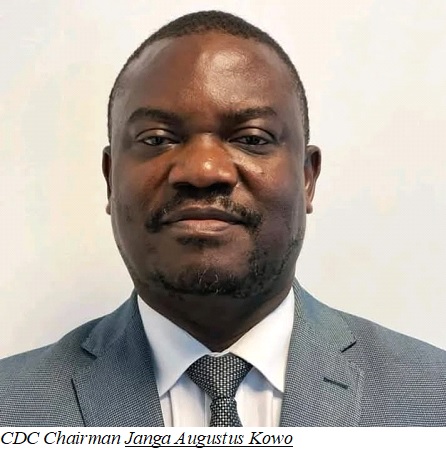
MONROVIA – As Liberia’s immediate past ruling party and the country’s largest and most politically entrenched opposition force, the Congress for Democratic Change (CDC) occupies a uniquely consequential position in the nation’s democratic discourse. Having governed for six years and now observing governance from the opposition benches, the CDC’s interventions carry both institutional memory and political weight. Its latest statement, however, moves beyond partisan contestation into a sweeping moral indictment of the state itself. At a time when the Unity Party administration of President Joseph Nyuma Boakai navigates the Ship of State in its third year in office, the CDC argues that Liberia is not merely experiencing policy underperformance, but a dangerous erosion of accountability, human dignity, and ethical restraint. By linking stalled justice, normalized sexual violence, alleged abuse of state power, and controversial diplomatic postures, the opposition party, in a statement issued by the CDC National Chairman Atty. Janga A. Kowo, describes the current crisis as systemic—one that threatens the moral foundations of governance itself rather than any single sector of public administration. The Analyst reports.
The Congress for Democratic Change (CDC) has issued a strongly worded statement condemning what it describes as a collapse of accountability, the normalization of sexual violence, and the moral decay of governance under the Boakai-Koung administration, while also rejecting criminal charges brought against leaders of the December 17 peaceful protest.
In a statement addressed to Liberians, international partners, and the global community, the CDC’s National Executive Committee said the country is confronting “a moment of profound national anguish and moral reckoning,” warning that Liberia is drifting toward a humanitarian and ethical crisis in which the most vulnerable—women, children, and marginalized communities—are left exposed while perpetrators linked to power remain shielded.
Central to the CDC’s statement is its condemnation of what it termed “bogus charges” against leaders of the December 17 protest.
The party described the prosecutions as a revival of intimidation tactics against perceived political opponents, arguing that such practices undermine democratic space and reverse hard-won gains in civil liberties.
“These tactics have no place in the democracy we struggled to build and sustain,” the CDC said, framing the charges as part of a broader pattern of state abuse rather than isolated legal actions.
The opposition party contrasted the government’s international posture with what it called internal governance collapse.
While President Boakai’s administration seeks moral authority abroad and engages diplomatically on global conflicts at the United Nations, the CDC argued that the Liberian state is “collapsing inward,” failing to meet its most basic obligation—the protection of human life and dignity.
Hospitals without medicines, schools without resources, communities without safety, and families without justice were cited as lived realities rather than abstract policy failures.
According to the CDC, these failures are etched into “bodies, minds, and graves” across the country.
Nowhere, the statement argued, is the failure more devastating than in the normalization of sexual violence under state watch.
The CDC described Liberia as having entered a “dangerous and shameful new normal” where rape, gang rape, and sodomy occur with alarming frequency while accountability remains absent.
The party mourned the death of “Little Mitchell” of Pitty Town, describing the child’s killing as emblematic of a society that has failed to protect its most vulnerable.
It also highlighted the countless unnamed victims whose trauma never reaches public attention due to fear, stigma, and institutional indifference.
Statistical data cited by the CDC paints a grim picture. In 2024 alone, Liberia recorded 3,957 reported cases of rape and gender-based violence.
In the first three quarters of 2025, an additional 1,735 rape cases were reported. The CDC stressed that these figures do not represent justice or resolution, but rather a nation overwhelmed and unprotected.
The statement further named several high-profile cases involving individuals linked to state institutions, including allegations against Deputy Minister for Youth Development Bryant McGill, Ministry of Agriculture contractor Sando Kromah, and a senior National Security Agency official, Peter Bon Jallah, accused in the alleged gang-sodomy of a fifteen-year-old boy.
“These are not marginal actors,” the CDC said, “but individuals connected to public trust and institutions mandated to protect the young.”
Compounding the violence, the party opined, is institutional silence. Investigations stall, prosecutions fade, and institutions “close ranks,” sending a devastating message that justice is selective and power shields perpetrators.
The CDC linked this breakdown to broader state violence, citing the fatal police shooting of Matthew Mulbah and the assault of Musu Kiatamba, a five-month pregnant woman, by a senior police commander. According to the party, these incidents form a single narrative of state indifference to human life, whether the victim is a child, a protester, or a pregnant woman.
The statement also criticized Liberia’s recent diplomatic posture at the United Nations, particularly on Venezuela, arguing that the government speaks the language of sovereignty abroad while failing to protect the sovereignty of citizens’ bodies at home.
The CDC formally distanced the Liberian people from this posture and called for independent investigation into unverified allegations of foreign financial influence on Liberia’s foreign policy decisions.
While emphasizing that such allegations remain unadjudicated, the party said their seriousness demands transparency and scrutiny by credible national and international anti-corruption bodies.
The CDC called on international partners—including the United States, African Union, ECOWAS, and the European Union—to engage Liberia with moral clarity, warning against providing diplomatic cover for domestic failure. Any consequences arising from the administration’s conduct, the party said, should target decision-makers, not an already traumatized population.
The CDC reaffirmed its commitment to accountability, human dignity, and justice, warning that silence amounts to complicity and indifference to endorsement. Liberia, it said, must not be allowed to descend into a future where violence is normalized, children are expendable, and justice is optional.
Comments are closed.