

The Professor’s Voice: This Week’s Answers to Your Education Questions
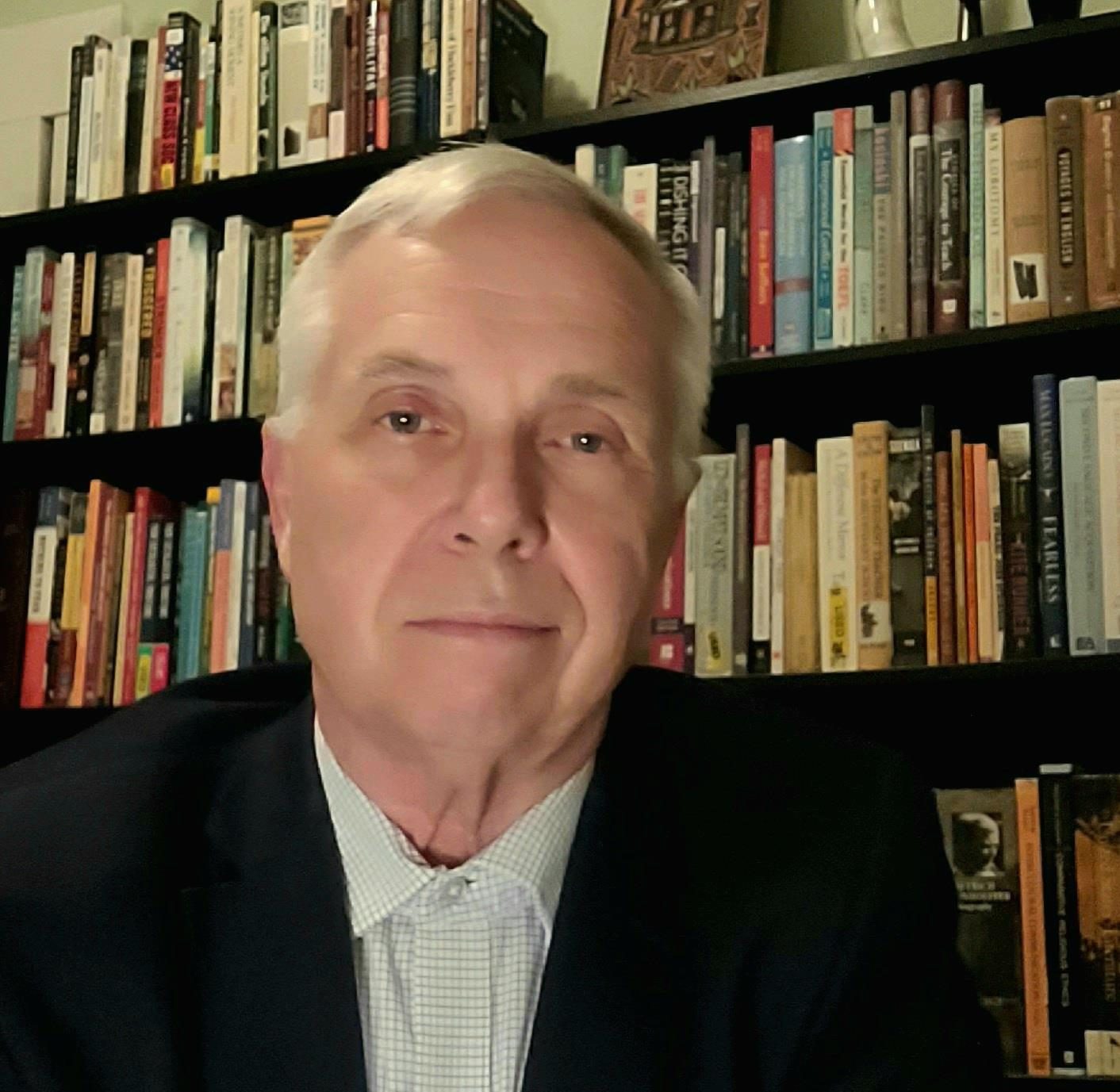
By Dr. Randy Nelson
Professor Emeritus of Education
Contributing Columnist
Dr. Randy Nelson has been a professional educator for 47 years. Since 2018 he has worked closely with Liberian teachers, university students, professors, and administrators as an educator and consultant. If you have questions pertaining to education, please email them to educationquestions@yahoo.com. All questions cannot be published.
A reader asks: “What are the marks of a good teacher, and what’s the trick a teacher can use to get the lesson to actually stick or resonate with students? How does that teacher make his or her way to your future because of what they did right or how they spoke to your heart and soul and not just your letter grade?”
Response: Among the thousands of teachers standing in classrooms at any given moment, there are some who become unusually influential in their students’ lives. They are somehow different from most teachers as they captivate students with enduring knowledge and wisdom. Some of them have qualities so rare that they are remembered for decades. They become legendary.
Teachers who reach legendary status interact with both the human mind and spirit. They are aware of the unceasing interplay between that which we learn and that which propels us.
Exceptional teachers must be masters of academic content, lesson design, and delivery methods. They must have a strong work ethic and a deep commitment to the teaching profession. But beneath these fundamentals roils an undercurrent that seems imperceptible, yet it is forceful. It may seem simple, but it is nuanced and complex in its ability to activate the archetypal triggers within us.
That undercurrent represents our unconscious human quest for personal dignity. Self-esteem, belonging, respect, relationship, trust, competence, purpose, and emotional safety matter to all of us. Wise and powerful teachers help students satisfy these needs through a positive attitude, an understanding of human development, and an abiding faith that good qualities live within all of us.
Students under the wise guidance of such a teacher become confident, cooperative, trusting, loyal, and enthusiastic. Their self-worth increases, and they become motivated to do more because working with that teacher feels inexplicably wonderful. And when that teacher fiercely protects each student’s personal dignity, students will work much harder to gain the respect and admiration of their faithful advocate.
In my pedagogy workshops, I tell teachers to “teach people first and academic content second, and you will actually teach more content.” This seems perplexing and perhaps contrary until we examine the concept closely. Participants are reminded that establishing students’ well-being as the highest priority eliminates embarrassment, intimidation, and fear from the classroom. The human spirit is thus honored through the protection of human dignity.
A teacher who masters academic content and delivery skills will feed the mind. A teacher whose attitude and practices help students meet their deep inner needs will inspire the human spirit. A teacher who fiercely and unfailingly protects each student’s personal dignity becomes a revered student advocate. These three aspects of effective teaching become the symbolic triquetra—three interlocking components working in unison to summon the greatness within every student. This is the work of legends.
A reader asks: “Many teachers usually teach only at the knowledge and comprehension levels. How does that help students’ curiosity in a developing nation?”
Response: Developing students’ curiosity is essential for the advancement of a nation. Curiosity leads to restless and insatiable thinkers with the capacity to develop a bold vision for Liberia. The prerequisite of this capacity is the intentional teaching of higher-order thinking skills in Liberia’s schools.
When teachers limit their instruction to the knowledge and comprehension levels of Bloom’s taxonomy of learning, curiosity is largely overshadowed by simple memorization and recitation. To be effective in developing curiosity, educators must require students to engage with content at the application and analysis levels. As students mature and increase their analytical thinking skills, they must then learn to evaluate situations and justify the evaluation’s results. Liberia’s students must develop such skills to identify and address a problem’s root causes, justify potential solutions, and promote change.
Liberia’s issues are complex. Youth homelessness, drug abuse, a struggling education sector, gender inequality, unemployment, corruption, healthcare staffing shortages, and pervasive poverty are among the issues today’s leaders are facing. The issues are interconnected, with weaknesses in one area exacerbating the challenges of others. Liberia’s future leaders will need to be superior thinkers, and schools must therefore be responsible for helping students acquire the intellect and ingenuity necessary to strengthen a nation one community at a time.
The development of higher-order thinking skills should be required within every school’s curriculum. Teachers themselves must be trained in the integration of such skills, and administrators must ensure that students are engaged frequently in relevant activities.
As strong thinkers, Liberia’s graduates and future leaders will indeed develop a wiser and more informed voice. They will acquire the intellectual might and confidence to challenge systems large and small, to fight greed, and to call out hypocrisy and corruption for exactly what they are. Simple memorization and recitation will not take us there.
Deep, analytical thinkers—intensely curious, well-educated men and women—will help Liberia become the nation that history remembers with admiration, a nation that persevered through postwar suffering, acknowledged its struggles, fought relentlessly to change, and reclaimed its place of honor along Africa’s western shore.
Comments are closed.