

CBL Trains Judges, Magistrates -CBL, UNDP Focus on Banking Act
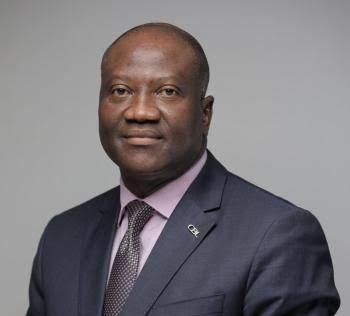
MONROVIA – A banking law is only as strong as the judge who interprets it. That is the logic behind the Central Bank of Liberia’s latest move. In Ganta, the CBL has trained judges on the new Banking and Financial Institutions Act. Magistrates and commercial, debt and circuit court judges took part. The law tightens governance, supervision and the handling of distressed financial institutions. But disputes over loans and failed banks eventually end up in court. If judges misread the law, depositors and investors pay the price. Governor Henry F. Saamoi put it plainly: capital goes where contracts are respected. The partnership with UNDP and the Judiciary aims to close that gap, as THE ANALYST reports.
GANTA, Nimba County, November 2, 2026 – The Central Bank of Liberia (CBL), in collaboration with the James A. A. Pierre Judicial Institute and the United Nations Development Programme (UNDP), has concluded a one-day training program on Liberia’s new Banking and Financial Institutions Act (BFIA) for judges of various courts across Liberia, including magistrates, commercial court judges, debt court judges and circuit court judges.
The training was designed to strengthen judicial understanding of the new banking law, which enhances corporate governance standards, strengthens supervisory and enforcement powers, and establishes clearer mechanisms for addressing distressed financial institutions.
Governor: Courts Anchor Financial Confidence
Addressing participants through a statement delivered on his behalf, CBL Executive Governor Henry F. Saamoi described the training as a critical investment in institutional strength, financial stability, and the rule of law. He noted that the BFIA represents a landmark reform that modernizes Liberia’s banking regulatory framework and aligns it with regional and international standards.
Saamoi emphasized that the effectiveness of any law depends not only on its provisions but also on its proper interpretation and application by the courts. He stressed that a strong understanding of banking and financial laws will enable judges to adjudicate disputes within the appropriate legal and regulatory context, thereby reinforcing confidence in Liberia’s financial system.
“Investors commit capital where contracts are respected, businesses can grow, and disputes are resolved fairly and efficiently,” Saamoi stated. “A strong and credible financial system cannot flourish without the rule of law.”
Judges Welcome the Initiative
Saamoi’s remarks were delivered by the Acting Deputy Governor for Economic Policy, Euphemia G. T. Swen-Monmia, who commended Chief Justice Yamie Quiqui Gbeisay, Sr., the Supreme Court of Liberia, and the broader Judiciary for their commitment to continuous professional development and judicial excellence. Swen-Monmia observed that the partnership between the Judiciary and the CBL reflects a shared commitment to building strong institutions that promote economic growth, attract investment, safeguard financial stability, and strengthen public confidence in Liberia’s governance framework.
Speaking on behalf of participants, the President of the National Association of Trial Judges of Liberia, Judge Ousman Feika, welcomed the initiative and described it as an important contribution to enhancing the capacity of judges across Liberia to effectively address matters involving banking and financial sector legislation. The training forms part of the CBL’s broader efforts to strengthen financial sector governance and support effective implementation of key reforms aimed at promoting a safe, sound, and resilient banking system in Liberia.
Comments are closed.