

By Dr. Randy NelsonProfessor Emeritus of EducationContributing Columnist
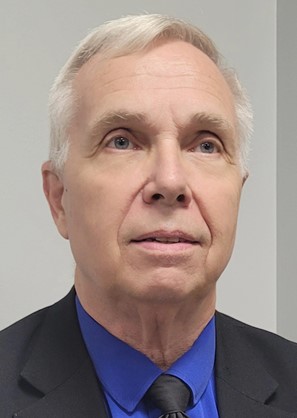
Dr. Randy Nelson has been a professional educator for 47 years. Since 2018 he has worked closely with Liberian teachers, university students, professors, and administrators as an educator and consultant. If you have questions pertaining to education, please email them to educationquestions@yahoo.com. All questions cannot be published.
A reader asks: “There are some school owners who establish their institutions as businesses. They really don’t adhere to the national curriculum in totality. They sometimes promote students who do not meet the requirements because they want to have high enrollment. What impact do you think it has on national development?”
Response: Whenever educational standards are compromised, society pays the price. Unearned class promotions, bribery in all its forms, falsification of documents, and prioritizing profit over educational integrity are among the issues one sees today. Such compromises indeed have a negative impact on national development.
Students who advance to the next grade level without legitimately passing will struggle to learn more advanced material at higher grade levels, thereby impeding their ability to acquire sufficient academic competence. And if there are several of those students, as will likely be the case, they will graduate unprepared to enter higher education. They will not have the knowledge and skills necessary to function competently in any position requiring a solid education.
In the past, many concerns have surfaced about the quality of Liberia’s high school graduates. For example, in 2013 approximately 25,000 hopeful applicants took the University of Liberia entrance examination. No one passed. The July 2025 entrance examination saw a pass rate of 24 percent, with an improved pass rate in November 2025 at 41 percent.
A few months ago, many watched online as young men and women, all with high school diplomas, attempted to read one simple sentence as part of the military’s vetting process for admission. Many were unable to read the sentence before them. Those who could not read were rejected.
I have read the writing of numerous high school graduates. Most struggled to compose a single paragraph. The few sentences they wrote often contained numerous errors. A few were completely indecipherable.
Some of these graduates will enter professions that require deep knowledge and strong literacy skills. If they have a diploma but are lacking in knowledge, national development will be impeded. We must have medical personnel capable of writing medical reports and comprehending physicians’ written instructions. We must have engineers who are skilled in reading, writing, mathematics, and physics. We must have teachers with deep content knowledge and strong delivery skills. No one seeking a professional position should be hired without actual knowledge. The diploma itself, if obtained through compromises, will be meritless; but even worse, that diploma will be detrimental to national development and, at times, dangerous to individual people.
School owners and administrators must never contribute to the existing national problems by compromising academic and institutional integrity. Liberia’s graduates must be academically competent and prepared to contribute to the nation’s betterment. Academic competence must always prevail over profit.
A reader asks: ”As Liberia seeks to expand access to education, how can the country ensure that students in both urban and rural communities have equitable access to qualified teachers, learning resources, and quality instruction?”
Response: Without exception, every child in Liberia deserves equal access to a quality education as outlined in Article 6 of Liberia’s Constitution. Fully qualified instructors should stand before all children in every community. The facilities in which they teach should be clean and well maintained. Financial resources should be available to pay respectable salaries and purchase textbooks.
At the 2022 Liberia National Education Conference, a representative from the Ministry of Education provided data surrounding the percentage of untrained teachers in each of Liberia’s 15 counties. The highest was 89%; those with lower percentages were much higher than we would want. It is thus critical for the government to focus on strong teacher training programs and retraining opportunities for existing teachers. They must require qualified teachers in all schools.
Well-maintained, clean schools are also important. I recently spoke with a person who has firsthand knowledge of the struggles in rural Liberia. He said the school building in his community has no doors. At night, the cattle wander into the classrooms to sleep. Not so long ago, a goat was born overnight in one of the classrooms. After the animals are cleared from the building each morning, children attend school in unsanitary conditions. They sit on broken benches. Their teachers are mostly volunteers with minimal education. Such conditions must not be overlooked.
I am compelled to remember that every sector is still rebounding from the war. Just 23 years ago, every sector was struggling to lift its head from the ashes. At the same moment in time, each sector had a budget of zero. And although the country has since made strides to rebuild itself, much more development is needed. Every sector has great need and senses an urgency for funding. I am, however, equally compelled to state that education must be a high priority because a well-educated citizenry will positively impact every other sector. Over time, Liberia will see lasting change when her citizens have greater knowledge—when they can analyze complex problems, weigh the positive and negative aspects of potential solutions, plan more comprehensively, and have the capacity to envision a bold future.
Liberia’s national, regional, county, and school-level leaders must work together to allocate, manage, and protect funding that will improve education for every Liberian child. Liberia’s quality of life will improve only when the quality of education improves across all counties, when knowledgeable and skilled graduates become the new leaders with the skills needed to implement improvements. That will happen only when well-educated and trained teachers who earn a respectable salary are the highest priority in every school across Liberia.
The constitutional obligations are before us. Our commitment must not falter.
Comments are closed.