
Paye Exposes Mining Scandal -Paye Alleges Koung, Fallah Corrupt Schemes
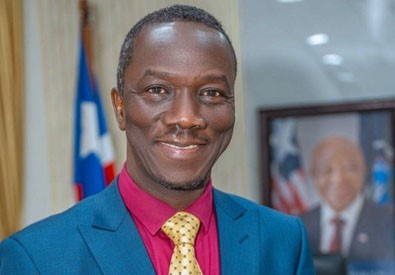
MONROVIA – In one of the most far-reaching and explosive political broadcasts in recent Liberian memory, former Unity Party Chairman and ex-Minister of Mines and Energy Wilmot Paye took to the popular Family Spoontalk television program on Tuesday, June 23, 2026, and unleashed a torrent of allegations that struck at the heart of the ruling establishment — accusing Vice President Jeremiah Kpan Koung and Deputy Speaker Thomas Pangar Fallah of orchestrating corrupt mining fee deals, engineering his ouster from the Cabinet, forming a parallel political movement to hijack the Unity Party, and directly triggering the Liberia–Guinea border crisis that nearly plunged the two countries into armed conflict earlier this year. Paye, who served as Mines and Energy Minister from the administration’s inception in January 2024 until his abrupt dismissal in October 2025, declared that he has documentary evidence of the alleged illicit transactions — and that he intends to fight, despite what he described as an acute lack of financial resources. THE ANALYST reports.
‘I Have It Right Here In My Hand’
In one of the most dramatic moments of the broadcast, Paye declared that he had personally intercepted documents relating to fraudulent fee arrangements that elements within the ruling establishment had been attempting to push through with mining companies operating in Liberia.
“The fees they try to cross with other companies in the country already — I intercepted that. It’s right now in my hand. It’s in my hand right now. You don’t know about it, but I know it,” Paye said defiantly on air, suggesting he possesses evidence that could expose financial misconduct in the mining sector that he was removed from overseeing.
He linked the attempted corruption directly to his dismissal. “They wanted me out of the way so they can do whatever they want to do,” he said. “But I’m out of the way. So what they want to do? I will fight. And I’m announcing it here. I’m gonna fight. I don’t have the means. I don’t have money, but I have the capacity.”
Paye did not name specific companies in connection with the alleged fee manipulation during the broadcast, but the context was unmistakable.
During his tenure, he had introduced a sweeping new mining fee structure in June 2025 — raising Class B license fees from US$10,000 to US$50,000, and Class A license fees from approximately US$2,000 annually to US$500,000 per year during initial production, rising to US$1 million annually thereafter.
He had previously alleged that the Vice President’s public remarks on concession agreements contradicted President Boakai’s stated policy of reviewing all concessions — a dispute that foreshadowed the deeper political rupture now playing out publicly.
Fallah, Koung and the Makona River: The Border Crisis Connection
Perhaps the most explosive element of Paye’s Spoontalk appearance was his direct linkage of Thomas Fallah to the Liberia–Guinea border crisis that convulsed the country in early 2026 — a crisis that had already reached the level of Guinean soldiers crossing into Liberian territory, seizing equipment, and removing the Liberian flag from Sorlumba, in Foya District, Lofa County.
In March 2026, what had begun as a routine sand-extraction operation along the Makona River — the waterway that serves as the natural boundary between Liberia and Guinea — descended rapidly into a national security emergency. The extraction was initially sanctioned for use in the Foya–Vahun road construction project. But when gold deposits were reportedly discovered in the riverbed, the situation changed dramatically.
According to civil society investigations and media reports, the discovery of gold prompted Deputy Speaker Fallah and Minister of Local Government Francis Sakila Nyumalin to order heavy mining equipment — reportedly sourced from China — to be brought into the county to exploit the find. When Guinean authorities observed the intensified mining activity on the shared waterway, they dispatched soldiers who crossed into Liberian territory, seized equipment, and planted the Guinean flag on Liberian soil — an act that sparked immediate outrage and prompted President Boakai to travel to Conakry for emergency diplomatic talks.
Paye connected his own removal directly to this crisis. “If I had remained in the ministry, I don’t think we would have reached to that level,” he said on Spoontalk. “Because the money likely was issued to a company — to a man — in the Makona River, a river that serves as a border between two countries. It’s a shared resource. A clear water resource.”
He added that the mining license in question should never have been issued, and that he would not have sanctioned it. “Even if I was drawing, I could not have issued it” — implying that the license was issued after his departure, under his successor, in circumstances he regards as improper.
Civil society organizations had by March 2026 called for a full regional investigation under the Mano River Union framework, citing violations of the 1997 UN Convention on the Law of the Non-Navigational Uses of International Watercourses. The Center for Human Rights and Democracy (CeHRD International) demanded accountability from those responsible for the unauthorized gold mining, and at least one political commentator publicly called on President Boakai to dismiss the Local Government Minister over his alleged role in the crisis. As of June 23, 2026 — the same day Paye made his broadcast — the Minister of Internal Affairs confirmed on ELBC that the border situation had been resolved, with calm restored along the frontier. But the political fallout from how the crisis began remains very much unresolved.
NIMBO: A Trojan Horse Inside the Unity Party
Paye’s assault on the Koung–Fallah axis extended well beyond the mining sector. He returned forcefully to his earlier warnings about the National Independent Movement for Boakai — NIMBO — which Deputy Speaker Fallah publicly unveiled in January 2026 as a movement to mobilize support for President Boakai’s development agenda and reelection bid.
Paye was categorical in his characterization of NIMBO’s true purpose. “They want to replace the Unity Party. Do they think we don’t know that? They are targeting all the potential people in the Unity Party and fighting them, thinking that will give them the advantage. That is the strategy. That strategy will not work. They will not succeed. They will not replace the Unity Party,” he declared.
He also challenged the notion that NIMBO’s money-driven political organizing could ultimately succeed, drawing on two decades of Liberian electoral experience.
“I have been in politics since 2005 in this country. I know that money does not win elections. It can help you, but it will not win elections. I don’t care what you do — you can party it, you can tap it, you can put it in warehouses or whatever. Money will not help come Election Day,” he said — a pointed allusion to what he portrayed as the financial underpinning of the NIMBO enterprise.
As further evidence of his skepticism, Paye invoked the electoral fate of former President George Weah, who despite substantial financial advantages over his opponents lost the 2023 presidential runoff to Boakai — proof, in Paye’s view, that Liberian voters are not for sale.
“George Weah was the same president of Liberia. Liberians are not foolish people,” he said.
The 2029 Presidential Contest: Koung’s Calculations
Undergirding Paye’s entire Spoontalk narrative is what he portrays as a methodical, self-serving campaign by Vice President Koung to position himself for a 2029 presidential run — using both NIMBO and Fallah’s legislative muscle as building blocks, while simultaneously eliminating potential rivals within the ruling coalition.
Paye alleged on air that Koung opposed his retention at the Ministry of Mines and Energy specifically because of his perceived independence and his Nimba County political standing — a base the Vice President regards as his own.
“The Vice President didn’t want me at the Ministry of Mines and Energy; he said I don’t support his 2029 ambition to become President,” Paye charged.
Political observers have noted for months that Koung, born in Yekepa, Nimba County, and elected to the House of Representatives in 2011 before ascending to the Senate in 2020, has been quietly building a national profile consistent with a presidential aspirant. His partnership with Fallah, who brings Lofa County influence and extensive legislative networks, is widely read as an attempt to construct a cross-regional coalition ahead of 2029.
Paye, who himself hails from Nimba County and served as Unity Party Secretary General and later Chairman, made clear he intends to be a thorn in that project.
“I speak the Dan language,” he said, asserting his own Nimba roots and refusing to cede the county’s political space to the Vice President by default.
“Nobody wants to gaslight me. I will go and talk my own. You talk your own, I talk my own.”
A Party at War With Itself
The breadth and ferocity of Paye’s Spoontalk appearance underscores the depth of the fractures now visible within the ruling Unity Party establishment. Since his dismissal in October 2025, Paye has been a consistent and escalating voice of internal dissent — warning at the party’s December 2025 Homecoming Celebration of “adulterants and unpatriotic intruders” whose greed threatened to derail President Boakai’s ARREST Agenda, and publicly challenging the Vice President’s public statements on concession policy as recently as April 2026.
But the June 23 broadcast represents a qualitative leap. For the first time, Paye named names in connection with an alleged intercepted document, connected specific individuals to a border crisis that nearly drew Liberia into armed conflict, and publicly announced an intention to fight — even in the absence of financial resources.
The implications for President Boakai are considerable. Paye’s allegations, if substantiated, would place the fault for the Makona border crisis — one of the most serious sovereignty challenges of the Boakai administration — squarely at the door of the Vice President’s political ally. They would also suggest that the mining sector reforms Paye painstakingly built during his nearly two years in office are now being dismantled in the service of private financial interests.
Neither Vice President Koung, the Office of the Vice President, Deputy Speaker Fallah, nor the Executive Mansion had issued any public response to Paye’s allegations as of press time. Both the Vice President’s and Deputy Speaker’s offices may issue official statements in due course.
What Paye has done, in the meantime, is ensure that the internal war over the Unity Party’s future — and over who controls Liberia’s mineral wealth — is no longer being fought in the shadows.
Comments are closed.