
Weah Mourns Grand Mufti Kanneh -Says “Their Loss Is My Loss”
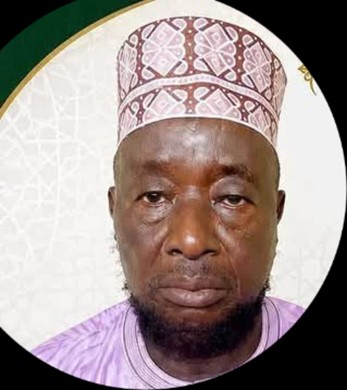
MONROVIA – Former President George Manneh Weah has described the death of Liberia’s Grand Mufti, Dr. Abass Kanneh, as a profound loss to the nation, declaring, “When they have a loss, it is my loss.” In a deeply personal tribute, Weah hailed the late Islamic scholar as a patriot, educator and advocate for peace and social justice, while pledging to personally visit the bereaved family and the Muslim community upon his return to Liberia.
Former President George Manneh Weah has expressed profound condolences to the family of Liberia’s late Grand Mufti, Dr. Abass Kanneh, describing his death as a painful loss to the Muslim community, the interfaith community and Liberia as a whole.
Dr. Kanneh, who served as Grand Mufti of the Republic of Liberia, died on Wednesday, July 29, 2026, in Freetown, Sierra Leone. His death has drawn expressions of grief from across Liberia’s religious community and beyond.
In a statement issued Tuesday, August 4, through his office, former President Weah extended sympathy to the Kanneh family, the National Muslim Council of Liberia, Muslims in Liberia and around the world, the religious and interfaith community, and Liberians generally.
Weah, who is currently outside Liberia, said his relationship with the Muslim community transcends religious boundaries, stressing that the death of the Grand Mufti is a loss he personally shares.
“They are also my People. Just like the Christian Community, when they are bereaved, I am bereaved; when they have a loss, it is my loss,” Weah said.
The former President recalled his longstanding association with the Muslim community, noting that he attended Muslim Congress and was, at one point, a Muslim before returning to Christianity.
His remarks appeared to underscore a broader message of religious solidarity, particularly at a moment when the death of one of Liberia’s prominent Islamic scholars has brought the country’s religious communities together in mourning.
Weah said the passing of Dr. Kanneh represents “our loss,” describing the late Grand Mufti as an accomplished educator, renowned Islamic scholar and authority in Islamic theology, comparative theology and Islamic jurisprudence.
He further praised Dr. Kanneh for his contributions to peace, social justice and religious understanding, portraying him as a patriot whose influence extended beyond the Muslim community to Liberia and the wider world.
According to Weah, the late Grand Mufti’s legacy will endure through his teachings, scholarly contributions, selfless service and commitment to the advancement of the Muslim community and the broader religious and interfaith community.
“Dr. Abass Kanneh was not only a religious leader but also an educator, scholar, patriot and advocate for peace and social justice,” Weah emphasized, noting the breadth of the late cleric’s contribution to Liberian society.
The former President also highlighted Dr. Kanneh’s role in strengthening religious life and contributing to the moral and social development of communities through scholarship and service.
Weah said he intends to personally visit the bereaved Kanneh family and the National Muslim Council of Liberia when he returns to the country to convey his condolences and sympathies in person.
“I will visit the bereaved Family of Dr. Kanneh and the National Muslim Council of Liberia upon my return to Liberia to again express my deepest sympathies in person,” he stated.
The former President urged the bereaved family, the National Muslim Council, Muslims in Liberia and around the world, members of the interfaith community and Liberians generally to find strength and consolation in the Lord as they navigate the period of mourning.
His condolence message comes as Liberia remembers a religious figure whose work, according to Weah, went beyond the boundaries of Islamic scholarship to touch questions of peace, social justice, interfaith relations and national cohesion.
For Weah, the death of Grand Mufti Kanneh is therefore not merely a loss to one religious community, but a moment of national mourning for a scholar and religious leader whose life was dedicated to teaching, service and the pursuit of peace.
Comments are closed.