
OWECC-L’s Barbu Joins Global Justice Dialogue
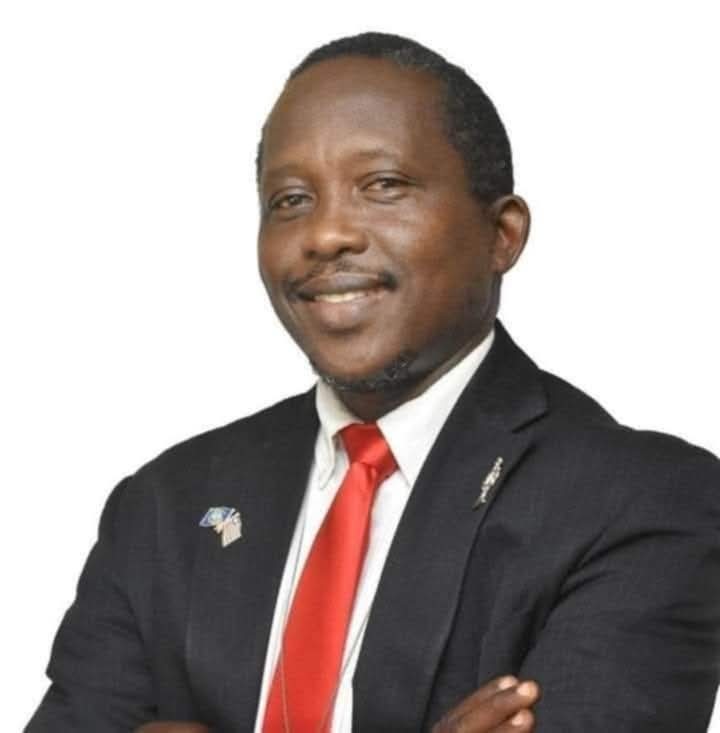
MONROVIA: Liberia’s long-delayed pursuit of accountability for war-era atrocities is gaining renewed international visibility, as the Executive Director of the Office for the Establishment of War and Economic Crimes Court for Liberia, Cllr. Dr. Jallah A. Barbu, joins global leaders in Cape Town to mark a historic milestone in transitional justice. His participation in South Africa’s 30th anniversary of the Truth and Reconciliation Commission signals more than diplomatic presence—it reflects a reassertion of Liberia’s commitment to confronting its past through institutional mechanisms. At a time when domestic expectations remain high, the engagement places Liberia within a broader global discourse on justice, reconciliation, and post-conflict recovery, as THE ANALYST reports.
Global Leaders at South Africa TRC Anniversary
The Executive Director of the Office for the Establishment of War and Economic Crimes Court for Liberia (OWECC-L), Jallah A. Barbu, is in Cape Town, South Africa, participating in a high-level international symposium commemorating the 30th anniversary of that country’s historic Truth and Reconciliation Commission (TRC).
The event, organized by the University of Cape Town, has drawn a global assembly of transitional justice practitioners, policymakers, scholars, and human rights advocates, all convening to reflect on one of the most influential post-conflict accountability models of the modern era.
Established in the aftermath of apartheid, South Africa’s TRC has long been regarded as a benchmark for national healing, truth-telling, and reconciliation—an experience that continues to inform justice processes across the world.
For Liberia, Barbu’s presence at the anniversary gathering carries both symbolic and strategic significance.
LIBERIA RETURNS TO THE GLOBAL JUSTICE STAGE
Barbu’s participation underscores what appears to be a renewed effort by the Liberian government to reposition the country within the global transitional justice discourse, particularly as momentum builds around the long-anticipated establishment of a War and Economic Crimes Court.
Liberia’s civil conflicts, which spanned from 1989 to 2003, left deep and enduring scars—marked by widespread human rights violations, economic crimes, and institutional collapse. Despite the passage of time, calls for accountability have remained persistent among victims, civil society actors, and segments of the international community.
The creation of OWECC-L under Executive Order No. 131 by Joseph Nyuma Boakai signaled a formal step toward addressing those demands. Yet the path toward implementation has remained complex, shaped by political sensitivities, legal considerations, and questions of national consensus.
Against that backdrop, Barbu’s engagement in Cape Town represents more than attendance—it is an attempt to draw lessons, build alliances, and reinforce Liberia’s stated commitment to justice.
LESSONS FROM SOUTH AFRICA’S EXPERIENCE
Speaking ahead of the symposium, Barbu emphasized the enduring relevance of South Africa’s TRC model in shaping contemporary approaches to transitional justice.
“The Truth and Reconciliation Commission of South Africa represents a significant chapter in the global pursuit of justice and reconciliation,” he noted. “As Liberia continues its own journey toward accountability and healing, there are critical lessons to be drawn from both the successes and challenges of the South African model.”
That acknowledgment reflects a growing recognition within Liberia’s policy space that transitional justice is not a one-size-fits-all process, but one that must be adapted to national realities while drawing from international experience.
The South African model, while widely praised for its emphasis on truth-telling and reconciliation, has also faced criticism for its perceived limitations in delivering full accountability—particularly in cases where amnesty replaced prosecution.
For Liberia, such complexities offer both caution and guidance.
A GLOBAL PLATFORM FOR TRANSITIONAL JUSTICE
The Cape Town symposium is structured around a series of panel discussions, keynote addresses, and high-level dialogues exploring key themes in post-conflict justice, including truth-telling, reparations, institutional reform, war crimes prosecution, and the role of justice in sustaining peace.
It also provides a forum for evaluating how transitional justice mechanisms can evolve to meet the changing demands of societies recovering from conflict and systemic abuse.
Barbu is expected to contribute to these discussions by outlining Liberia’s ongoing efforts to establish both a War and Economic Crimes Court and a National Anti-Corruption Court—two pillars widely seen as central to the country’s accountability agenda.
His interventions are expected to emphasize the importance of political will, victim-centered approaches, and sustained international support in advancing these initiatives.
BUILDING PARTNERSHIPS AND MOMENTUM
Beyond formal discussions, the gathering offers an opportunity for Liberia to deepen engagement with international partners, including institutions and experts with experience in designing and implementing transitional justice frameworks.
For OWECC-L, such engagement is critical.
The process of establishing a war crimes court is not merely legal—it is institutional, political, and deeply social. It requires technical expertise, financial resources, and sustained public trust.
Barbu’s participation is therefore expected to extend beyond dialogue, focusing also on exploring partnerships and best practices that can inform Liberia’s path forward.
THE WEIGHT OF LIBERIA’S PAST
The urgency of Liberia’s transitional justice agenda cannot be separated from the scale of its history.
Between 1989 and 2003, the country endured prolonged civil conflict that resulted in the loss of hundreds of thousands of lives, widespread displacement, and systemic abuses that touched nearly every community.
The Truth and Reconciliation Commission of Liberia, established in the post-war period, produced a comprehensive report outlining recommendations for accountability, including the establishment of a war crimes court.
Yet implementation of those recommendations has remained incomplete.
OWECC-L has emerged as a key institutional advocate for advancing those recommendations, particularly in relation to accountability for war-era atrocities and economic crimes.
A SIGNAL OF INTENT—BUT QUESTIONS REMAIN
Barbu’s presence at the global forum signals a willingness by the current administration to engage with the international community on issues of justice and accountability.
It suggests a recognition that Liberia’s path to sustainable peace is closely tied to its ability to confront unresolved questions from its past.
At the same time, questions remain. Will political consensus be achieved domestically?
Will the necessary legal frameworks be enacted? Will resources be mobilized to sustain the process?
And perhaps most importantly, will the process meet the expectations of victims who have waited decades for justice?
LOOKING AHEAD
As the world reflects on three decades since the establishment of South Africa’s Truth and Reconciliation Commission, the lessons emerging from that experience continue to resonate far beyond its borders.
For Liberia, the challenge lies not only in learning from those lessons, but in applying them in a way that is credible, inclusive, and responsive to national realities.
OWECC-L, through its leadership and engagement, is positioning itself at the center of that effort.
“The cause of justice in Liberia remains a shared responsibility,” the office noted, reaffirming its commitment to working with both national and international partners to advance accountability and restore dignity to victims.
Whether the current momentum will translate into concrete outcomes remains to be seen.
But for now, Liberia has taken a visible step back into the global conversation on justice.
And the world is watching.
ABOUT OWECC-L
The Office for the Establishment of War and Economic Crimes Court for Liberia (OWECC-L) is a national institution mandated to lead efforts toward the establishment of a War and Economic Crimes Court and a National Anti-Corruption Court in Liberia. The office works to promote accountability, support victims, and contribute to lasting peace and justice.
Comments are closed.