

Matching the ARREST Agenda To Tangible Outcomes -What to Expect from Boakai’s SONA
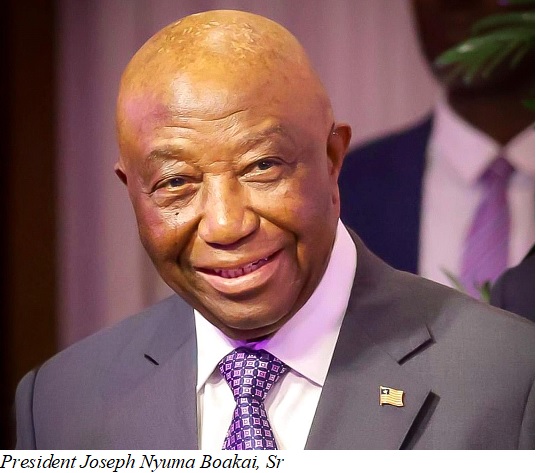
MONROVIA – President Joseph Nyuma Boakai, Sr.’s third State of the Nation Address arrives at a pivotal moment in Liberia’s governance journey, as expectations increasingly shift from policy articulation to visible results. Today’s address offers the President an opportunity to demonstrate how the ARREST Agenda for Inclusive Development is translating into practical gains across the economy, infrastructure, governance, and human development. Beyond constitutional obligation, this SONA is positioned as a progress report—measuring intent against execution and vision against outcomes. As Liberians look for relief from rising costs and pathways to opportunity, the address is expected to reinforce government commitment to stability, accountability, and inclusive growth. If clearly framed around delivery, timelines, and institutional responsibility, the SONA can strengthen public confidence and affirm the administration’s resolve to convert national priorities into everyday impact. THE ANALYST reports.
President Joseph Nyuma Boakai, Sr. will today, January 26, 2026, deliver his third State of the Nation Address (SONA) in fulfillment of his constitutional obligation. The address, scheduled for 4:00 p.m., will take place in the Joint Chambers of the National Legislature before a full bench of the Supreme Court, members of both houses of the Legislature, members of the diplomatic corps, foreign and local dignitaries, and the people of Liberia.
In keeping with Article VI, Section 58 of the 1986 Constitution, President Boakai’s address is expected to outline the “income” and “expenditures” of the Republic and present his legislative agenda for the year 2026.
President Joseph Nyuma Boakai’s third State of the Nation Address comes at a defining moment, not only for his administration, but for a population increasingly impatient for visible improvements in living conditions. More than rhetoric, this SONA will be judged by how convincingly the President connects the ARREST Agenda for Inclusive Development (AAID) to concrete outcomes across the economy, governance, infrastructure, and human development.
As The Analyst reports, the central question Liberians will be asking is simple: how does ARREST move from policy paper to kitchen table reality?
1. The Economy: Stabilization, Jobs, and Cost of Living
The public should expect President Boakai to foreground macroeconomic stabilization as a necessary foundation for inclusive growth. With inflationary pressures, currency volatility, and limited fiscal space still constraining households, the President will likely emphasize on domestic revenue mobilization as a means of reducing dependence on aid, including tighter tax administration and renegotiation of concession agreements. The President will obviously harp on the ambitious Fiscal Year 2026 National Budget $1.2 billion, which constitutes 94% domestic revenue generation, as a practical example of how his government intends to free up the fiscal space.
The Liberian chief executive’s speech will also focus on job creation, particularly through agriculture, mining expansion, and small- and medium-scale enterprises (SMEs), to expand the economy.
President Boakai is also expected to touch on a renewed focus on value addition, signaling a shift away from raw commodity exports toward agro-processing and light manufacturing.
However, credibility will hinge on whether the President goes beyond aggregates to address cost-of-living realities—food prices, transportation costs, and purchasing power. Without a clear pathway for translating growth into household relief, economic claims may ring hollow.
2. Rule of Law and Governance: Restoring Trust in the State
The “R” in ARREST—Rule of Law—is arguably the most politically sensitive pillar. Liberians will be listening for a firm recommitment to anti-corruption enforcement, not just investigations.
The people will also expect to hear from their leader how his government is strengthening the judiciary and integrity institutions to ensure accountability applies equally to allies and opponents; and the mechanisms put in place to ensure that public financial management reforms are being institutionalized, not personalized.
Any mention of prosecutions, asset recovery, or enforcement of audit recommendations will be closely scrutinized. The public mood suggests that symbolic gestures are no longer enough; consistency and impartiality are the new benchmarks.
3. Roads and Infrastructure: Connecting People to Opportunity
Infrastructure is where the ARREST Agenda intersects most directly with daily life. The President is expected to highlight Road connectivity, especially farm-to-market roads that link rural producers to urban consumers.
President Boakai is also expected to speak on progress made in the last year with regards to energy expansion, including electricity access beyond Monrovia, as a driver of productivity and private investment; and his government’s action plans to provide its citizens with affordable access to electricity.
He will also be expected to speak on the Port, water, and sanitation improvements which are critical to public health and commerce.
In this regard, Liberians will want clarity on whether ongoing or future infrastructure will be debt-financed, concession-based, or supported through public-private partnerships—and timelines that go beyond ceremonial groundbreakings.
4. Education: Human Capital as Long-Term Investment
Education remains central to inclusive development, and the President’s speech should reflect a shift from access to quality and relevance. Anticipated focus areas include teacher training and deployment, especially in underserved counties; curriculum reform aligned with labor market needs, including technical and vocational education, and renewed investment in public universities and community colleges as engines of national skills development.
The public will listen closely for whether education reforms are framed as economic strategy, not just social obligation.
5. Health: From Crisis Response to System Strengthening
Post-pandemic realities have exposed structural weaknesses in Liberia’s health system. Under the ARREST framework, expectations include strengthening primary healthcare delivery and rural clinics, expanding access to essential medicines and trained health professionals, and improving health financing and reducing out-of-pocket expenses for poor households.
Here, success will be measured by access, affordability, and reliability, not donor-funded pilot projects.
6. Inclusion and Social Protection: Leaving No One Behind
The “Inclusive Development” promise of AAID will be tested by what the President says about youth employment and skills development, women’s economic participation, as well as social protection for the elderly, disabled, and extremely poor.
Liberians will expect to hear how growth will be deliberately redistributed, not assumed to trickle down.
7. Legislative Agenda – What Liberians Should Expect
President Boakai’s legislative agenda focuses on enabling laws to support national development priorities — especially those aligned with his ARREST Agenda (Agriculture, Roads, Rule of Law, Education, Sanitation, Tourism).
Key areas that will likely be highlighted include Priority bills and Reforms, to include the Presidential Transition Act: A law to formalize how incoming presidents transition into office smoothly; the Decentralization & Local Government Reform, which has to with strengthening county governance and bringing services closer to citizens — likely with supporting legislation following earlier policy shifts like renaming the Ministry of Local Government; and Fiscal and Accountability Measures that deal with continued push for laws that reinforce fiscal discipline, transparency, and anti-corruption frameworks.
President Boakai, in touching on his administration’s Legislative Agenda, will most likely touch on Infrastructure and Development Laws that include legislation to support road maintenance frameworks and national road fund utilization, as well as laws to facilitate public-private partnerships and investment in key sectors like agriculture and tourism.
The Liberian chief executive will probably emphasize the need for collaboration between the Executive and Legislature to pass critical bills that underpin economic recovery, job creation, and rule of law enforcement — reinforcing that development requires joint action.
8. Economic Relations with International Partners
President Boakai’s speech and budget strategy will strongly focus on strengthening economic ties and financial support from both bilateral partners (countries) and multilateral institutions (e.g., IMF, World Bank).
In terms of multilateral engagements, Liberians will expect to hear how more about the IMF Extended Credit Facility (ECF), how Liberia secured about US $210 million to stabilize the economy and improve debt sustainability (2024–2027), as well as ongoing World Bank Support towards to the national budget and special funds for infrastructure and services.
President Boakai will also be expected to commend international partners like the European Union and the African Development Bank, through whose financial support millions have been committed to roads and development programs.
Most importantly, President Boakai will be speaking to Liberia’s eligibility to the U.S. MCC Compact funding, a major step toward sizeable future economic support.
The president is also expected to brief the nation on several active Diplomatic Trade Missions, for instance, official state visits to France, the UAE, and how investor roundtables are helping to attract private sector investments.
President Boakai will most like address the Trade & Investment Office in the USA which is strategically positioned to boost bilateral trade, diaspora engagement, and business linkages.
9. Foreign Relations – Strategy and Priorities
Boakai’s foreign policy underscores robust diplomatic engagement, regional cooperation, and global leadership — built on Liberia’s history and current international roles.
The Liberian leader in this direction will be expected to speak on the country’s election as a non-permanent member of the UN Security Council (2026–2027) — a major milestone that will likely be featured as a success in foreign relations and a platform for advancing peace, security, and sustainable development globally.
He is also expected to address the continued active roles in United Nations, African Union, ECOWAS, and other regional bodies — emphasizing peace, human rights, and regional stability.
The Liberian leader is also expected to speak on how the nation is deepening engagement with key partners such as the United States, China, and Gulf States to secure trade, investment, and capacity building.
The Political Subtext: Delivery over Declarations
Ultimately, this SONA is less about vision and more about execution credibility. President Boakai enjoys goodwill as a steady, reform-minded leader, but patience is thinning. The ARREST Agenda must now be framed as a measurable delivery plan, with timelines, responsible institutions, and indicators of success.
If the President uses the address to clearly link policy intent to lived experience—and to acknowledge constraints honestly—he will strengthen public trust. If not, the gap between promise and perception may widen.
This SONA, therefore, is not just a constitutional exercise; it is a referendum on whether the ARREST Agenda can meaningfully upgrade the lives of ordinary Liberians.
Comments are closed.