

Leymah Gbowee Challenges Liberia’s Silent Mothers -Nobel laureate urges women become visible
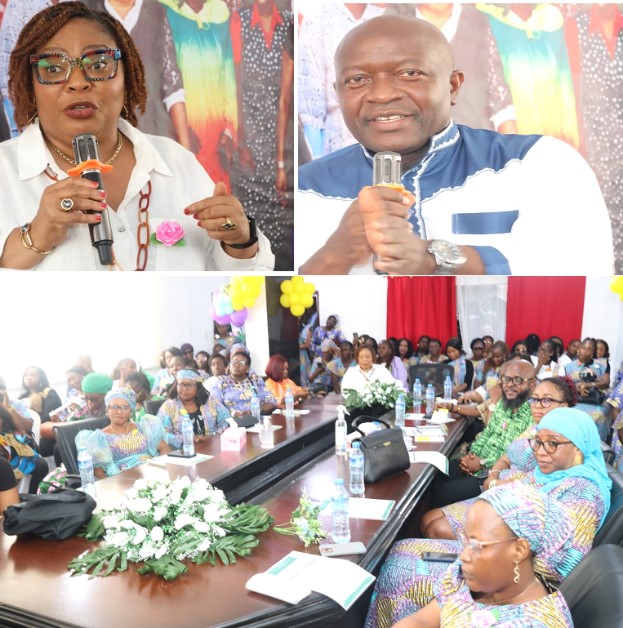
MONROVIA – What began as a ceremonial Mother’s Day celebration inside Liberia’s Ministry of Finance and Development Planning evolved into a deeply emotional national reflection on womanhood, sacrifice, invisibility, and self-worth as Nobel Peace Prize laureate Leymah Gbowee delivered one of her most candid and socially resonant public addresses in recent years. Blending humor, painful personal memories, moral challenge, and practical empowerment, Gbowee confronted the silent burdens many Liberian women carry while urging them to reject lives consumed entirely by sacrifice without recognition or personal fulfillment. As THE ANALYST reports, her message struck beyond symbolism into broader conversations about gender, professional growth, emotional exhaustion, and national development, reinforcing the increasingly urgent call for women to prioritize themselves while still shaping Liberia’s future.
Celebration Turns Into National Reflection
A colorful Mother’s Day celebration organized by Liberia’s Ministry of Finance and Development Planning transformed into an emotionally charged moment of national introspection Friday as Nobel Peace Prize laureate Leymah Gbowee delivered a powerful and deeply personal keynote address urging Liberian women to stop living permanently as “the unseen.”
The event, hosted by the Professional Women Association of the Ministry on May 22, 2026, brought together senior government officials, civil servants, mothers, invited guests, and women professionals in celebration of the critical contributions women continue to make to Liberia’s governance, public administration, and national development.
But what unfolded inside the gathering quickly evolved beyond ceremonial speeches and formal recognition.
Through a blend of humor, emotional storytelling, social commentary, and blunt realism, Madam Gbowee delivered a speech that resonated profoundly with attendees, challenging women to break free from invisible lives of sacrifice and begin intentionally prioritizing their dreams, ambitions, emotional wellbeing, education, professional advancement, and personal fulfillment.
Centered on the theme “Celebrating the Unseen,” the Nobel laureate’s remarks struck deeply at the emotional realities many Liberian women quietly endure daily while carrying families, institutions, and communities on their shoulders with little recognition.
Her intervention immediately generated widespread public discussion following the ceremony, with many attendees describing the address as one of the most relatable and emotionally honest speeches delivered at a government-sponsored women’s event in recent years.
Humor, Humanity, and a Mother’s Spirit
Before delving into the heavier substance of her message, Gbowee first lightened the atmosphere with a humorous but deeply human story involving her 77-year-old mother during a trip to Israel and Palestine.
The anecdote instantly captivated the audience and generated roaring laughter across the hall.
“After a while, I saw my mother coming with a Palestinian flag draped over her shoulder, walking along in arms with two Palestinian women, while wearing a hat that said, ‘Free Palestine,’” Gbowee recounted humorously.
“I panicked,” she admitted jokingly.
But according to her, before she could even intervene, her mother calmly responded:
“Leymah, what are you doing here? Let’s go across the border to Palestine. The Arab people side is sweet just like Africa. The people can beat drums just like us.”
The audience erupted in laughter once again as Gbowee narrated how her mother’s warmth, openness, and adventurous spirit quickly won over the Palestinian women accompanying her.
She emotionally recalled how those same women later sang gospel hymns during her mother’s baptism in the Jordan River.
“My mom is 77 now, but I will forever remember that trip,” she reflected emotionally.
The touching anecdote eventually transitioned into a broader appeal for people to value mothers while they are still alive.
“Let’s cherish the ones that we have, and let’s cherish the memories of the ones that have gone by,” she urged.
“Please Don’t Call Me Honorable”
In characteristic candor, the Nobel Peace Prize laureate also took direct aim at one of Liberia’s most politically abused titles.
“With all due respect, please don’t call me honorable,” she declared firmly.
“I don’t like that term because it has been bastardized in the Republic of Liberia. A lot of honorables are not honorable.”
The blunt statement drew laughter and applause from the audience.
“Just call me Leymah or Madam Gbowee or any other name except honorable,” she added. “I am afraid of that name.”
Observers noted that the comments reflected growing public frustration over what many citizens perceive as the widening disconnect between political titles and actual public conduct in Liberia.
The moment also reinforced Gbowee’s longstanding reputation for directness and willingness to publicly challenge political culture without diplomatic cushioning.
The Pain of Being “Unseen”
Turning directly to the event’s theme, Gbowee described “Celebrating the Unseen” as emotionally heavy and personally confronting.
According to her, the phrase immediately forced her to reflect deeply on the countless sacrifices women make silently throughout their lives while often suppressing their own dreams, desires, and identities.
Drawing extensively from her childhood experiences under the guidance of her grandmother and mother, she recounted lessons about resilience, survival, discipline, sacrifice, and womanhood.
“All of those things she was doing, I would realize later on in my life, is to teach us that you have to command your space,” she reflected.
Gbowee then recounted painful childhood memories of questioning why her mother did not dress elegantly for church like other women.
As a child, she admitted, she initially misunderstood her mother’s appearance and sacrifices.
Only later did she recognize that her mother was sacrificing personal comfort, clothing, and self-care to provide opportunities and necessities for her children.
“Eventually I got to understand that the sacrifices that she was making for us created a situation where she couldn’t wear the kind of clothes that she wanted to wear; she couldn’t use the kind of perfume that she wanted to use,” she explained emotionally.
“That sadness then turned into anger. Because it’s like I am sacrificing, can’t you see?”
Her comments visibly resonated with many women in attendance.
Observers described moments inside the hall where several participants reportedly became emotional as Gbowee articulated realities many Liberian women quietly experience but rarely publicly discuss.
Women Carrying Silent Burdens
The Nobel laureate argued that countless women across Liberia continue to live invisible lives of emotional exhaustion and suppressed dreams.
According to her, women routinely sacrifice careers, ambitions, education, personal happiness, and emotional wellbeing for families, children, relatives, communities, and institutions while receiving little acknowledgment in return.
“And so, the theme for today says, ‘Celebrating the Unseen.’ What is the unseen?” she asked.
“The unseen cries by yourself, thinking about how you will make the budget to budget; the unseen emotions when the children are not doing well in spite of your struggles; the unseen passionless marriage, you’re there, but it’s just like you aren’t there.”
“The unseen ‘I have a dream for my life, but that dream has gone into a mist’ because you prioritize everything else but yourself.”
Her words touched directly on issues many women privately endure — financial stress, emotional loneliness, unfulfilled ambitions, family pressures, and the burden of constant caregiving.
Analysts later observed that Gbowee’s speech succeeded precisely because it moved beyond symbolic praise for women and confronted the difficult emotional realities often hidden behind public celebration days.
“Don’t Always Be the Unseen”
In perhaps the most powerful moment of the entire address, Gbowee issued a firm challenge to women not to permanently remain invisible.
“Don’t always be the unseen,” she declared emphatically.
“I came to tell you to be seen.”
The statement generated loud applause throughout the hall.
She then shifted from emotional reflection toward practical empowerment, encouraging women to intentionally pursue personal development, financial discipline, education, travel, self-care, and professional advancement.
“How do you get seen?” she asked rhetorically.
Gbowee explained that she personally carries notebooks in which she annually documents goals, aspirations, financial plans, reading targets, and family objectives.
“This is the amount of money that I want to save… this is how many books I want to read… this is where I want to vacation with my children,” she explained.
“When you do these things, you are breaking away from that silent thing of unseen.”
The practical advice resonated particularly strongly among professional women attending the event.
Education, Growth, and Self-Advancement
The Nobel laureate also challenged women in government service not to become stagnant professionally or academically.
In one of the speech’s most direct sections, she emphasized continuous self-improvement and lifelong learning.
“The second thing is, if you are in my office and you have not moved ahead academically, professionally, in more than one year, then you are not ready,” she asserted.
“Professional women are not women who are stuck to the same place for 20 years.”
Gbowee then revealed that despite already becoming a Nobel laureate and recipient of multiple honorary doctorates, she remains actively engaged in formal academic advancement.
“I am in my final year of my PHD program,” she announced proudly.
“You are never too old to advance.”
The revelation drew applause and admiration from participants, many of whom viewed the statement as evidence that personal growth should never stop regardless of age or achievement.
Discovering Personal Gifts
Gbowee also urged women to discover and maximize talents beyond their formal jobs and professional responsibilities.
“Every one of us carries a gift,” she declared.
“God gives us something extra other than our professional work. How are you maximizing your gifts for your benefit?”
She warned women against losing themselves entirely in sacrifice while neglecting their own identities and aspirations.
At the same time, she cautioned against unhealthy competition, reckless spending, and pressure-driven lifestyles.
“Take care of yourself,” she advised.
“Dress well, but don’t spend all your money on sell-pay. You are the boss of you. Don’t look around and try to be someone else.”
Ngafuan Honors Women’s Sacrifices
For his part, Finance and Development Planning Minister Augustine Kpehe Ngafuan paid glowing tribute to mothers and female employees of the Ministry, describing them as unsung heroines whose sacrifices sustain government operations.
The Minister emotionally reflected on the role his mother’s prayers played throughout his life and career.
“Everything that has come my way, the dangers that I have escaped in this dog-eat-dog world, and sometimes the concrete jungle that we call government, thanks to Mother’s prayer,” Ngafuan declared.
“My mother and many other mothers here and the sainted mothers who have transitioned to glory, because of them and their efforts some of you are here.”
Ngafuan praised female workers at the Ministry for their resilience during difficult national budget preparation periods, often involving sleepless nights and intense pressure.
“At the MFDP we have some war moments here when we must deliver,” he remarked metaphorically.
“This is deadline-driven ministry.”
“The pressure from the top will hit me and I will cascade the pressure. Some of you have felt the pressure. We’ve put you through the pressure cooker but you haven’t melted.”
The Minister specifically acknowledged the many mothers forced to sacrifice family time while meeting national responsibilities.
“I can never repay you for your sacrifice,” he stated emotionally.
Honoring the “Unseen”
The ceremony concluded with the presentation of Mother’s Day certificates honoring distinguished female employees within the Ministry.
Among those recognized were Deputy Minister for Budget and Development Planning Mrs. Tanneh G. Brunson, Communication Director and Acting Women President Patience Senkpeni Kumeh, Margaret E. Cooper-Mark of the CAG Department, Zainab K. Dukuly of Fiscal Affairs, Phanta T. Sackor of Budget and Development Planning, Albertha B. Yengbe of Economic Management, Joko Smith of Administration, and Atty. Martus K. Williams of the Specialized Unit.
Yet beyond certificates and formal recognition, the event ultimately evolved into something far more profound.
For many participants, Leymah Gbowee’s message became a national reminder that Liberia’s women — long celebrated rhetorically for resilience and sacrifice — must also be encouraged to pursue visibility, fulfillment, growth, self-worth, and personal dreams beyond survival alone.
And in one unforgettable line that lingered heavily throughout the hall, the Nobel laureate delivered the message many women appeared to need most:
“Don’t always be the unseen.”
Comments are closed.