

Fake Legislative Photo Sparks National Outrage -Citizens condemn dangerous digital political deception
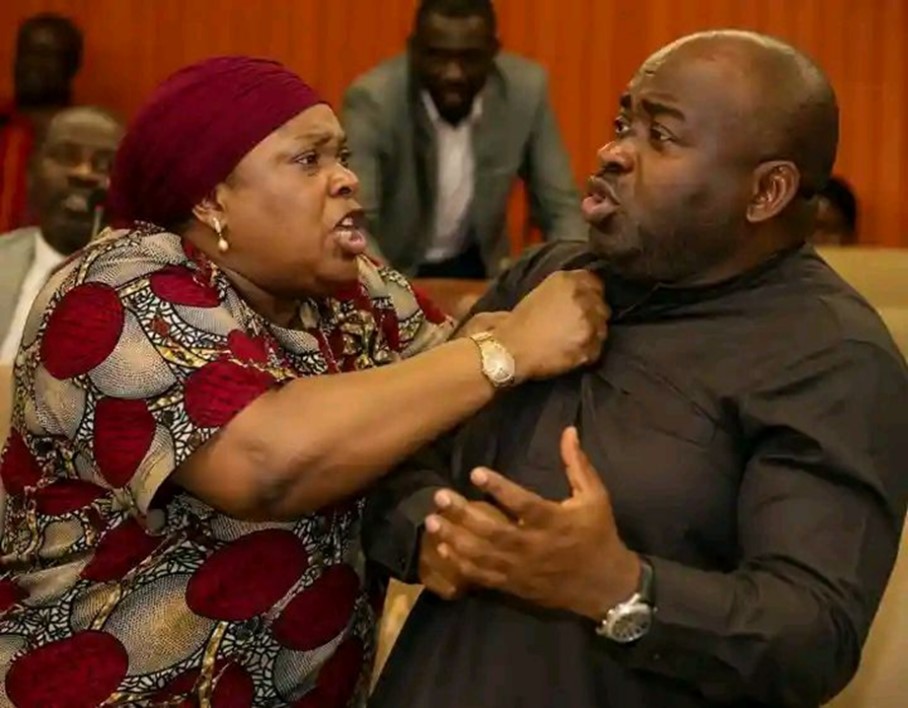
MONROVIA – Liberia’s increasingly toxic digital political environment has suffered another disturbing escalation following the circulation of a fabricated and manipulated image falsely portraying two sitting lawmakers engaged in a violent confrontation inside the National Legislature. The viral photo, targeting Bong County Representative Moima Mensah-Briggs and Nimba County Representative Musa Hassan Bility, has triggered outrage among citizens and renewed national concerns over the growing weaponization of social media disinformation for political blackmail, character assassination, and public manipulation. As THE ANALYST reports, beyond the immediate controversy, the incident highlights deeper anxieties about cyber ethics, democratic responsibility, and the dangerous ease with which fabricated narratives can inflame political tensions and damage reputations in Liberia’s already polarized political climate.
A growing wave of public anger and condemnation has erupted across Liberia following the circulation of a heavily manipulated and fabricated social media image falsely depicting Bong County District #6 Representative Moima Mensah-Briggs physically attacking or “hijacking” fellow lawmaker, Nimba County Representative Musa Hassan Bility, during proceedings at the National Legislature.
The viral image, which rapidly spread across multiple social media platforms over the weekend, has now become the center of an intensifying national debate surrounding political disinformation, cyber-bullying, digital ethics, and the increasingly reckless use of manipulated media to inflame public sentiment and destroy reputations.
Reacting strongly to the controversy, a cross-section of citizens operating under the banner “Concerned Liberians” issued a blistering condemnation of the fabricated photo, describing it as a “cheap and dangerous political blackmail tactic” deliberately designed to mislead the public, provoke unnecessary outrage, and undermine the credibility of two nationally prominent lawmakers.
In a strongly worded statement, the group warned that Liberia’s fragile democracy cannot survive if falsehoods, digitally altered content, and politically motivated propaganda are allowed to dominate public discourse unchecked.
The citizens expressed alarm over what they described as the alarming normalization of cyber deception and online character assassination, cautioning that fabricated political content now poses a serious threat not only to individuals but to democratic institutions themselves.
“We cannot sit idly by and watch characters being assassinated on social media for political expediency,” the statement declared.
“Representative Moima Mensah-Briggs and Representative Musa Hassan Bility are national leaders who understand the gravity of their mandates. This fake photo is an embarrassment to our national political space and must be rejected by all well-meaning Liberians,” the group added.
The manipulated image allegedly portrays Representative Mensah-Briggs in what appears to be a physical confrontation with Representative Bility inside the Legislature — a scenario the group insists never occurred and bears no resemblance to the professional conduct historically demonstrated by either lawmaker.
Political observers say the incident reflects a broader and deeply troubling trend emerging across Liberia’s digital landscape, where fake images, doctored videos, manipulated audio recordings, and fabricated narratives are increasingly being weaponized to influence public opinion and deepen political polarization.
What has particularly intensified concern surrounding this latest episode is the stature and national visibility of the individuals targeted.
Representative Moima Mensah-Briggs is widely regarded as one of Liberia’s most experienced female legislators and a respected voice on women’s rights, governance reform, peacebuilding, and democratic accountability.
Beyond her legislative responsibilities representing Salala District #6 in Bong County, she also serves as a representative of Liberia at the ECOWAS Parliament, where she has participated in regional deliberations on governance, gender inclusion, conflict prevention, and democratic consolidation.
The Concerned Liberians group argued that Briggs’ longstanding professional record directly contradicts the violent imagery being falsely projected online.
According to the statement, the veteran lawmaker possesses deep knowledge of parliamentary procedures, legislative ethics, and institutional discipline, making it inconceivable that she would physically assault a colleague inside the chambers of the Legislature.
The citizens further emphasized that while Representative Briggs has often been vocal, assertive, and uncompromising in advocating for issues affecting women, governance, and national accountability, she has consistently operated within the bounds of parliamentary rules and democratic engagement.
“She deeply understands the standing rules of the House of Representatives and would never degrade her office through physical violence,” the group asserted.
The statement similarly defended Representative Musa Hassan Bility against what it described as an orchestrated attempt to drag him into a fabricated scandal.
Bility, Political Leader of the Citizens Movement for Change (CMC) and Representative of Nimba County District #7, has become one of the country’s most outspoken opposition voices and among the most visible political figures in contemporary Liberian politics.
Known for his aggressive commentary on governance, corruption, national unity, and institutional accountability, Bility frequently attracts both strong support and fierce criticism across the political spectrum.
Yet the Concerned Liberians maintained that despite his combative political style, the Nimba lawmaker has consistently demonstrated professionalism in parliamentary interactions and would never engage in physical confrontation with a colleague — particularly a female lawmaker.
Similarly, they stressed that legislative disagreements and heated political exchanges are normal components of democratic governance and parliamentary culture.
However, they argued that robust political disagreements should never be confused with physical hostility or violence.
“Both lawmakers have always maintained mutual respect and professionalism despite political differences,” the statement emphasized.
The incident has reignited broader concerns regarding the role of anonymous social media actors in spreading disinformation and manufacturing political scandals for public consumption.
Liberia’s rapidly expanding digital environment has created unprecedented opportunities for political engagement and citizen participation. However, analysts say it has simultaneously opened dangerous spaces for misinformation, propaganda, impersonation, and coordinated online manipulation.
In recent years, fabricated social media content has increasingly become a weapon in Liberia’s political warfare.
Doctored images, false quotes, fabricated letters, manipulated videos, and impersonated accounts have repeatedly surfaced during politically tense moments, often generating confusion before corrections can reach the broader public.
Cyber-security experts warn that advances in digital editing technologies and artificial intelligence are making manipulated media increasingly difficult for ordinary citizens to detect, thereby heightening the risk of public deception and political instability.
The latest controversy involving Representatives Mensah-Briggs and Bility appears to have struck a particularly sensitive nerve because it directly targets the integrity and dignity of elected officials inside the nation’s highest democratic institution.
Some observers fear that repeated circulation of fabricated political content could gradually erode public trust in democratic institutions and normalize hostility within national political culture.
Others argue that the incident reflects the dangerous deterioration of political civility across Liberia’s online ecosystem, where outrage and sensationalism increasingly overshadow factual discourse and responsible engagement.
The Concerned Liberians group therefore called for urgent institutional intervention.
The citizens specifically appealed to the Ministry of Information, Cultural Affairs and Tourism (MICAT), along with cyber-security watchdogs and relevant state institutions, to investigate the origins of the manipulated image and identify those responsible for creating and disseminating it.
According to the group, failure to hold perpetrators accountable could encourage even more reckless acts of digital manipulation capable of inciting public unrest or damaging innocent individuals.
The citizens also urged ordinary Liberians to exercise caution before sharing inflammatory content online.
They warned that many citizens unknowingly contribute to the spread of falsehoods simply by reposting sensational material without verifying authenticity.
“Liberians must become more responsible digital citizens,” one member of the group reportedly stated during discussions surrounding the controversy.
“You cannot simply see shocking content online and immediately circulate it without asking whether it is true. That behavior can destroy lives and destabilize society.”
The controversy has additionally reopened national conversations about the absence of stronger cybercrime enforcement mechanisms and digital literacy programs in Liberia.
While the country has witnessed explosive growth in internet access and smartphone usage, experts say public understanding of digital verification, media ethics, and online misinformation remains dangerously weak.
That gap has created fertile ground for manipulation, particularly during politically sensitive periods.
Analysts warn that as Liberia gradually approaches another electoral cycle, the risk of digitally engineered political propaganda is likely to intensify significantly.
In that environment, fabricated content could potentially inflame ethnic tensions, provoke violence, undermine public trust, and distort democratic decision-making if not aggressively challenged.
The fake legislative confrontation involving Representatives Mensah-Briggs and Bility may therefore represent more than an isolated act of online mischief.
For many observers, it symbolizes the growing battle for truth itself inside Liberia’s evolving digital democracy.
And unless institutions, political actors, media organizations, and ordinary citizens collectively confront the culture of online deception, analysts fear the country risks entering a dangerous era where manipulated narratives increasingly overpower facts, professionalism, and democratic responsibility.
Comments are closed.