

Kouyateh Faces Growing Political Peril -Legislature demands proof or consequences
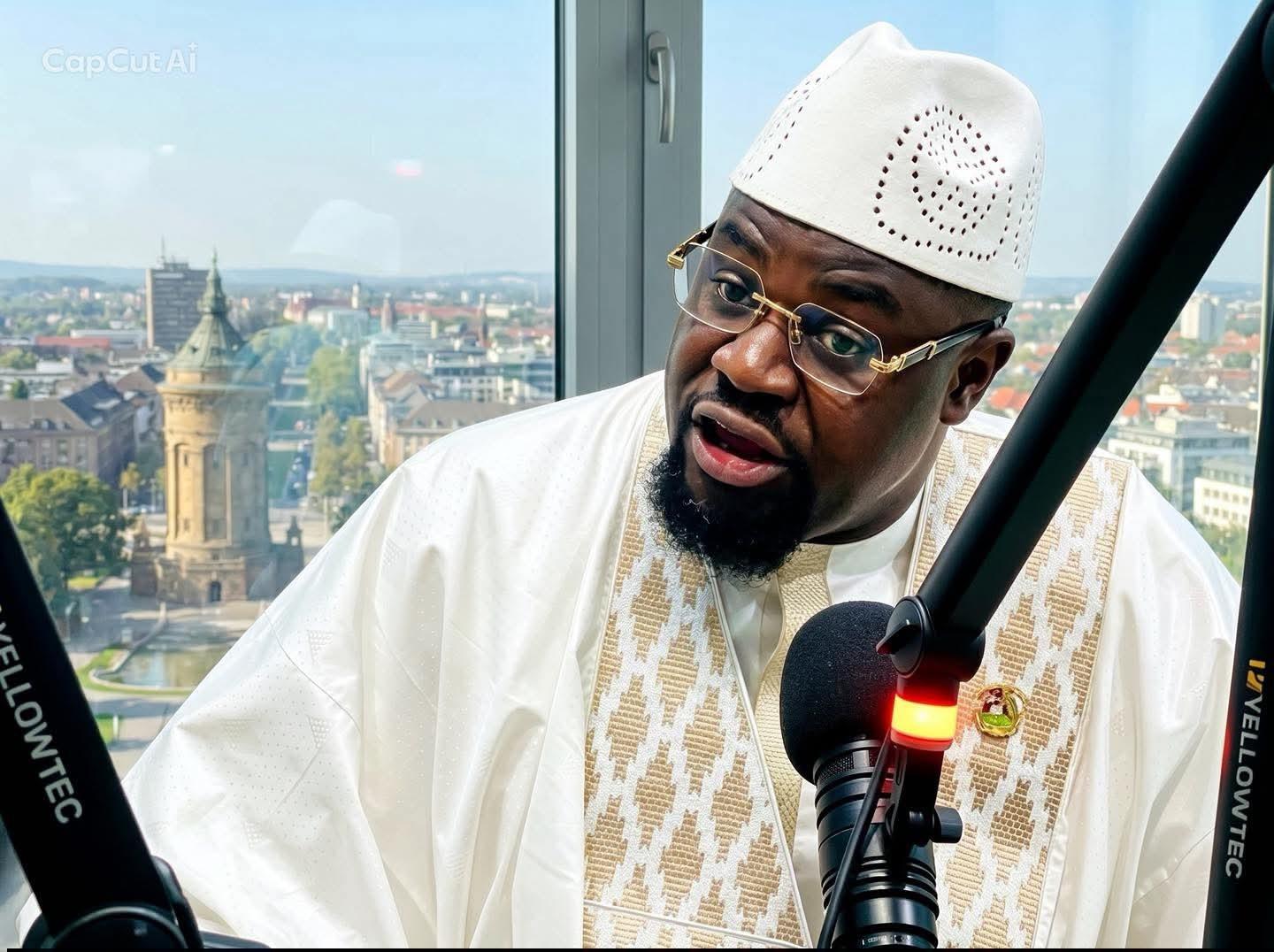
MONROVIA – What began as a public accusation against members of Liberia’s Legislature has rapidly evolved into one of the most consequential political confrontations facing the Boakai administration. At the center of the dispute is Ambassador-at-Large Sheikh Al-Moustapha Kouyateh, whose allegations of corruption and bribery against lawmakers have triggered an unprecedented institutional backlash from the House of Representatives. The controversy now extends far beyond questions of personal credibility. It touches on legislative authority, executive-legislative relations, anti-corruption accountability, freedom of expression, and the obligation of public officials to substantiate serious accusations. Following a formal Vote of No Confidence, reports, attention has shifted from allegations themselves to what happens next.
HOUSE ACTION CHANGES POLITICAL LANDSCAPE
The House of Representatives’ decision to adopt a Vote of No Confidence against Ambassador-at-Large Sheikh Al-Moustapha Kouyateh has transformed a political dispute into a potentially defining moment for both the diplomat and the administration of President Joseph Nyuma Boakai.
While the vote itself carries no automatic legal consequence capable of removing Kouyateh from office, political observers say the action represents one of the strongest institutional condemnations available to lawmakers against a senior public official outside the Legislature.
The House’s action follows weeks of controversy surrounding allegations made by Kouyateh accusing members of the National Legislature of corruption and bribery, particularly in matters involving concession agreements.
Those allegations generated immediate outrage among lawmakers, who insisted that the ambassador either produce evidence to support his claims or retract the statements publicly.
Instead, the dispute escalated, culminating in the Legislature’s formal declaration that it no longer has confidence in the Ambassador-at-Large.
The development has significantly raised the stakes for all parties involved.
A POLITICAL REBUKE WITH FAR-REACHING IMPLICATIONS
Although the House resolution is not legally binding on the Executive Branch, it carries substantial political significance.
Political analysts note that votes of no confidence are rare instruments that communicate institutional displeasure at the highest level.
In adopting the measure, lawmakers effectively signaled that they believe Kouyateh’s conduct has undermined the credibility and integrity of the Legislature.
The House further recommended that President Boakai be formally informed of its position and urged the Executive to take what lawmakers described as appropriate administrative action.
The resolution also indicated the Legislature’s unwillingness to work with Kouyateh on matters affecting legislative business.
For many observers, that recommendation places considerable pressure on the Executive Mansion.
Given the importance of maintaining constructive relations between the Executive and Legislative branches, some analysts believe the administration may eventually be compelled to address the matter directly.
PRESIDENT BOAKAI NOW FACES DELICATE CHOICE
The controversy has created a politically sensitive dilemma for President Boakai.
On one hand, the President depends heavily on cooperation from lawmakers to advance his legislative agenda, secure budget approvals, obtain confirmations, and implement major government initiatives.
On the other hand, taking action against Kouyateh could be interpreted by some supporters as discouraging public officials from speaking out about alleged corruption.
Political commentators argue that the President must now balance competing institutional interests.
Should the administration move against Kouyateh, it may help ease tensions with lawmakers.
However, failure to respond could deepen friction between the Executive and Legislative branches at a time when collaboration remains essential to governance.
The President’s response is therefore expected to be scrutinized closely by politicians, civil society organizations, anti-corruption advocates, and international partners.
CAN THE AMBASSADOR BE REMOVED?
The House’s recommendation has fueled speculation regarding possible administrative consequences for Kouyateh.
While the Legislature lacks authority to dismiss an Ambassador-at-Large, the President retains broad powers regarding appointments and removals within the Executive Branch.
Political observers suggest several possible outcomes.
The administration could issue a formal reprimand, reassign the ambassador, suspend him, request a public clarification, or remove him entirely from his position.
Others believe the government may seek a compromise solution that preserves institutional relations while avoiding perceptions of political retaliation.
At this stage, however, no official indication has emerged from the Executive Mansion regarding what course of action may be pursued.
What remains clear is that the controversy has become increasingly difficult for the administration to ignore.
LEGAL QUESTIONS BEGIN TO EMERGE
Beyond the political consequences lies a more complicated legal question.
Can Ambassador Kouyateh be compelled to prove the allegations he made against lawmakers?
Legal experts note that accusations involving corruption and bribery are serious matters under Liberian law and cannot remain indefinitely within the realm of political rhetoric.
If Kouyateh possesses evidence supporting his claims, there could be increasing pressure for him to submit that evidence to institutions responsible for investigating corruption.
These may include the Ministry of Justice, the Liberia Anti-Corruption Commission, and other competent authorities.
Should such evidence exist, the controversy could evolve into a far-reaching investigation extending beyond the ambassador himself.
Conversely, failure to produce evidence may create new challenges for Kouyateh.
THE BURDEN OF PROOF INTENSIFIES
At the heart of the controversy lies a fundamental question of evidence.
Public allegations of corruption can have significant consequences for public confidence in democratic institutions.
For that reason, legal analysts argue that serious accusations require equally serious proof.
As the debate intensifies, the burden increasingly appears to rest on Kouyateh to demonstrate that his claims were based on credible information rather than speculation or political frustration.
Failure to do so could weaken his standing and damage his credibility.
Some legal experts also suggest that knowingly false allegations could potentially expose an individual to legal challenges if affected parties choose to pursue available remedies.
Whether such actions materialize remains uncertain.
Nevertheless, the House’s vote has amplified demands for substantiation.
HOW THE LEGISLATURE BUILT ITS CASE
The Vote of No Confidence followed a motion introduced by Sinoe County District #1 Representative Prof. Romeo Quioh and supported by dozens of lawmakers.
Presenting the motion before Plenary, Quioh argued that Kouyateh publicly accused legislators of corruption without providing evidence.
He further contended that the ambassador failed to comply with a legislative directive requiring him to publicly retract the allegations through the same platform on which they were made.
“This motion is necessitated by the conduct of Ambassador Kouyateh, who publicly made grave allegations against the National Legislature,” Quioh told lawmakers.
According to the House, Kouyateh was afforded opportunities to clarify his position and provide supporting evidence.
Lawmakers insist those opportunities were not utilized effectively.
OK FM APPEARANCE DEEPENS CONTROVERSY
According to legislative leaders, the controversy intensified after Kouyateh appeared on OK FM following his interaction with lawmakers.
House members contend that instead of resolving the matter, the appearance further aggravated tensions.
Representative Quioh argued that the ambassador made additional remarks that lawmakers interpreted as disrespectful and inflammatory.
“Regrettably, rather than complying with the directive of this Honorable Body, Ambassador Kouyateh appeared on OK FM and proceeded to make additional disparaging and insulting remarks against the Legislature,” Quioh asserted.
Lawmakers concluded that the comments represented a continued challenge to the authority and dignity of the institution.
That conclusion ultimately contributed to support for the no-confidence resolution.
A TEST OF ACCOUNTABILITY ON BOTH SIDES
Ironically, many observers believe the controversy has evolved into a broader test of accountability involving both the Legislature and the ambassador.
If corruption exists within the Legislature, the public has a legitimate interest in knowing the truth and seeing any wrongdoing investigated.
If the allegations cannot be substantiated, critics argue that accountability should also apply to those making public accusations.
The dispute therefore presents parallel questions.
Can lawmakers demonstrate that the institution’s integrity has been unfairly attacked?
Can Kouyateh demonstrate that his allegations were grounded in fact?
The answers may determine how the public ultimately judges the controversy.
PUBLIC DEMAND FOR TRUTH GROWS
Civil society organizations and governance advocates have increasingly argued that the matter should not be reduced to a battle of personalities.
Instead, they contend that the central issue should be establishing the truth.
The public, many observers note, deserves clarity.
If evidence exists, it should be presented and investigated.
If evidence does not exist, then the consequences of unsubstantiated allegations must also be addressed.
For that reason, pressure continues to mount on all sides to move beyond political rhetoric and toward verifiable facts.
THE DEFINING MOMENT AHEAD
What began as a verbal confrontation has now become a defining test of credibility, accountability, and political survival.
For Ambassador Sheikh Al-Moustapha Kouyateh, the path forward appears increasingly narrow.
The House of Representatives has formally expressed its lack of confidence in him.
The Executive Branch faces growing pressure to respond.
The public is demanding answers.
And the question that triggered the controversy remains unresolved.
Will Kouyateh produce evidence capable of validating his corruption allegations against lawmakers, or will the Legislature’s unprecedented rebuke ultimately mark the beginning of the end of his tenure as Ambassador-at-Large?
The answer may determine not only his political future but also the direction of one of the most closely watched governance controversies in Liberia today.
Comments are closed.