

INCHR Crisis Deepens Further -Corruption allegations divide human rights watchdog
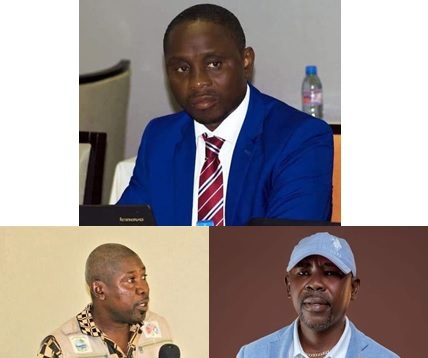
Liberia’s premier human rights institution is confronting one of the gravest crises in its two-decade history as senior officials openly accuse one another of corruption, abuse of power and political interference. Beyond the personal allegations, the dispute raises broader questions about institutional independence, governance and public confidence in an agency established to protect the rights of all Liberians. With dismissals, suspensions and competing public statements dominating national attention, the controversy has evolved from an internal administrative disagreement into a test of accountability and credibility. Until independent investigations determine the facts, the conflict threatens to weaken not only the Independent National Commission on Human Rights but also Liberia’s broader commitment to democratic oversight and human rights protection. The analyst’s Matthew Turry reports.
The Independent National Commission on Human Rights (INCHR), Liberia’s statutory human rights watchdog, is facing one of the most serious institutional crises since its establishment in 2005, with senior officials exchanging allegations of corruption, abuse of authority, political interference and misconduct amid a widening leadership dispute.
Within a matter of weeks, the Commission has witnessed the suspension of its chairperson, the dismissal of its Executive Director and Director for Planning, and a series of competing public statements in which senior officials accuse one another of financial impropriety, intimidation and actions allegedly undermining the institution’s independence.
The controversy has intensified concerns among governance observers because the Commission was created specifically to function as an independent national institution responsible for promoting and protecting human rights free from political influence.
Dismissals Spark Dispute
On Wednesday, August 5, 2026, the Commission’s Board of Commissioners, acting through Acting Chairperson Cllr. Mohammed E. Fahnbulleh, formally dismissed Executive Director Atty. Urias Teh-Pour and Director for Planning, Internal Monitoring and Evaluation Bah-wah Brownell.
According to the Board, the dismissals were effected pursuant to the Commission’s Staff Handbook, specifically Provision 37 governing disciplinary and complaint resolution procedures, together with Article 16 of the INCHR Act.
The two officials had previously been suspended on July 15, 2026, following allegations involving corruption, payroll fraud and the alleged circumvention of internal financial controls relating to a US$20,175 UNICEF grant.
The suspension was intended to remain in force while the Liberia Anti-Corruption Commission (LACC) examined the underlying allegations.
However, the Board stated that the dismissals were based not primarily on the original financial allegations but on actions allegedly taken during the suspension period.
According to the Board, Teh-Pour continued representing the Commission despite his suspension, including receiving official correspondence from the Network of African National Human Rights Institutions (NANHRI).
More significantly, the Board alleged that Teh-Pour purported to nominate the also-suspended Brownell to represent the Commission in an official capacity despite both officials having been relieved of their duties.
The Board characterized those actions as “an extremely grave violation” of Part Four, Section 4.3 of Liberia’s National Code of Conduct.
Executives Reject Allegations
The dismissals prompted an immediate and strongly worded response from Teh-Pour and Brownell.
In a joint statement issued one day after the Board announced their dismissal, the two officials categorically denied any wrongdoing and accused the Commission’s leadership of fundamentally misunderstanding—or deliberately misrepresenting—the institution’s financial management procedures.
Their principal defense centered on the Commission’s financial controls.
According to the two officials, all INCHR expenditures are subject to a multi-layered verification process requiring prior approval from the Internal Audit Agency before any funds can be disbursed.
They argued that the alleged diversion of UNICEF grant funds would therefore have been impossible without circumventing those institutional safeguards.
“Corruption allegations require evidence: investigation, forensic audit, and legal foundation. In the absence of these, they are rhetorical,” the joint statement asserted.
Teh-Pour and Brownell further noted that the Commission has consistently undergone external audits conducted by Moore Stephens & Co. and the General Auditing Commission (GAC).
According to them, those audits confirmed compliance with international accounting standards and proper utilization of public funds.
“No complaint has been filed against us. No audit or investigation has implicated us. These accusations are fabrication,” they maintained.
Counter-Accusations Escalate
Rather than limiting their response to defending themselves against allegations of financial impropriety, Teh-Pour and Brownell launched a series of counter-allegations against Acting Chairperson Fahnbulleh.
Among other claims, they alleged that Fahnbulleh was never certified by the Independent Committee of Experts (ICE) as required under Article 9(3) of the 2005 INCHR Act and that his appointment resulted from political connections rather than the statutory vetting process.
The two officials further alleged that Fahnbulleh’s appointment generated internal discord and nearly jeopardized the Commission’s internationally recognized “A” status, which reflects compliance with global standards governing the independence of national human rights institutions.
They also accused him of intimidating Board members, opposing publication of the Commission’s report into the July 26, 2022 student protest involving Walter Seville, and appealing to political authorities to suppress the report despite testimony gathered during the investigation.
The joint statement additionally alleged that Fahnbulleh had previously been investigated by civil society organizations over sexual harassment allegations involving a female staff member and criticized his handling of the Prince Wreyou case, which they said sparked protests at the Commission.
The statement further accused the Acting Chairperson of using his temporary position to settle personal scores by dismissing senior staff members and creating what it described as a climate of fear within the institution.
Both factions maintain they welcome independent scrutiny.
The Board insists its actions followed established disciplinary procedures under the Commission’s governing instruments, while Teh-Pour and Brownell maintain that no audit or formal investigation has implicated them in corruption.
As of publication, neither the allegations against the dismissed officials nor the counter-allegations against Acting Chairperson Fahnbulleh had been independently adjudicated by a competent authority. Until those processes are completed, the Commission remains confronted by competing narratives that continue to test public confidence in one of Liberia’s most important accountability institutions.
Comments are closed.