

NaFAA Unveils Decentralization Plan -Splits Liberia Into Four Hubs, Eyes US$155M Investment
MONROVIA – The National Fisheries and Aquaculture Authority (NaFAA) has drawn an ambitious map for Liberia’s fisheries. It plans four regional hubs, a fish-processing factory and the country’s first industrial fishing vessels. The centerpiece is a 10-year plan carrying a US$155 million (L$26.36 billion) price tag. But Director-General J. Cyrus Saygbe Sr. admitted that the money has not been secured. Fundraising, he said, looks toward 2027. That leaves its boldest promises unfunded for now. The firmer ground is smaller. The Food and Agriculture Organization (FAO) has provided US$325,000 for a fish sales hub. The Harper office opens November 20. As THE ANALYST reports, NaFAA’s credibility will now rest on converting plans into secured financing for fishing communities.
The National Fisheries and Aquaculture Authority (NaFAA) has announced plans to decentralize its operations across Liberia, establish regional fisheries hubs, and mobilize an estimated US$155 million (L$26.36 billion) investment over the next decade to address infrastructure gaps and strengthen the country’s fisheries and aquaculture sector.
The initiative, according to NaFAA Director-General Hon. J. Cyrus Saygbe Sr., is intended to improve access to fisheries services, strengthen regulatory oversight, expand local capacity, and create an enabling environment for private-sector investment in the industry.
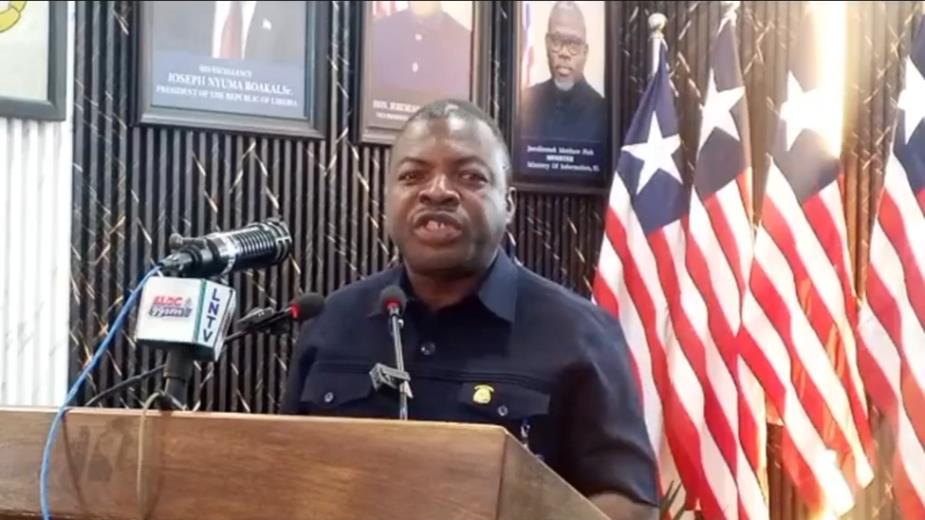
Speaking Thursday at the regular press briefing of the Ministry of Information, Cultural Affairs and Tourism (MICAT) in Monrovia, Saygbe disclosed that the authority developed a decentralization plan after identifying significant gaps in its operational presence across the country’s coastal and inland counties.
He explained that an assessment conducted in September 2025, involving fishing communities, revealed that NaFAA’s visibility and service delivery in rural areas remained inadequate, forcing fishermen and other fisheries stakeholders to travel long distances to Monrovia to access essential services.
According to him, the situation placed unnecessary financial and logistical burdens on fishing communities, particularly those in southeastern and northeastern Liberia.
“Folks have to leave from as far as Maryland, Grand Kru, and other parts of the country to come to Monrovia to be served. Imagine the cost implications of someone traveling from the southeast or northeastern part of Liberia just to access services,” Saygbe said.
Four Regional Hubs Planned
He noted that the decentralization framework, approved by NaFAA’s Board of Directors in 2025, is designed to address these challenges through the strategic deployment of qualified personnel and the establishment of regional operational centers.
Under the plan, Liberia has been divided into four regional hubs: the Harper Hub, expected to cover Maryland, Grand Kru, and River Gee counties; the River Cess Hub, which will serve Grand Gedeh, River Cess, Grand Kru, and other surrounding areas; the Grand Bassa Hub, covering Grand Bassa, Margibi, and Bomi counties; and the Ganta Hub, which will serve Bong, Lofa, and Nimba counties.
The first regional office is scheduled to be officially opened in Harper, Maryland County, on November 20, 2026, with funding support from the World Bank. The facility will initially host 15 NaFAA employees deployed from Monrovia to provide fisheries-related services to local communities.
Saygbe said the establishment of the regional offices would be implemented in phases, with the first hub commencing operations in 2026, followed by additional hubs in 2027, 2028, and 2029.
He emphasized that the authority intends to deploy experienced personnel rather than immediately embark on large-scale recruitment, explaining that the approach would help manage the institution’s wage bill while ensuring effective service delivery.
Each regional hub is expected to accommodate small-scale fisheries services, fisheries inspectors, monitoring operations, administrative personnel, and scientific support. The authority also plans to collaborate with community colleges to strengthen fisheries education and technical capacity in the regions.
Ten-Year Plan, US$155 Million
Beyond decentralization, the NaFAA Director-General disclosed that the authority has presented a 10-year strategic plan to President Joseph Nyuma Boakai, outlining six major pillars intended to reposition Liberia’s fisheries sector for sustainable growth.
The strategic framework covers fisheries governance, research and statistics, aquaculture and inland fisheries, among other priority areas, while seeking to strengthen the country’s ability to manage its marine resources and increase domestic fish production.
A major component of the strategy is an estimated US$155 million investment plan intended to bridge infrastructure deficiencies, stimulate private-sector participation, and strengthen the overall productive capacity of the industry.
However, responding to a question from THE ANALYST regarding the financing status of the proposed investment, Saygbe clarified that the amount has not yet been secured.
Asked how much of the US$155 million had already been mobilized, how much remained outstanding, and what concrete financing commitments Liberians could expect from government and international partners, the NaFAA chief explained that the authority had only recently submitted the strategic document to the President and was now putting the necessary financing mechanisms in place.
“We drafted the document and presented it to the President last week. We did not start raising the money right away. We are putting the mechanisms in place now, looking towards 2027 to see what we can begin raising,” he stated.
He added that NaFAA had already initiated discussions with development partners and potential private-sector companies interested in investing in the fisheries industry.
According to him, the authority is also exploring ways to diversify its revenue streams to help finance some of the sector’s critical development priorities.
Although the Director-General did not disclose any confirmed financing commitments or indicate how much of the US$155 million had been secured, he expressed optimism that the ongoing engagements would help establish the financial foundation necessary to implement the long-term strategy.
FAO Funds First Fish Hub
Meanwhile, Saygbe announced that NaFAA has secured US$325,000 (L$55.28 million) from the Food and Agriculture Organization (FAO) to construct Liberia’s first fish sales hub, a facility expected to improve fish preservation, storage, and market accessibility.
The proposed facility will be constructed on land secured behind the Ministerial Complex, between Tacos Island and the government complex, a location the authority considers accessible to consumers and fish traders.
He explained that the facility would have a storage capacity of 20 tons and provide fishing communities, particularly women involved in fish trading, with improved opportunities to preserve their products and reduce post-harvest losses.
The proposed fish sales hub will also incorporate a solar-powered system to ensure reliable electricity for its operations. NaFAA intends to hand over the management of the facility to a private operator, while maintaining regulatory oversight to ensure quality standards.
Saygbe further disclosed that the authority is preparing several major infrastructure projects, including the construction of Liberia’s first fish-processing factory in Grand Bassa County, a large-scale fish farm in Sinoe County, and a competent laboratory in Montserrado County to strengthen the country’s capacity to meet export requirements.
He also revealed that NaFAA is working toward securing Liberia’s first industrial fishing vessels, a move he said would help the country gradually reduce its dependence on foreign fishing interests and increase national ownership of its fisheries resources.
On aquaculture, the Director-General said the authority is validating an aquaculture regulation to provide the necessary legal and regulatory framework for the growing sector. He noted that increasing interest from investors makes it important to protect Liberian businesses and ensure that emerging opportunities benefit the country’s economy.
Maryland Hosts World Fisheries Day
In another development, Saygbe announced plans for the observance of World Fisheries Day, scheduled for November 21, with Maryland County selected to host this year’s national celebration.
The activities will run from November 18 to 21 and include beach-cleaning exercises, a career day in collaboration with Toma University, health screenings for fish processors, and the official opening of the Harper regional office.
He explained that the health-screening initiative would particularly target women involved in traditional fish smoking, many of whom are exposed to smoke and wood-burning processes that could affect their eyesight.
The celebration will also feature sporting activities, a canoe race, and a bonfire gathering with fishing communities to recognize their contributions to national food security.
Saygbe described fishermen and women as the unsung heroes of the fisheries sector, noting that their daily efforts, often under difficult weather and working conditions, ensure the continuous supply of fish to Liberian markets.
The United Nations Development Programme (UNDP) Country Representative is expected to deliver the keynote address at this year’s celebration, while the World Bank Country Manager is expected to participate in the opening of the Harper regional office. He said the annual observance is intended not only to recognize fishing communities but also to strengthen their relationship with government and development partners.
The NaFAA Director-General maintained that the combination of decentralization, infrastructure development, improved scientific research, and private-sector participation would be critical to transforming Liberia’s fisheries industry.
However, with the proposed US$155 million investment yet to enter the actual resource-mobilization stage, the success of the 10-year strategic plan will ultimately depend on NaFAA’s ability to translate its development priorities into concrete financing commitments and measurable results for fishing communities across the country.
Comments are closed.