

Gongloe Renews Support to Anti-Corruption Court -Civil society reflects on corruption fight in Liberia
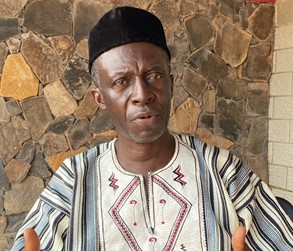
MONROVIA – Cllr. Tiawan S. Gongloe brought his corruption argument to the Albert Porte Street Lecture Series. His address endorsed an Anti-Corruption Court while warning that no court alone can save Liberia. The distinction truly matters today. Many Liberians increasingly view a special court as the silver bullet against graft. Gongloe insists the court must sit within professional investigations, impartial prosecutions, independent judges, and due process. His definition of corruption as disregard for the Rule of Law widens the indictment beyond theft. His Botswana comparison and stagnant governance scores challenge both major parties equally. The lecture honored Albert Porte’s tradition of fearless civic criticism. THE ANALYST reports.
Cllr. Tiawan S. Gongloe has endorsed the establishment of an independent and competent Anti-Corruption Court in Liberia, while cautioning that a new court alone will not solve the country’s corruption problem unless it operates within a legal system of professional investigations, impartial prosecutions, independent judges, and due process of law.
Gongloe recently, made the assertion when he addressed a special edition of the Albert Porte Street Lecture Series on the important national issues of corruption, the Rule of Law, and the establishment of an Anti-Corruption Court in Liberia.
Describing the gathering as an opportunity for honest national reflection, Gongloe stated that Liberians must ask where the country stands, why it continues to struggle despite its abundant natural wealth, and what must change to build a prosperous, democratic, and just society. Corruption, he noted, remains one of Liberia’s greatest obstacles to development, depriving the people of quality education, healthcare, roads, electricity, clean water, employment opportunities, and investor confidence.
Corruption Broader Than Theft
Gongloe maintained that corruption is much broader than the theft of public money, defining it as the abuse of public power through disregard for the Rule of Law. Corruption occurs, he explained, whenever public funds are spent without legislative appropriation, whenever contracts are awarded outside the Public Procurement and Concessions Act, whenever concession agreements fail to secure the greatest benefit for the Liberian people, and whenever laws are selectively enforced or public information is concealed.
“Corruption begins where the Rule of Law ends, and the Rule of Law begins where no one is above the law,” he declared. For this reason, Gongloe argued, no nation can successfully fight corruption without strengthening respect for its Constitution and laws, because strong institutions, not slogans, are the true foundation of integrity.
The fight against corruption, he added, also requires impartial accountability. Public confidence grows, he asserted, when allegations are investigated fairly regardless of who is involved, and the Executive, Legislature, Judiciary, autonomous agencies, and state-owned enterprises must all be held to the same standards of transparency and accountability.
Justice, Gongloe emphasized, must depend upon evidence and the law, not political influence, wealth, or official position.
The Botswana Benchmark
To illustrate what corruption has cost Liberia, Gongloe compared the country with Botswana, recalling that Botswana attained independence in 1966, more than a century after Liberia declared its independence, and was then one of the poorest countries in the world, landlocked, with much of its territory covered by the Kalahari Desert and limited rainfall.
Liberia’s circumstances, he observed, are entirely different, with fertile land, abundant rainfall, rich forests, rivers, fisheries, iron ore, gold, diamonds, rubber, timber, and enormous agricultural potential. Yet Botswana, he pointed out, has become one of Africa’s best-governed and least corrupt nations, while Liberia continues to struggle with poverty.
The lesson, he noted, is unmistakable: natural resources alone do not create prosperity, which is created instead by honest leadership, prudent management of public resources, strong institutions, and unwavering respect for the Rule of Law.
Botswana, Gongloe recalled, invested its natural resource wealth in education, healthcare, infrastructure, and economic development, and Liberia must do the same. Government, he stressed, holds the nation’s natural resources in trust for the people, and every concession agreement, procurement contract, and public expenditure should be measured by one simple question: does it maximize the long-term benefit of the Liberian people?
Gongloe further described corruption as a human rights issue that destroys opportunity, weakens institutions, discourages investment, fuels unemployment, and drives many young Liberians to seek opportunities abroad. Fighting corruption, he contended, is therefore not merely about recovering stolen money but about restoring justice, opportunity, hope, and confidence in public institutions.
Stagnant Governance Scores
Expressing his firm belief that Liberia can become the Botswana of West Africa, Gongloe pointed to the Millennium Challenge Corporation (MCC) Rule of Law score as an internationally recognized measure of governance. During the Coalition for Democratic Change (CDC) administration, he disclosed, Liberia’s score stood at approximately 40 percent, and today, under the second Unity Party administration, it remains at about the same level. Regardless of political affiliation, he warned, the absence of measurable improvement should concern every Liberian because corruption flourishes where the Rule of Law remains weak.
Court Alone Not Enough
Turning to the central theme of the lecture, Gongloe called for the strengthening of institutions that enforce accountability, stating that an independent and competent Anti-Corruption Court can play an important role by ensuring that corruption cases are heard expeditiously, fairly, and without political interference. However, he cautioned, a new court alone will not solve the problem, as the court must operate within a legal system where investigations are professional, prosecutions are impartial, judges are independent, and every accused person receives due process of law.
Transparency, Gongloe insisted, must become the rule and not the exception, because public officials are paid from public funds and the people have a legitimate right to know how public resources are collected, allocated, and spent. Transparency strengthens public confidence, he observed, while secrecy breeds suspicion and weakens democratic governance.
Liberia, he declared, needs leaders who understand that government is a place to serve, not to steal, and governance that is for the people, not the pockets of those in government. The country, he added, needs prudence in public spending, integrity in public service, transparency in public finance, and accountability in every branch of government. History, Gongloe reflected, already knows that Liberia is richly blessed with natural resources; what history will ask is whether this generation possessed the courage, discipline, integrity, and patriotism to transform those blessings into prosperity for all Liberians.
Audience Led in Pledge
Closing the lecture, Gongloe respectfully invited those able to stand and repeat a pledge after him, committing citizens to support leaders of integrity, to reject corruption in every form, to obey and defend the Constitution and the Rule of Law, to demand transparency in the use of public resources, and to insist that every concession agreement, every procurement contract, and every public expenditure serve the interests of the Liberian people. The pledge further committed them to hold every public official accountable regardless of political party or position, to affirm that government is a place to serve and not to steal, that governance is for the people and not the pockets of those in government, and to help make Liberia the Botswana of West Africa.
“A better Liberia is possible if we remain faithful to these commitments,” Gongloe concluded, invoking God’s blessings upon his audience and the Republic of Liberia. The special edition of the Albert Porte Street Lecture Series was convened as a civil society reflection on corruption and the establishment of an Anti-Corruption Court in Liberia.
Comments are closed.