
Boakai’s NIMBO Rally Sparks Public Outrage -Critics question Lawmakers’ priorities, accountability
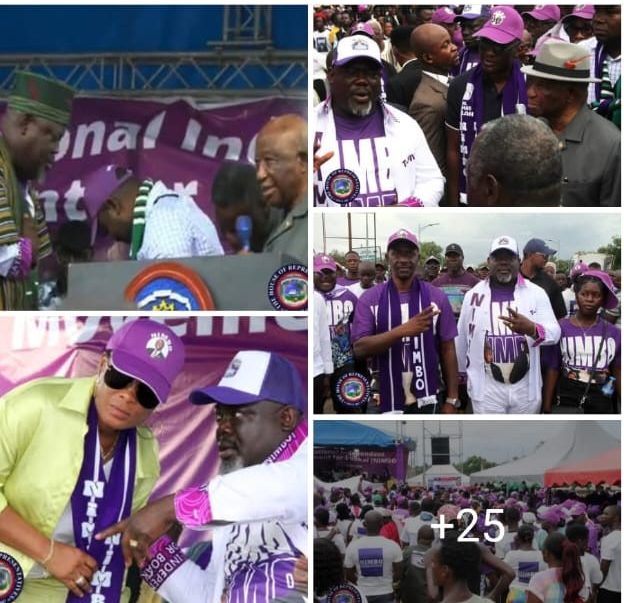
MONROVIA – Liberia’s already fragile political climate is facing renewed scrutiny after several lawmakers openly participated in the launch of the National Independent Movement for Boakai Organization, popularly known as NIMBO, a political structure established to rally support for President Joseph Nyuma Boakai’s anticipated re-election bid. The controversy has emerged at a particularly sensitive period when the country is simultaneously confronting growing economic pressure, lingering border tensions with Guinea, fears surrounding possible regional Ebola outbreaks, and mounting youth unemployment. As THE ANALYST reports, critics argue the optics of elected officials appearing at what many describe as an early campaign mobilization project signals misplaced priorities and threatens public confidence in democratic governance, accountability, and institutional neutrality nationwide.
The participation of several Liberian lawmakers in the official launch of the National Independent Movement for Boakai Organization (NIMBO) has ignited a wave of criticism across political, governance, and civil society circles, with critics warning that the growing focus on early political mobilization risks distracting the country from urgent national concerns requiring immediate governmental attention.
What may ordinarily have been dismissed as a routine political gathering has instead evolved into a wider national debate over democratic ethics, institutional priorities, constitutional restraint, and the increasingly blurred line between governance and partisan political ambition.
Early Political Mobilization Raises Constitutional Questions
At the center of the controversy is the appearance of sitting lawmakers at an event widely viewed by critics as an unofficial launchpad for President Joseph Nyuma Boakai’s expected 2029 re-election campaign, despite the fact that Liberia remains years away from the next presidential elections and the National Elections Commission has not declared the commencement of any campaign season.
Governance advocates argue that the symbolism of lawmakers enthusiastically participating in such an event carries implications far beyond ordinary political association. According to them, elected legislators are constitutionally mandated to represent the people, oversee the Executive Branch, scrutinize national expenditures, and formulate policies capable of addressing Liberia’s worsening socioeconomic realities. Their visible involvement in what critics describe as premature political campaigning has therefore triggered questions about whether governance is gradually being subordinated to political calculations.
Several political analysts interviewed on the matter contend that while lawmakers possess constitutional rights to political association, public officials are simultaneously expected to exercise restraint and maintain sensitivity to the broader democratic environment. They argue that when influential officeholders begin openly participating in political mobilization years before elections are due, it creates the perception of an uneven political landscape in which incumbency advantages may quietly begin shaping the electoral field long before formal campaign regulations take effect.
One governance observer noted that the issue extends beyond support for President Boakai himself. According to the analyst, the deeper concern revolves around whether public officials are respecting the spirit of democratic timing and institutional neutrality expected within constitutional governance systems.
The analyst argued that democracy functions best when political competition occurs within clearly defined legal periods supervised by competent electoral institutions rather than through informal early campaign structures that may confer disproportionate visibility and influence on those already holding state power.
Border Tensions Add To Public Frustration
The backlash has become even more pronounced because of the difficult national conditions currently confronting Liberia.
Foremost among these concerns is the unresolved Liberia-Guinea border dispute, which continues generating anxiety among residents of affected communities while raising broader questions regarding territorial security, diplomatic engagement, and the state’s capacity to defend national interests through peaceful negotiation and international legal mechanisms.
Critics argue that lawmakers should presently be intensifying legislative oversight regarding developments surrounding the border situation, convening security hearings, engaging affected populations, and demanding regular updates from relevant ministries and national security institutions.
For many citizens, therefore, the optics of legislators attending celebratory political gatherings while sensitive territorial concerns remain unresolved appears disconnected from the gravity of prevailing national realities.
Some political commentators further warn that territorial disputes, if poorly managed, possess the potential to inflame nationalist tensions and undermine regional diplomatic relations. They argue that moments such as these demand visible seriousness from elected leaders rather than symbolic participation in future-oriented political projects.
Ebola Fears Rekindle Painful National Memories
Public health concerns have also intensified the criticism.
Liberia’s painful memory of the 2014–2016 Ebola epidemic remains deeply embedded within the national consciousness, and regional health developments continue to generate unease among both health authorities and ordinary citizens. Reports of Ebola-related concerns in neighboring countries have prompted renewed calls for preparedness, surveillance reinforcement, and proactive emergency planning.
Health experts have repeatedly emphasized that Liberia cannot afford complacency, particularly given the devastating human and economic consequences the country suffered during the previous epidemic. Critics therefore argue that lawmakers should be concentrating on strengthening budgetary support for county health systems, improving disease surveillance infrastructure, ensuring the availability of emergency response funding, and supporting awareness campaigns rather than participating in politically charged mobilization activities.
Several public health advocates say the country’s healthcare infrastructure remains vulnerable despite lessons learned from the Ebola crisis. According to them, preparedness requires sustained political attention, resource allocation, and aggressive coordination among institutions long before emergencies emerge.
For critics, this is precisely why lawmakers are expected to prioritize national readiness rather than electoral symbolism.
Youth Unemployment Continues To Haunt Nation
Equally significant is the growing frustration among Liberia’s youth population.
Youth unemployment remains one of the country’s most persistent and politically explosive challenges. Thousands of university graduates and vocational trainees continue struggling to secure sustainable employment opportunities in an economy widely perceived as stagnant and incapable of absorbing the expanding labor force.
Civil society organizations argue that the frustrations facing young Liberians are increasingly becoming national stability concerns rather than merely economic problems. According to several advocates, unemployed youth remain vulnerable to exploitation, political manipulation, criminal activity, and growing disillusionment with democratic governance itself.
Against this backdrop, critics contend that the emergence of highly visible pro-election political structures risks sending the wrong message to struggling young people who expect lawmakers to prioritize economic reforms, private-sector stimulation, educational investment, and job creation initiatives.
One civil society advocate bluntly remarked that Liberia’s youth need jobs and opportunities rather than campaign-style political pageantry. According to the advocate, lawmakers should currently be consumed with debates surrounding investment incentives, industrial policy, infrastructure expansion, and entrepreneurship support programs rather than future election strategies.
The concerns are being amplified by rising frustration among graduates who increasingly believe the country’s political leadership appears more energized during political mobilization than during discussions surrounding employment generation and economic transformation.
Economic Hardship Deepens National Anxiety
The country’s broader economic conditions have only compounded public frustration.
Ordinary Liberians continue battling rising living costs, declining purchasing power, weak business conditions, and widespread concerns over household economic survival. Small business operators routinely complain about shrinking consumer spending, inadequate infrastructure, unstable operating conditions, and limited access to financing.
For many critics, therefore, the launch of a political organization centered around future electoral ambitions appears profoundly detached from the day-to-day struggles facing ordinary citizens attempting to survive worsening economic hardship.
Market women, transport operators, petty traders, and struggling households across the country continue voicing concerns about inflationary pressure and deteriorating living conditions. Critics therefore argue that the political class risks appearing disconnected from the suffering of ordinary citizens when public attention becomes dominated by future election calculations rather than immediate governance concerns.
Some governance campaigners warn that prolonged economic hardship combined with perceptions of political insensitivity can gradually weaken public trust in democratic institutions themselves.
Debate Emerges Over Legislative Independence
Beyond questions of public perception, constitutional scholars are increasingly raising concerns regarding the broader institutional implications of early political mobilization involving elected officials.
While Liberia’s Constitution protects freedoms of association and political participation, some legal analysts argue that public officials carry heightened ethical responsibilities because of the authority and visibility attached to their offices. They caution that even legally permissible political activities can become problematic when they create public perceptions that state influence is being gradually integrated into partisan political projects.
Some scholars contend that democracy depends not only upon compliance with the technical letter of the law but also upon adherence to democratic norms designed to preserve public confidence in institutional fairness.
According to them, electoral systems function most credibly when campaigns unfold within officially sanctioned timelines overseen by independent electoral bodies rather than through prolonged informal mobilization efforts that risk advantaging incumbents long before opposition parties can reasonably compete on equal footing.
The controversy has also reignited debate concerning the independence of Liberia’s Legislature itself.
Under Liberia’s constitutional framework, the Legislature serves as a co-equal branch of government tasked with providing oversight over executive authority. Critics therefore argue that visible participation by lawmakers in explicitly pro-presidential political structures risks creating perceptions that legislative independence is being compromised by excessive political alignment with the Executive Branch.
Some governance experts warn that when legislators become too closely associated with executive political projects, public trust in their willingness to independently scrutinize government policies, expenditures, contracts, and administrative actions may gradually erode.
This concern is particularly sensitive in Liberia’s post-war democratic environment, where public confidence in institutional checks and balances remains essential to maintaining political stability and democratic legitimacy.
Supporters Defend Political Participation Rights
Meanwhile, defenders of the lawmakers’ participation insist that elected officials retain constitutional rights to political association and cannot reasonably be expected to suspend political identities merely because they occupy public office.
Some supporters further argue that the NIMBO initiative represents an independent political movement rather than an officially declared presidential campaign and that public officials cannot be prohibited from attending political gatherings or expressing support for leaders they believe are performing effectively.
Others maintain that critics are exaggerating the significance of the gathering for political purposes while ignoring the democratic rights of citizens and officials alike to organize politically.
Yet critics counter that the controversy is not simply about legality but about political judgment, democratic sensitivity, and national priorities.
According to them, leadership requires understanding the political implications of timing, symbolism, and institutional conduct, especially during periods of national difficulty.
National Priorities Versus Political Ambitions
For many ordinary Liberians, the sight of lawmakers energetically participating in future-oriented political mobilization while citizens battle unemployment, economic hardship, public health fears, and unresolved territorial disputes appears increasingly troubling.
As debate surrounding the NIMBO launch continues to intensify, governance advocates are calling upon lawmakers to redirect their energies toward pressing national concerns requiring immediate legislative attention. These include border security oversight, economic recovery initiatives, youth employment strategies, healthcare preparedness, infrastructure development, anti-corruption reforms, and policies aimed at improving the daily lives of ordinary citizens.
Ultimately, the controversy has evolved into something larger than a single political event.
For many critics, the deeper issue concerns whether Liberia’s political class remains sufficiently focused on governance responsibilities or whether political calculations surrounding future elections are gradually overtaking the immediate demands of national service.
In the eyes of opponents, the participation of lawmakers in the NIMBO mobilization has become symbolic of a broader fear that governance priorities risk being overshadowed by premature political ambition at a moment when Liberia can least afford distraction.
Comments are closed.