
Kpelle Unity Beyond Tribal Politics -EPA Boss Calls Cultural Renaissance
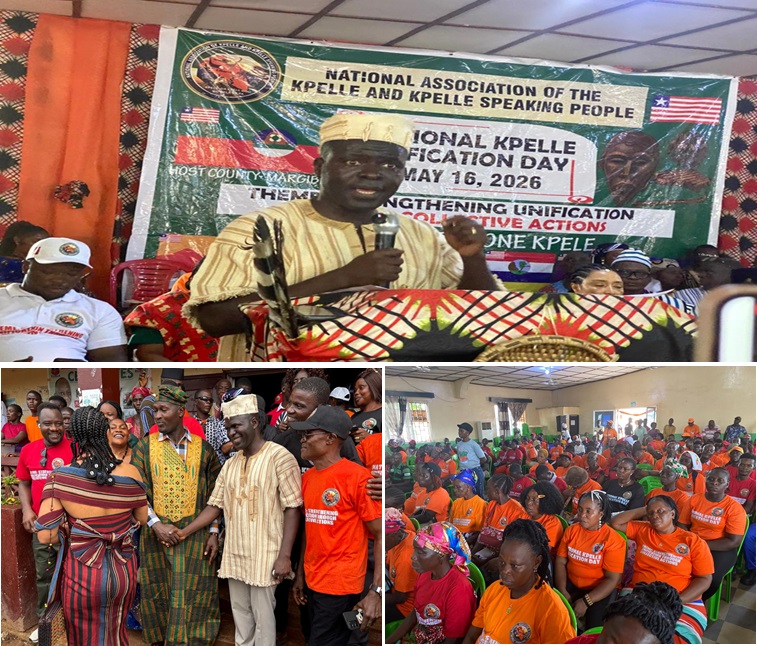
MONROVIA – At a time when Liberia continues grappling with political fragmentation, cultural erosion, youth disillusionment, and weakening communal bonds, a major address delivered during the National Kpelle Unification Day celebration in Kakata, Margibi County has injected unusual intellectual depth into the national conversation on identity, governance, and development. Rather than reducing ethnic unity to symbolism, ceremony, or cultural nostalgia, Environmental Protection Agency Executive Director Dr. Emmanuel K. Urey Yarkpawolo framed Kpelle unification as a national responsibility tied directly to peacebuilding, women’s empowerment, environmental protection, education, accountable leadership, and Liberia’s democratic future. His message sought to reposition cultural identity not as tribal exclusion, but as a disciplined force for national renewal and cohesion. THE ANALYST reports.
The Executive Director of Liberia’s Environmental Protection Agency, Dr. Emmanuel K. Urey Yarkpawolo, has delivered one of the most intellectually expansive and politically nuanced cultural addresses heard in recent years, using the occasion of National Kpelle Unification Day not merely to celebrate ethnic identity, but to challenge Liberians to rethink the relationship between culture, governance, development, reconciliation, and national purpose.
Speaking Saturday in Kakata, Margibi County under the theme, “Kpelle Unity for Cultural Renewal, Peace, Development, and National Progress,” Dr. Yarkpawolo transformed what could have remained an ordinary ceremonial keynote into a sweeping philosophical and political reflection on the future of both the Kpelle people and Liberia itself.
From the outset, the EPA Executive Director made clear that his message would go beyond customary cultural rhetoric. Addressing traditional leaders, government officials, women groups, youth representatives, religious figures, and members of the National Association of Kpelle and Kpelle-speaking People, he argued that unity must never become a tribal instrument aimed against other groups, but instead should serve as a force for dignity, peace, empowerment, and national development.
“We gather as Kpelle people and as Liberians,” he declared. “Kpelle unity must never be unity against any group. It must be unity for cultural dignity, peace, development, education, women and youth empowerment, and the progress of Liberia.”
That framing immediately distinguished the address from the type of ethnically charged political messaging that has periodically complicated Liberia’s fragile social landscape.
Instead of encouraging ethnic exclusivity, Yarkpawolo presented cultural identity as a platform for civic responsibility and national service. His central thesis was clear and deliberate: a united Kpelle people, properly organized and morally grounded, could become a stabilizing and developmental force within Liberia rather than a source of fragmentation.
The significance of that message was amplified by the political and social context in which it was delivered.
Liberia continues to wrestle with widening political distrust, regional polarization, economic frustration, weakening traditional value systems, and recurring anxieties surrounding identity politics. In such an environment, cultural gatherings often carry implications extending far beyond celebration. They become arenas where competing visions of nationhood, belonging, and political influence quietly intersect.
Yarkpawolo appeared acutely aware of those sensitivities.
At several points during his address, he carefully emphasized that Kpelle identity must strengthen rather than weaken Liberia’s broader national framework. He argued that because the Kpelle people constitute Liberia’s largest ethnic group, their internal cohesion carries national implications.
“We are the largest ethnic group in Liberia, representing over 20 percent of the population,” he noted, before adding that such demographic reality should not inspire domination, but responsibility.
“To be the largest is a burden of responsibility,” he stated. “The largest must also be peaceful, organized, generous, disciplined, and committed to the common good.”
Observers attending the event said one of the most striking dimensions of the speech was its insistence on connecting cultural identity to governance standards and civic ethics.
Rather than romanticizing tradition in abstract terms, the EPA boss argued that indigenous Kpelle systems historically embodied forms of authority, diplomacy, mediation, accountability, and social responsibility that modern Liberia risks neglecting.
He reminded the audience that long before the rise of formal modern political institutions, Kpelle communities organized disputes, protected land, guided youth, and sustained communal welfare through systems grounded in legitimacy, wisdom, and public trust.
In perhaps one of the speech’s deeper political undertones, Yarkpawolo appeared to contrast those traditional accountability structures with aspects of Liberia’s contemporary governance failures.
Without directly criticizing the state, he repeatedly emphasized values such as discipline, humility, reconciliation, truth-telling, service, and community-centered leadership.
His remarks suggested that Liberia’s modernization process may have weakened certain indigenous ethical foundations without successfully replacing them with sufficiently accountable modern institutions.
The address also ventured extensively into questions of language preservation and cultural survival.
Warning that language loss constitutes cultural erosion, Yarkpawolo lamented the growing number of young Kpelle children unable to speak their ancestral language.
“When a people lose their language, they lose a library of memory,” he warned.
That observation resonated strongly with educators and cultural advocates attending the ceremony, many of whom have long expressed concern about the increasing displacement of indigenous languages by English in urban Liberia.
The EPA Executive Director argued that language carries far more than communication. According to him, it preserves wisdom, spirituality, history, identity, oral tradition, and generational continuity.
He further called on parents, schools, churches, radio stations, mosques, and community organizations to actively preserve and promote the Kpelle language.
Interestingly, while emphasizing cultural preservation, Yarkpawolo also embraced technological modernization. He referenced ongoing English-Kpelle machine translation initiatives as evidence that indigenous African languages can participate in the digital future if properly invested in.
That intersection between heritage and innovation became a recurring theme throughout the address.
In another major segment of the speech, Yarkpawolo turned attention toward women’s leadership and youth development, arguing that no meaningful unification process can succeed while marginalizing either demographic.
His remarks on women drew heavily from historical references to influential female leaders within Kpelle history, particularly Chief Suah Koko, whom he cited as evidence that women historically exercised real political authority within indigenous governance systems.
“No serious discussion of Kpelle unity can ignore women,” he declared.
He described women as custodians of language, family stability, agriculture, morality, and social organization, warning that any unification effort excluding women would amount to “organizing half of the house.”
The speech also devoted substantial attention to youth responsibility, discipline, and education.
Rejecting superficial ethnic pride, Yarkpawolo challenged young people to connect identity with moral conduct, hard work, honesty, education, and national service.
“Identity without discipline is empty,” he cautioned. “Pride without education is dangerous. Energy without direction can destroy.”
Those comments drew strong applause from sections of the audience, particularly educators and elders concerned about increasing drug abuse, criminality, unemployment, and social instability affecting many Liberian youths.
Importantly, the EPA Executive Director did not limit his remarks to moral instruction alone. He also proposed practical institutional interventions.
Among the most notable proposals was a call for the establishment of a Kpelle Education and Scholarship Initiative aimed at supporting rural students, girls’ education, vocational training, medicine, environmental science, agriculture, entrepreneurship, and public administration.
Observers described that portion of the speech as one of its strongest developmental dimensions because it attempted to move cultural unity beyond ceremonial symbolism into measurable socio-economic investment.
Throughout the address, Yarkpawolo repeatedly warned against reducing cultural gatherings to empty celebration.
“Our celebration is beautiful,” he acknowledged. “The speeches, dances, and cultural displays are flowers. But after today, the Kpelle people must produce fruit.”
That metaphor became one of the defining messages of the event.
He argued that genuine unification must eventually produce tangible outcomes including leadership development, educational opportunity, environmental stewardship, women’s empowerment, youth mentorship, and economic progress.
As head of Liberia’s Environmental Protection Agency, Yarkpawolo also used the occasion to raise alarm over environmental degradation, illegal mining, river pollution, forest destruction, and unsustainable land practices threatening rural communities.
Speaking from personal experience as someone born in Gomue Village in Bong County who began formal schooling at age fourteen before eventually rising into national leadership, he argued passionately that environmental protection must become part of cultural responsibility.
“A people cannot claim love for their ancestors while destroying the land those ancestors protected for them,” he warned.
The environmental message added another significant layer to the address by connecting identity, development, and sustainability within a single philosophical framework.
Toward the conclusion of the speech, Yarkpawolo proposed what he described as a “Kpelle Unification Compact” built around six commitments: one people, one language, one responsibility, one future, one land, and one Liberia.
Each principle sought to merge ethnic identity with broader civic obligations.
The proposal called for rejection of political bitterness and county-based divisions, preservation of language and culture, investment in youth and women, environmental protection, and a commitment to ensuring that Kpelle unity strengthens rather than undermines Liberia’s national cohesion.
Political analysts who later reviewed the speech noted that it carried unusual depth for a cultural keynote address.
Some described it as part cultural philosophy, part governance lecture, part reconciliation appeal, and part developmental manifesto.
Others suggested the speech reflected an emerging intellectual tendency among sections of Liberia’s professional and technocratic class to reconnect national development debates with indigenous value systems and local cultural frameworks.
Whether the address ultimately translates into organized institutional follow-up remains uncertain.
But what is already clear is that the speech succeeded in elevating National Kpelle Unification Day beyond entertainment and symbolism into a serious national conversation about identity, governance, memory, responsibility, and the future of Liberia itself.
Comments are closed.