
Bility Demands Legislature Audit-Suspects Alleged Legislative Looting Taking Place
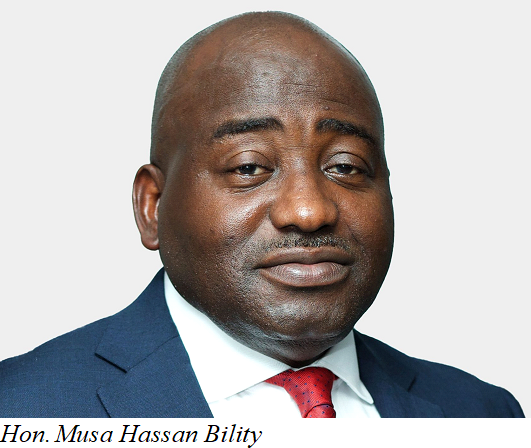
MONROVIA – For years, Liberia’s anti-corruption fight has moved in familiar circles, targeting selected officials while broader questions surrounding systemic abuse inside powerful state institutions often remain politically untouched. That long-simmering contradiction resurfaced sharply Tuesday after Nimba County District #7 Representative Musa Hassan Bility publicly challenged President Joseph Nyuma Boakai to authorize a full audit of the National Legislature covering the period from 2018 through 2025. The demand immediately injected fresh political tension into an already polarized governance environment, particularly because the years identified by Bility coincide with some of Liberia’s most controversial public spending debates, legislative benefit disputes, and recurring allegations of financial opacity involving senior lawmakers and political power brokers. THE ANALYST reports.
A major political storm appeared to gather momentum Tuesday after Representative Musa Hassan Bility openly challenged President Joseph Nyuma Boakai to order what could become one of the most politically explosive financial investigations in Liberia’s postwar democratic history — a full audit of the National Legislature spanning seven years.
The outspoken Citizens Movement for Change political leader accused powerful actors within the Liberian political establishment of shielding individuals who allegedly participated in what he described as extensive abuse of public resources while simultaneously occupying influential positions within the current administration.
Bility’s statement, published publicly through his official communication channels, did not merely call for another anti-corruption exercise. Instead, it directly questioned the credibility, consistency, and moral direction of the government’s broader anti-graft campaign, arguing that selective prosecutions and politically convenient investigations risk undermining public confidence in the fight against corruption itself.
“Stop shielding those who milked this country and are today wielding power within your Government,” Bility declared in a strongly worded appeal directed at President Boakai.
The lawmaker specifically urged the President to invoke the authority provided under the General Auditing Commission framework to initiate a transparent and independent review of legislative financial activities from 2018 to 2025, a period he described as representing “one of the darkest chapters of abuse against the Liberian people.”
Though Bility stopped short of naming specific lawmakers or officials, the implications of his remarks immediately reverberated across Liberia’s political establishment because the period under scrutiny overlaps with several contentious episodes involving budget controversies, legislative expenditure disputes, public procurement concerns, and recurring accusations surrounding misuse of state resources.
The statement also arrives at a politically delicate time for the Boakai administration, which entered office promising renewed accountability, integrity in governance, and institutional reform under what officials frequently describe as the “Rescue Mission” agenda.
Political observers say Bility’s intervention now threatens to widen the national corruption debate beyond traditional executive branch investigations by shifting public attention toward the Legislature itself — an institution that has repeatedly faced criticism from civil society organizations, activists, and ordinary citizens over transparency concerns.
In his statement, Bility suggested that previous attempts to raise the matter internally within the Legislature had allegedly been frustrated by political resistance and procedural suppression.
“I wrote you about this last year. I have written my colleagues and raised this matter before the plenary several times, but each time, the majority used its power to suppress and kill the request,” he asserted.
That accusation may prove particularly damaging because it reinforces a long-standing public perception that accountability initiatives within Liberia’s political system often collapse when they begin approaching powerful institutional interests.
The Representative further argued that continuing anti-corruption efforts without simultaneously examining alleged abuses inside the Legislature risks creating the impression of selective justice or politically targeted investigations.
“There is no need to waste our scarce national resources on selective witch hunts disguised as anti-corruption efforts while those who presided over the real looting of this country remain protected by political convenience,” Bility wrote.
The comments are already generating intense debate across political circles in Monrovia, with some analysts interpreting the statement as a direct challenge not only to the Executive Mansion but also to entrenched bipartisan political networks that have dominated the Legislature for years.
Others, however, caution that the issue may quickly evolve into another politically weaponized confrontation unless supported by concrete evidence, institutional due process, and independent investigative mechanisms capable of withstanding political pressure.
Liberia’s Legislature has long faced criticism over opaque financial management practices. Public frustration has periodically intensified around issues such as lawmakers’ benefits, supplemental budget allocations, committee expenditures, vehicle procurements, constituency fund management, and allegations involving unexplained spending patterns.
Successive governments have often promised stronger oversight and transparency reforms, yet institutional accountability within the Legislature has historically remained politically sensitive because lawmakers themselves play decisive roles in budget approvals, confirmations, investigations, and national governance negotiations.
Bility’s demand therefore strikes at the center of Liberia’s political power structure.
What makes the intervention even more politically consequential is Bility’s positioning as both a sitting lawmaker and a leader of the Citizens Movement for Change, a political institution increasingly seeking to establish itself as a vocal anti-establishment force within Liberia’s evolving political landscape.
His statement also reflects a growing public mood of frustration among sections of the population who believe anti-corruption campaigns in Liberia frequently focus on lower-level or politically isolated actors while more influential figures escape scrutiny through political compromise and elite protection networks.
The lawmaker framed the issue not simply as an accounting exercise, but as a test of presidential courage and institutional sincerity.
“Liberians deserve honesty, consistency, and courage in governance,” he stated while urging President Boakai to authorize the audit transparently and independently.
He then delivered perhaps the most politically loaded line of the statement, telling the President that such action could help redeem both himself and his government “in the eyes of the Liberian people.”
That formulation subtly suggests that public confidence in the administration’s anti-corruption posture may already be facing erosion unless broader institutional accountability measures are pursued.
Governance analysts say any serious attempt to audit the Legislature across seven years would likely trigger enormous political resistance because of the number of current and former officials who could potentially become exposed to scrutiny.
Such an audit would also inevitably raise difficult constitutional, procedural, and political questions regarding separation of powers, institutional autonomy, audit scope, prosecutorial authority, and the extent to which the Executive Branch can compel deeper legislative financial examination without provoking institutional confrontation.
Yet others argue that avoiding such scrutiny altogether would reinforce the perception that Liberia’s anti-corruption agenda remains structurally selective.
As public reaction continued building Tuesday evening, neither the Executive Mansion nor senior legislative leadership had formally responded to Bility’s challenge.
Still, the statement has already succeeded in reopening one of Liberia’s most politically uncomfortable national conversations: whether the country’s governance system is genuinely prepared to investigate corruption wherever it exists — even when the trail leads directly into the highest corridors of political power.
Comments are closed.