
Sports Diplomacy Gains Ground-Global partnerships target youth empowerment
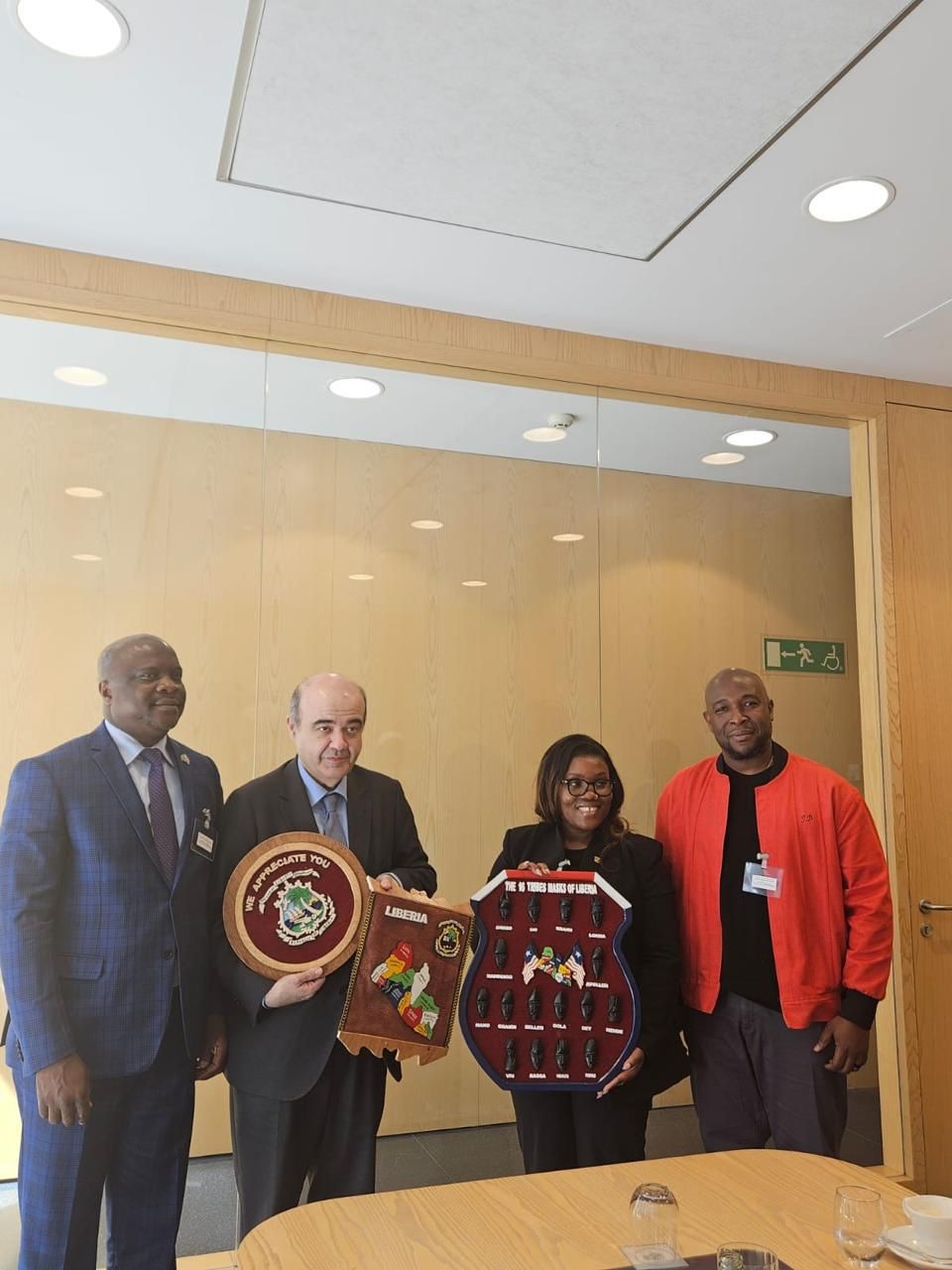
MONROVIA – As governments increasingly look beyond traditional policy tools to address youth unemployment and social challenges, sports diplomacy is emerging as a strategic pathway for engagement, offering opportunities that combine education, discipline, and global exposure. For Liberia, where a large youth population continues to seek meaningful avenues for growth, such partnerships carry both symbolic and practical significance. As THE ANALYST reports, it seems Liberia has taken a giant step in that direction through a high-level engagement with the Real Madrid Foundation in Spain, an internationally respected institution known for using sport as a platform for social development, raising expectations about potential collaborations that could expand opportunities for young Liberians.
Liberia is advancing its youth development agenda on the international stage, following a high-level engagement between senior Liberian officials and the Real Madrid Foundation, a globally recognized organization known for promoting education, inclusion, and social development through sport.
The meeting, held in Madrid on March 26, 2026, brought together Liberia’s Minister of Youth and Sports, Atty. Cornelia Wonkerleh Kruah; Liberia’s Ambassador to France, His Excellency Dr. Teeko Tozay Yorlay Sr.; Mr. Joseph Nyuma Boakai Jr.; and the Managing Director of the Real Madrid Foundation, Julio Gonzalez Ronco.
The engagement was facilitated through the Embassy of the Republic of Liberia near Paris, France, and forms part of a broader diplomatic effort to expand Liberia’s global partnerships in support of youth empowerment.
According to officials, the discussions were organized through the proactive engagement of Mr. Joseph Nyuma Boakai Jr., whose role in convening the dialogue reflects an emerging focus on connecting Liberian institutions with established international organizations capable of delivering structured opportunities for young people.
Held at the Foundation’s headquarters, the meeting explored several areas of mutual interest, including sports-based education, youth empowerment, and community development.
While discussions remain at an exploratory stage, both sides expressed strong interest in continuing engagement and working toward a more formal framework for cooperation.
For Liberia, the significance of the engagement lies in its potential to open new pathways for youth development—particularly in a country where unemployment and limited access to structured opportunities continue to affect a large segment of the population.
Minister Kruah used the occasion to reaffirm the Government’s commitment to harnessing sport as a tool for national development, emphasizing that youth-focused partnerships must go beyond symbolic engagement and translate into real opportunities.
Her remarks reflect a growing recognition within policy circles that sport, when properly structured, can serve as a platform for education, skills development, and social inclusion.
The Real Madrid Foundation, for its part, welcomed the initiative and indicated its openness to exploring collaboration with Liberia.
Internationally, the Foundation is known for implementing programs that combine football training with educational support, values-based learning, and community engagement.
Its projects have reached thousands of young people across multiple countries, particularly in underserved communities, making it one of the most prominent examples of sport-driven development.
For Liberia, aligning with such an institution offers both credibility and potential access to tested program models.
The involvement of Liberia’s diplomatic mission in Paris highlights the role embassies can play beyond traditional representation—serving as bridges that connect national priorities with global opportunities.
By facilitating the engagement, the Embassy demonstrated how diplomatic channels can be used to advance development goals, particularly in sectors like youth empowerment where international partnerships can have immediate and visible impact.
Officials say the next phase will involve continued consultations between the Ministry of Youth and Sports, the Embassy, and other stakeholders to translate the discussions into concrete programs.
This may include structured initiatives in sports education, training exchanges, youth academies, and community-based development projects.
The challenge, however, will be ensuring that such engagements move beyond initial enthusiasm.
Liberia has, in the past, entered into international partnerships that struggled at the implementation stage due to coordination challenges, funding limitations, or lack of sustained follow-through.
For this initiative to succeed, observers say it will require clear planning, defined responsibilities, and consistent engagement from all parties involved.
Still, the meeting represents an important step.
It signals an effort to reposition youth development within a broader global context, where opportunities are not confined within national borders but can be expanded through strategic collaboration.
In a country where young people continue to look for pathways into education, employment, and personal development, such initiatives carry weight.
They offer not only opportunity, but also direction.
As Liberia continues to explore new approaches to addressing youth challenges, the engagement with the Real Madrid Foundation stands as a reminder that solutions may lie not only in policy, but also in partnerships—carefully built, well-managed, and sustained over time.
For now, the conversation has begun.
What follows will determine whether it becomes a program—or remains a promise.
Comments are closed.