
Yekeson Takes Commerce Helm -Boakai taps experience for economic delivery
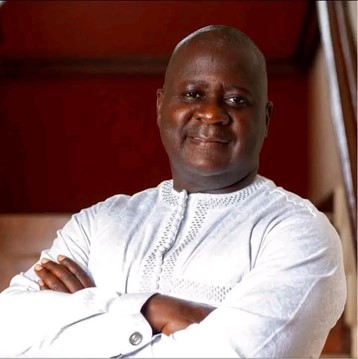
MONROVIA – President Joseph Nyuma Boakai’s choice of Steven M. Yekeson Jr. places a professional record against Liberia’s stubborn commercial constraints. Yekeson brings experience spanning investment finance, infrastructure, maritime reform, public administration, business and institutional restructuring. That range gives his appointment weight beyond another Cabinet reshuffle. Commerce affects food prices, consumer protection, Liberianization, industrial growth and the survival of small businesses. Yet an impressive curriculum vitae cannot itself deliver cheaper markets or stronger local enterprises. Yekeson must convert technical knowledge into visible improvements for traders, producers and consumers. His record suggests that he understands how capital, regulation and government machinery interact. Liberians will judge whether that understanding produces fairer markets, credible enforcement and opportunities they can reach, as THE ANALYST reports.
In a move aimed at accelerating government delivery, strengthening market oversight and invigorating local enterprise, President Joseph Nyuma Boakai has named private-sector leader and former public servant Steven M. Yekeson Jr. as the new Minister of Commerce and Industry. Yekeson takes over from Minister Magdalene E. Dagoseh, who has served as Minister of Commerce and Industry since late 2024 and is expected to be reassigned within the government.
According to official communication from the Executive Mansion, the presidential reshuffle reflects the administration’s focus on fine-tuning Cabinet operations to serve Liberians better, uphold standards of integrity and accelerate service delivery across the public sector. The strategic transition aligns directly with the administration’s drive to reorganize its service-delivery framework across key government institutions.
The realignment aims to ensure that public-sector leadership remains nimble, accountable and focused on improving the everyday conditions of the Liberian people. Yekeson’s appointment places an experienced financial expert, business leader and public administrator at the helm of a ministry central to investment, trade, consumer protection, industrial growth and Liberian entrepreneurship.
Who Is Steven Yekeson?
Yekeson’s curriculum vitae traces an uncommon passage through public service and private enterprise in Liberia, the United States and wider West Africa. He currently serves as President of Panchariya Group’s West African operations, leading business and project development, investment banking, special economic zone development and project financing.
His portfolio covers electricity generation, transmission and related infrastructure—sectors that sit at the heart of Liberia’s industrial constraints. In that role, he has structured financing arrangements involving debt refinancing, working-capital facilities and payment guarantees.
Yekeson has worked on technical and financial responses to grid-investment and capacity gaps and on project-financing arrangements for generation and transmission infrastructure. These are not distant concerns for commerce, as every Liberian processor, cold-storage operator, retailer and manufacturer knows that unreliable and costly electricity raises prices, destroys inventory and limits expansion.
A commerce leader who understands the financing behind energy infrastructure begins with a practical appreciation of what businesses endure. Yekeson’s background gives him direct exposure to the systems, investments and institutional decisions that determine whether enterprises survive, expand or collapse under the weight of operating costs.
Career Across Two Sectors
Before joining Panchariya, Yekeson served from 2022 to 2024 as Chief Financial Officer of South Atlantic Capital Group. His responsibilities included financial planning, budgeting, reporting, risk management, due diligence, deal structuring and capital raising.
The firm pursued expansion into commercial banking and financial services across seven African countries while developing strategies intended to widen financial inclusion and access to capital. That experience bears directly on one of Liberia’s most persistent business complaints: worthy enterprises, particularly Liberian-owned firms, often remain too small, informal or weakly capitalized to compete for serious contracts and expansion opportunities.
For eight years, from 2014 to 2022, Yekeson served as Managing Partner at Development Ventures Inc., where he headed business development and management consulting. The work combined economic, technical and financial analysis for infrastructure projects structured through public-private partnerships, build-operate-transfer arrangements, direct project financing and concessions.
His résumé records collaboration with Global Financial Capital Limited and member states of the West African Economic and Monetary Union on a USD 19 billion regional private-infrastructure investment pipeline. He also served as lead consultant, in partnership with Dovetail Capital, advising the Liberia Telecommunications Authority (LTA) on a divestiture and restructuring process that included valuation modeling.
Those assignments strengthened his experience in the financial, legal and institutional dimensions of major transactions. They also placed him in positions requiring negotiations among governments, investors, financial institutions and regulatory authorities.
Public Administration and Institutional Memory
Yekeson is no stranger to the discipline, pressure and political complexity of government. As Deputy Minister for Administration at the Ministry of Public Works from March 2012 to September 2013, he served as principal deputy to the minister and oversaw administration, finance and strategic planning.
He coordinated project identification, appraisal, budget preparation and execution with the Ministry of Finance, the Legislature and development partners, including the World Bank, African Development Bank, European Union, German Agency for International Cooperation and Swedish International Development Cooperation Agency. He also directed an institutional-reform agenda that included a roadmap for transforming the ministry’s operational unit into a Road Authority supported by a Road Fund.
Yekeson represented the ministry before the Cabinet, Economic Management Team, Inter-Ministerial Committee on Concessions and international forums. He also served as Alternate Director on the Board of the Liberia Bank for Development and Investment.
This record matters because ministerial leadership is not simply a contest of ideas. Reform must survive budget negotiations, legal review, legislative scrutiny, institutional resistance and the competing interests of public and private actors.
One entry in his Public Works record is especially relevant to commerce: he led the development of a national standards laboratory intended to strengthen quality assurance, materials testing and regulatory compliance. Liberia’s trade ambitions depend on such infrastructure.
The country cannot confidently protect consumers, certify products, support exports or build reputable local industries if its standards and testing systems remain weak. Yekeson has already worked on the less glamorous institutional machinery that makes credible commerce possible.
His familiarity with public financial management, institutional reform and intergovernmental coordination could prove valuable at the Ministry of Commerce and Industry. The ministry’s success depends heavily on its ability to coordinate with agencies responsible for finance, agriculture, customs, investment, standards, concessions and local government.
Maritime Reform and Negotiation
Yekeson’s earlier service at the Liberia Maritime Authority added another layer of executive experience. As Deputy Commissioner for Corporate Strategy and Industry Development from 2010 to 2012, he led corporate strategy, aligned initiatives with national and regional maritime priorities and helped drive more than tenfold growth in the maritime project budget between 2008 and 2011.
He played a leading role in restructuring and concessioning the Port of Monrovia to APM Terminals under a public-private partnership arrangement, including the reconstruction and expansion of the 600-meter marginal wharf. He also served as principal deputy to the commissioner and chief executive officer, representing the authority before the International Maritime Organization and government and industry leaders.
Before becoming deputy commissioner, Yekeson served as the authority’s Executive Director for Business Development. In that position, he pursued new segments for the Liberian maritime program, including cruise and fishing-vessel registration, and helped launch the International Pleasure and Small Watercraft Program.
The thread running through those assignments is institutional repositioning: identifying dormant value, redesigning a public entity’s business strategy and negotiating with actors whose commercial strength may exceed that of the state. That negotiating discipline will be indispensable at the Ministry of Commerce and Industry.
Liberia must welcome international capital, but it must do so with clear rules, capable negotiators and enforceable benefits for the country. The ministry must navigate the competing pressures of import dependence, consumer protection, local-business participation, concessions, cross-border trade and the expectations created by regional and global agreements.
Yekeson’s experience suggests familiarity with both sides of the table: the state’s obligation to defend public value and the investor’s demand for predictability and commercial logic. His record reflects years of working where national policy, commercial interests and institutional responsibilities intersect.
Corporate America and Detailed Management
Long before his senior assignments in Liberia, Yekeson developed part of his professional foundation in the United States. At the Durham Housing Authority, he managed finance and strategic initiatives for a real-estate group and handled financial structuring and reporting connected to a USD 130 million HOPE VI Economic Revitalization Grant.
The program covered 96 blocks and carried a projected economic impact of approximately USD 600 million. His responsibilities included mixed-finance reporting, underwriting requirements, tax-credit equity, debt and grant financing for affordable housing and community development.
At Baltimore City Community College in Maryland, Yekeson served first as a senior budget analyst and later as Assistant Director of Properties. He managed property administration, fixed-asset accounting and transportation functions for a 15-member team.
His résumé credits an agency-wide systems conversion with projected savings of USD 2.5 million and a projected 20 percent increase in asset life. He also directed capital budgeting and served on a compliance commission concerned with internal controls.
These assignments gave him more than foreign exposure; they demanded attention to systems, controls, reporting, measurable savings and public accountability. Liberia’s ministries often announce reforms but struggle to institutionalize them.
Yekeson’s American public-sector experience, combined with his Liberian government service, offers an understanding of how rules, budgets, assets and performance systems must fit together if reform is to outlive a press conference. That combination of international exposure and domestic institutional experience could strengthen his approach to commerce administration.
The Ministry of Commerce and Industry requires attention to both policy and detail. Its mandate touches licensing, inspections, trade negotiations, consumer complaints, standards, prices, industrial policy and the development of Liberian-owned enterprises.
Making Liberianization Work
Among the hardest tests before any commerce leadership is Liberianization. For years, the policy has stirred resentment because many Liberians see reserved business categories occupied through fronts, informal arrangements or weak enforcement, while foreign-owned enterprises complain about inconsistency and uncertainty.
A serious reset must protect legitimate Liberian opportunities without turning regulation into harassment or encouraging politically connected monopolies. Yekeson’s record in private-sector development, investment promotion, financial inclusion and institutional reform equips him to pursue a more credible model.
Enforcement is necessary, but enforcement alone will not create competitive Liberian firms. The ministry must know who owns businesses, improve registration and compliance, coordinate access to finance, help firms meet standards, connect capable local suppliers to larger contracts and publish clear rules that apply to everyone.
Reserved sectors should create real ownership and growth rather than paper compliance. A credible Liberianization policy should help citizens build sustainable enterprises that employ people, pay taxes, meet regulatory standards and compete for opportunities.
The ministry must also distinguish between businesses that genuinely need institutional support and those that seek protection without building capacity. Yekeson’s private-sector and financial background places him in a position to connect regulation with the practical requirements of business growth.
He will also face the deeper industrial question of why Liberia continues to export raw value and import so many finished goods. His résumé highlights industrial and value-chain development linked to special economic zones, local processing, manufacturing and higher-value production.
That background aligns with the country’s need to move cocoa, rubber, oil palm, fisheries and other resources beyond extraction. A functioning commerce policy should help Liberian enterprises capture more value at home, create jobs and build the productive base required for sustainable revenue.
Liberia’s industrial ambitions will require more than policy declarations. They will demand reliable power, access to finance, enforceable standards, predictable regulations, efficient ports and border systems and stronger connections between producers and markets.
Yekeson’s experience across infrastructure, finance, public administration and institutional restructuring speaks directly to those requirements. His challenge will be to assemble them into a coherent national approach that creates room for Liberian enterprises to grow.
From Frustration to Practical Relief
The reform argument eventually returns to the market women and men, whose hurdles are immediate: high transport costs, unstable wholesale prices, weak storage, limited credit, poor market facilities, multiple charges and too little reliable information. They do not need another ceremony announcing that the government understands their pain.
Traders need a ministry capable of tracing the causes of price movements, coordinating with agencies responsible for taxes and logistics, enforcing fair competition and removing needless administrative obstacles that punish lawful enterprise. The arrival of Yekeson’s leadership raises expectations that these lingering market barriers will receive serious attention.
His challenge will be to convert technical capacity into visible relief through shorter and clearer business procedures, more transparent inspections, disciplined price monitoring and accessible complaint systems. The ministry will also be expected to provide better support for cooperatives and small enterprises and take stronger action against practices that distort the market.
Reform should reduce the distance between the ministry’s offices and the stalls where national economic policy is felt every day. Businesspeople should be able to understand licensing requirements, inspection procedures, applicable fees and the channels available for reporting misconduct or unfair treatment.
That work will require listening and sustained engagement with those affected by commerce policies. Market associations, manufacturers, importers, consumer groups, county-based businesses and young entrepreneurs should not meet the ministry only after a regulation has already been drafted.
A leader experienced in stakeholder management can build a regular consultative process in which evidence from the marketplace informs policy before hardship becomes a crisis. Consultation must become a working part of the ministry’s decision-making process rather than an occasional public-relations exercise.
The ministry’s policies should reflect the conditions confronting businesses outside Monrovia as well. County-based entrepreneurs encounter poor roads, limited electricity, weak storage, inadequate market information and fewer financial services.
Yekeson’s task will include ensuring that national commerce policy reaches those communities. The success of reform will be measured partly by whether businesses beyond the capital can feel its effects.
Supporting Competitive Liberian Enterprises
Liberian-owned businesses have long complained that they are invited to participate in the economy without receiving the institutional support required to compete. Many struggle with access to affordable financing, technical skills, quality standards, reliable electricity and major procurement opportunities.
The Ministry of Commerce and Industry occupies a central position in addressing those constraints. It can coordinate policy, identify obstacles, strengthen business-support systems and advocate for predictable opportunities for capable Liberian enterprises.
Yekeson’s experience in investment banking, financial inclusion, project development and business consulting could help connect government policy with the practical needs of firms. His work has exposed him to capital raising, risk management, due diligence and the preparation required to make businesses attractive to investors and lenders.
That knowledge will be important because many promising Liberian enterprises remain unable to demonstrate the financial records, governance systems and operational capacity required by commercial banks or major investors. A serious business-development strategy must help firms become competitive rather than leaving them permanently dependent on government preference.
The ministry can also strengthen links among local firms, concessionaires and international investors. Liberian participation should involve genuine supply contracts, skills transfer, employment, partnerships and opportunities for domestic firms to expand.
Yekeson’s background in concessions and public-private partnerships gives him experience relevant to those negotiations. The public will expect him to use that knowledge to secure measurable benefits for Liberian businesses and workers.
Regional and Global Commerce
Liberia’s commercial future will also be shaped beyond its borders. The country must protect its interests within the Economic Community of West African States, Mano River Union, African Continental Free Trade Area and World Trade Organization.
Membership and diplomatic presence matter, but influence comes from preparation: understanding the rules, defending national positions, meeting standards and building domestic firms capable of using the market access negotiated in Liberia’s name. That task requires coordination among government institutions responsible for trade, investment, agriculture, finance, customs and industry.
Yekeson’s résumé cites an in-depth understanding of regional integration frameworks, domestic and international regulatory requirements and reforms intended to strengthen transparency and competitiveness. That knowledge will be tested by practical questions concerning whether Liberian products can meet export standards and whether local companies can compete regionally.
The new minister must also confront whether trade concessions are linked to measurable national benefits, whether Liberia arrives at negotiations with sound data and whether the ministry can coordinate customs, investment, standards, agriculture, finance and industry rather than allowing their mandates to collide. Liberia’s place in global commerce will depend on productive capacity at home and disciplined representation abroad.
That responsibility requires officials who understand the language of international commerce while remaining anchored to the interests of Liberian producers, workers and consumers. Yekeson’s record will now be measured against those national expectations.
Liberia cannot benefit fully from regional and global trade agreements if its businesses cannot produce at competitive prices, meet quality requirements or move goods efficiently. Negotiated market access has limited value when domestic producers lack the capacity to use it.
The commerce ministry must therefore connect international negotiations with domestic production. Yekeson’s combination of financial, regulatory and infrastructure experience gives him a broad platform from which to pursue that connection.
Education, Faith and Family
Yekeson’s formal education reflects the blend of economics, law and management visible throughout his career. He earned a Master of Business Administration from North Carolina Central University in 2001 and graduated with honors in Economics and Law from the University of Science and Technology in Kumasi, Ghana, in 1997.
His education has supported a career requiring knowledge of finance, institutional management, commercial negotiations and public policy. Those disciplines appear consistently across his work in government, corporate finance, infrastructure and business development.
Yekeson is also described as a man of faith, a husband and the father of two daughters. He comes from a family with a recognized tradition of public service, with his father having served as president of Cuttington University.
Those details do not substitute for competence, but they help explain the standards of service, education and responsibility around which his public identity has formed. The family story carries its own public expectation because inheriting a respected name also means inheriting scrutiny.
Yekeson will be judged by whether his command of finance and institutions produces cleaner systems, stronger Liberian businesses and a Ministry of Commerce and Industry that works with greater urgency and fairness. His family’s public-service heritage will inevitably form part of that assessment.
A Ministry Poised for Renewal
The Ministry of Commerce and Industry stands at the intersection of many of Liberia’s most urgent economic concerns. It must protect consumers, regulate commercial activity, support investment, promote local enterprise, monitor markets and help shape the country’s industrial future.
Yekeson enters the ministry with experience that touches nearly every part of that mandate. His career has involved public budgets, corporate finance, institutional reform, infrastructure development, concessions, regional investment and engagement with international institutions.
That breadth could help the ministry move beyond fragmented interventions. Liberia needs commercial policies that connect market regulation with production, investment, consumer protection and the growth of Liberian-owned businesses.
The appointment also places renewed attention on the ministry’s internal systems. Effective commerce regulation requires reliable data, clear procedures, trained personnel, transparent inspections and consistent enforcement.
Yekeson’s record in budgeting, risk management, systems conversion, strategic planning and institutional restructuring could support that internal renewal. The ministry must become an institution that businesses understand and trust.
The Measure of Yekeson
The case for Steven M. Yekeson Jr. rests on a range of relevant assignments across public budgeting, restructuring advisory, capital structuring, infrastructure transactions, standards development and maritime repositioning. His experience also includes engagement with the Cabinet, Legislature, World Bank, African Development Bank and International Maritime Organization.
Few résumés offered for commerce leadership connect so many of the ministry’s central responsibilities. Yekeson has worked in the rooms where money, policy, infrastructure and national interests meet.
His record reflects experience in both designing policy and managing the detailed systems required to implement it. He has worked with public institutions, private investors, development partners, financial organizations and regional bodies.
That range creates strong expectations around his appointment. Liberians will look for a ministry that responds more quickly to market problems, supports legitimate businesses and protects consumers from unfair commercial practices.
They will measure whether Liberianization becomes credible, whether small businesses encounter fewer obstacles and whether investors receive clarity without privileged treatment. They will also assess whether industrial policy supports actual production and whether Liberia negotiates abroad with competence and purpose.
Yekeson appears prepared for that test. His career has trained him to understand the financial, regulatory and institutional forces that shape commercial development.
Commerce now demands that the knowledge accumulated in those rooms travel to the factory floor, border post, county business center and crowded market stall. It must reach the entrepreneur searching for financing, the producer seeking access to markets and the consumer demanding fair prices and quality goods.
If Yekeson turns that experience into disciplined reform, the Ministry of Commerce and Industry could become one of the government’s most consequential instruments for growth that Liberians can see, enter and own. His appointment offers the ministry an opportunity to connect experienced leadership with the country’s urgent demand for stronger businesses, fairer markets and practical economic progress.
Comments are closed.