

The ARREST Agenda 2 Yrs On -Are Liberians Seeing Results?
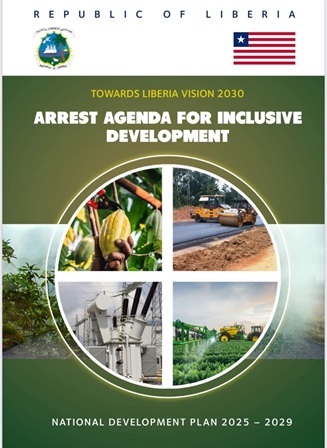
MONROVIA – Now in its third year, the Unity Party–led government is confronting the weight of its own words. Having risen to power on fiery critiques of the CDC administration and sweeping promises under the ARREST Agenda, it faces a public increasingly impatient for results. Two years into governance, the contrast is striking. While roads, sanitation, and livelihoods lag behind expectations at home, Liberia’s strongest performance has been abroad and at sea—where diplomacy and maritime governance have restored credibility and order. The irony is difficult to ignore: the Liberian state appears more capable of meeting international standards than fulfilling the domestic benchmarks it once used to condemn its predecessors. The assessment examines performance across key sectors, including foreign affairs and diplomacy, maritime governance, security, agriculture, education, sanitation, tourism, press freedom, civil liberties, and public communication, among others. Drawing on official records, stakeholder interviews, and on-the-ground reporting from urban and rural communities, THE ANALYST NEWSPAPER presents a factual account of progress and setbacks over the administration’s first two years, leaving citizens to judge the government’s record based on evidence rather than opinion.
Liberia at the midpoint—the Liberian government headed by the Unity Party is hitting its third of six years tenure, and the citizens, particularly those who civilly conscious are asking: Are the UP’s promises, both in campaign times and in its flagship development agenda, translating into concert and verifiable results?
The fact is Liberia finds itself at a critical moment of reckoning. Expectations remain high, shaped by the ambitious promises of the ARREST Agenda for Inclusive Development and sharpened by the fierce criticisms the party once directed at the former CDC-led government while in opposition. Two years into governance, public attention has shifted decisively from intent to impact—from rhetoric—to results.
Across Liberia, a common assessment has emerged in public discourse: while the government has restored calm leadership and improved international standing, tangible improvements in daily life have been slower to materialize. This contrast—between stronger performance in externally anchored sectors and weaker delivery at home—now defines the national conversation as the administration approaches the midpoint of its mandate.
The ARREST Agenda: Vision Meets Reality
Launched as the government’s central policy framework, the ARREST Agenda prioritizes Agriculture, Roads, Rule of Law, Education, Sanitation, and Tourism, with the stated goal of promoting inclusive growth, restoring public trust, and laying the foundations for long-term development.
Two years on, the agenda is widely seen as directionally clear but unevenly executed. Public discussion increasingly centers not on whether the policy framework exists, but on whether it is producing outcomes commensurate with expectations.
Security: Political Calm Holds, Community Insecurity Raises
On a quiet street in Paynesville, residents say they now avoid moving at night. Motorbikes no longer stop for passengers after dark, and phone calls are taken cautiously in public. “You don’t know who is watching,” said a shop owner who asked not to be named.
The country continues to enjoy relative political calm, even as concerns grow over community-level security, rising violent crime, and unresolved deaths that have unsettled public confidence. This is two years into the Unity Party–led administration.
At the national level, security institutions remain under civilian control, and there have been no major threats to constitutional order. Liberia has avoided the coups and armed insurgencies seen in parts of the region, a development analysts say reflects institutional discipline within the Armed Forces of Liberia and restraint among political actors.
However, residents across Monrovia and other urban centers report an increase in violent robberies, motorbike and phone hijackings, and assaults, some of which have resulted in fatalities. Motorbike riders, many of them young men relying on the trade for daily income, say they have become frequent targets of armed attacks.
“In one minute, everything is gone,” said a rider in Red Light, referring to both his motorcycle and his earnings.
In several communities, reports of unexplained or suspicious deaths have heightened anxiety. Families and local leaders say investigations have often been slow or inconclusive, leaving questions unanswered and fueling speculation.
“When nobody explains what happened, fear spreads,” said a community elder in Sinkor.
The Liberia National Police (LNP) has acknowledged challenges, including limited manpower, logistical constraints, and weak investigative capacity. Police officials say efforts are ongoing to improve response times and intelligence gathering, but admit resources remain stretched.
At the same time, the handling of public protests has drawn scrutiny. While authorities say restrictions were imposed to maintain order and protect public property, civil society organizations have raised concerns about the use of force and arrests during some demonstrations.
The Independent National Commission on Human Rights (INCHR) has urged security agencies to ensure proportionality and respect for constitutional rights, reminding authorities that peaceful assembly and free expression remain protected under the law.
Government officials, including representatives of the Ministry of Justice, maintain that security forces operate within legal boundaries and that allegations of misconduct are investigated. They say maintaining public order remains a priority amid economic hardship and social tension.
Despite rising concern, analysts note that public fear has not translated into widespread unrest. Political activity continues, opposition voices remain active, and daily life proceeds, albeit cautiously, in many communities.
Security experts say the contrast between political stability and everyday insecurity reflects broader structural issues, including unemployment, poverty, and limited capacity for preventive policing.
“Stability at the top does not always mean safety at the bottom,” said a Monrovia-based security analyst.
As the administration moves deeper into its term, residents and observers say restoring confidence in community policing, improving investigations, and balancing order with rights protection will be key to sustaining both security and public trust
Two years into the Unity Party–led administration, Liberia continues to enjoy relative political calm, even as rising community-level insecurity, unexplained deaths, and violent crime are drawing growing concern from citizens and civil society groups.
Since President Joseph Nyuma Boakai took office, the country has avoided major political unrest, and security institutions have remained under firm civilian control. Unlike several countries in the sub-region that have experienced coups or violent upheavals, Liberia’s political environment has remained largely stable.
However, that stability has not fully translated into a sense of safety in neighborhoods across the country.
Several communities have also reported unexplained or suspicious deaths, with families and local leaders expressing frustration over what they describe as slow or inconclusive investigations. In some cases, the lack of official explanations has fueled anxiety and speculation within affected neighborhoods.
“We hear about investigations, but months pass and we don’t see results,” said a community leader in Paynesville, who asked not to be named. “People are afraid because they don’t know what is happening or who is responsible.”
The Liberia National Police (LNP), which bears primary responsibility for public safety, continues to face challenges including limited manpower, logistical constraints, and inadequate investigative resources. While police patrols remain visible in some areas, residents say responses to violent incidents are often reactive rather than preventive.
At the same time, recent crackdowns on public protests have sparked debate about the balance between maintaining order and protecting constitutional rights. While authorities say force has been used to prevent disorder and protect public property, civil society organizations have raised concerns about arrests and the handling of demonstrators during some protests.
Security officials maintain that Liberia remains stable and that the government is committed to protecting lives and property. They point to the absence of large-scale violence, the professionalism of the Armed Forces of Liberia, and continued cooperation among security agencies as indicators that the overall security situation remains under control.
Analysts note, however, that the contrast between political stability at the national level and insecurity at the community level reflects deeper challenges. High unemployment, rising living costs, and limited policing capacity have created conditions in which crime can thrive, even in the absence of political unrest.
“Liberia is stable, but stability does not automatically mean people feel safe,” said a security analyst based in Monrovia. “When violent crime increases and deaths go unexplained, public confidence in security institutions is affected.”
Despite growing concerns, there has been no widespread unrest linked to the insecurity. Many Liberians have continued to go about their daily lives, relying on community vigilance and informal measures to protect themselves.
Observers say how the government responds in the coming months will be critical. Strengthening community policing, improving investigations into violent crimes, and ensuring proportionate responses to protests are seen as key steps toward restoring public confidence.
For now, Liberia remains politically calm, but for many citizens, the question of personal safety remains unresolved.
Agriculture: High Priority, Modest Impact
Agriculture has remained a central focus of government messaging, reflecting its importance to livelihoods and food security. Officials have emphasized renewed engagement with farmers, cooperatives, and development partners, alongside seed distribution and extension efforts.
As Liberia continues to grapple with food insecurity and high unemployment, the agriculture sector remains a key focus of the Unity Party–led administration, with renewed attention being placed on cash crop development through the Liberia Agriculture Commodity Regulatory Authority (LACRA).
Government officials say LACRA has in recent months intensified efforts to reactivate production and regulation of essential export commodities, including cocoa, oil palm, coffee, and rubber, in an attempt to put more farmers to work and attract sustained political and private-sector support to agriculture.
LACRA, which oversees the regulation and promotion of Liberia’s key agricultural commodities, has been engaging farmers, cooperatives, and buyers as part of a broader strategy to rebuild value chains that once formed the backbone of the rural economy.
According to agriculture officials, the authority is focusing on rehabilitating farms, improving quality standards, and strengthening farmer organizations, particularly in cocoa- and coffee-producing counties such as Lofa, Nimba, Bong, and Grand Gedeh.
In cocoa-growing areas, LACRA has been working with farmer groups to encourage replanting of aging trees, introduce improved seedlings, and improve post-harvest handling in order to meet international quality requirements. Officials say similar efforts are underway in coffee-producing regions, where production declined sharply during years of conflict and neglect.
Oil palm has also received increased attention, with LACRA seeking to balance large-scale investment with support for smallholder farmers. Authorities say the aim is to ensure that rural producers benefit from palm value chains while contributing to domestic processing and export growth.
Agriculture authorities describe these efforts as part of a longer-term push to restore agriculture as a source of employment, export earnings, and rural stability. They say the renewed focus on cash crops is also intended to attract political will and donor support to agriculture beyond subsistence farming.
Despite these initiatives, challenges remain. Farmers continue to face difficulties accessing credit, tools, and farm-to-market roads, while fluctuating global commodity prices and weak domestic infrastructure limit the pace of growth.
Some farmers say the renewed engagement by LACRA is encouraging but caution that results will depend on consistent support and follow-through.
“We are seeing more visits and discussions than before,” said a cocoa farmer in Lofa County. “But what we need is sustained help with seedlings, roads, and buyers.”
Agriculture analysts note that while food crop production remains critical for food security, cash crops such as cocoa, coffee, and oil palm offer the potential to generate income and foreign exchange, particularly if value chains are properly managed.
The Ministry of Agriculture has said it is working with LACRA and development partners to align cash crop promotion with broader agricultural policies under the ARREST Agenda for Inclusive Development.
For now, the government’s agriculture strategy reflects a dual focus: addressing immediate food needs while attempting to rebuild long-neglected export crops that once sustained rural livelihoods and national revenue.
However, public sentiment suggests limited transformation on the ground. Food prices remain high, Liberia continues to rely heavily on imports, and farmers still face challenges related to credit access, mechanization, storage, and market connectivity. Youth participation in agriculture remains low, reinforcing concerns about sustainability.
As a result, agriculture is widely viewed as a sector where policy intent has outpaced visible impact, with progress perceived as incremental rather than transformative.
Roads and Infrastructure: Expectations Outpace Delivery
On a rutted community road in New Kru Town, commercial driver James Toe says he spends more time repairing his vehicle than transporting passengers. After a night of rain, the road becomes nearly impassable. “By the time I reach my destination, whatever I earn is gone on repairs,” he said, gesturing toward a stretch of mud and broken pavement that has remained unchanged for years.
Two years into the Unity Party–led administration, progress in the road and infrastructure sector remains limited, according to analysts and public perception, particularly when compared with achievements recorded at a similar stage under the former Coalition for Democratic Change (CDC) government.
Across Monrovia and several counties, citizens say there is little visible evidence of newly constructed community roads, especially in densely populated urban settlements and rural areas where access roads are critical for commerce, education, and healthcare. Residents interviewed said many community roads remain in poor condition, becoming impassable during the rainy season.
Public sentiment has increasingly drawn comparisons with the CDC administration’s first two years, during which several community road projects were completed in Monrovia and other counties, alongside the construction of low-cost housing units provided free of charge to vulnerable residents. Those projects, citizens say, offered immediate and visible relief to underserved communities.
“By this time before, you could point to roads and houses,” said a resident of Logan Town. “Now, people are asking what the government has built.”
Infrastructure analysts say the current administration has yet to initiate a signature road or housing project that clearly distinguishes its infrastructure agenda. They point to the absence of major construction sites, signed contracts, or visible groundbreakings tied to new government-led road initiatives.
Under the CDC government, several foreign-financed highway projects were launched or advanced, aimed at improving inter-county connectivity and supporting trade. Observers note that similar large-scale engagements with foreign partners for new highway construction have not yet been announced under the current administration.
Officials within government have cited fiscal constraints, debt obligations, and the need to review existing contracts as factors contributing to the slow pace of infrastructure development. They say preparatory work is ongoing, though specific timelines for major projects remain unclear.
Meanwhile, deteriorating road conditions continue to affect daily life. In rural counties, farmers say poor farm-to-market roads have increased transportation costs and limited their ability to sell produce. In urban areas, transport operators report higher vehicle maintenance expenses, costs that are often passed on to passengers.
“When the road spoils, everything spoils,” said a motorcycle rider in Gbarnga, noting that bad roads reduce daily earnings and increase accident risks.
Civil society organizations warn that prolonged delays in infrastructure development risk undermining broader economic recovery efforts, particularly in agriculture-dependent regions where road access is essential.
Despite the challenges, analysts say the road sector remains one of opportunity if political will, financing, and execution align. They caution, however, that public patience is thinning as expectations continue to outpace delivery.
As the administration moves deeper into its term, citizens and observers say visible progress in roads and infrastructure will be a key benchmark by which the government’s development agenda is judged.
Rule of Law: Credibility without Closure
The administration entered office with strong anti-corruption messaging and a commitment to restoring integrity in public life. Public institutions have adopted a more restrained tone, and engagement with oversight bodies has improved.
However, public sentiment reflects skepticism over outcomes. Few high-profile corruption cases have resulted in convictions, asset declaration enforcement remains uneven, and access to justice—particularly in rural areas—continues to face delays and resource constraints.
The prevailing view is that while intent is visible, justice has yet to feel tangible to many citizens.
Additionally, among the pillars of the ARREST Agenda, the rule of law has emerged as one of the most contested—and, in public perception, one of the weakest-performing areas. While the administration entered office promising to restore constitutional order and respect for institutions, public sentiment has increasingly shifted toward concern over actions viewed as inconsistent with those commitments.
Across legal circles, civil society discussions, and everyday public discourse, attention has focused on a series of developments that many Liberians interpret as violations of established legal and constitutional norms. These include the removal of officials whose tenure is protected by law, actions widely described as circumventing statutory safeguards, and the forceful removal of a Speaker of the House of Representatives in circumstances that remain the subject of legal and constitutional debate.
Public concern has also been heightened by instances in which Supreme Court of Liberia decisions were perceived as ignored or selectively applied. For many observers, these actions have raised questions about executive respect for judicial authority and the separation of powers. Rather than reinforcing confidence in the rule of law, such episodes have contributed to a growing perception that political expediency has at times taken precedence over legal process.
As a result, public grading of the government’s rule-of-law performance has been notably harsh. While the administration continues to emphasize anti-corruption rhetoric and institutional reform, many Liberians argue that credibility in this area depends less on stated intent and more on consistent adherence to court rulings, tenure protections, and constitutional procedures. The prevailing sentiment is that until legal norms are observed without exception, the rule of law pillar of the ARREST Agenda will remain among its most fragile.
Education: Commitment, Limited Breakthrough
At a public primary school in deep District #2 Riverces County, pupils sit on concrete blocks arranged in uneven rows. There are no desks. When it rains, lessons end early as water leaks through the roof. “We try to teach,” said one instructor, “but sometimes there is nothing to work with.”
Two years into the Unity Party–led administration, Liberia’s education system continues to face deep structural challenges, from basic education through tertiary institutions, raising concerns about staffing, infrastructure, and labor relations.
In primary and secondary schools, the status of long-serving volunteer teachers remains a major issue. Many teachers say they were removed from government payrolls during recent payroll clean-up exercises, despite having worked for years under difficult conditions. School administrators say the removals have worsened already high pupil-teacher ratios, particularly in rural counties.
“One teacher is now handling two or three classes,” said a principal in Nimba County, adding that instructional quality has suffered.
Government officials say the payroll adjustments are intended to remove irregularities and strengthen accountability. However, teachers’ unions warn that the process has disrupted classrooms and undermined morale among educators who have long filled staffing gaps.
Beyond staffing, learning conditions remain poorin many public schools. Across counties, classrooms lack desks, chairs, textbooks, and teaching materials. Parents say deteriorating infrastructure discourages attendance, especially during the rainy season, when some schools become unusable.
“Our children want to learn,” said a parent in Rivercess County, “but the school itself is the challenge.”
These strains extend into higher education, particularly at the University of Liberia, where adjunct professors and non-tenured staff continue to protest low pay, delayed salaries, and what they describe as poor working conditions. Despite a change in national administration, adjunct faculty say their concerns remain unresolved.
“We are still teaching without job security,” said one adjunct lecturer, who requested anonymity. “The administration changed, but our situation did not.”
Labor disputes at the University of Liberia have fueled recurring student agitation, including class boycotts and protests over academic disruptions, facility conditions, and administrative decisions. Students say frequent interruptions have delayed graduation timelines and undermined academic stability.
“This is our future,” said a student leader on the Capitol Hill campus. “Every shutdown costs us time and money.”
University authorities acknowledge the challenges, citing limited funding, growing enrollment, and inherited financial constraints. Officials say discussions are ongoing to improve conditions for staff and stabilize the academic calendar.
The Ministry of Education has also acknowledged systemic pressures across the sector, pointing to years of underinvestment, rapid population growth, and constrained public finances. Officials say reforms are underway, often with donor support, but implementation has been uneven.
Education analysts note that Liberia’s reliance on volunteer teachers and adjunct lecturers reflects a broader crisis in education financing and workforce planning. Without sustained investment in educators at all levels, they warn, learning outcomes will continue to suffer.
Despite the challenges, enrollment remains high, driven by economic hardship that leaves many families unable to afford private alternatives. This has placed additional pressure on public institutions already operating beyond capacity.
As the government advances its development agenda, educators, parents, and students say restoring dignity to classrooms and campuses alike will be critical to rebuilding confidence in Liberia’s education system and securing the country’s long-term human capital.
Education remains a consistent priority in government policy statements. Teacher payroll stability has been maintained, curriculum reforms have continued, and attention has returned to public universities and vocational training.
Despite these efforts, learning outcomes remain poor, classroom conditions remain challenging, and rural-urban disparities persist. Public discussion often highlights the disconnect between years of schooling and employable skills, especially among young people.
Education is therefore seen as a sector with sustained attention but limited qualitative improvement.
Public education across Liberia continues to face significant challenges, as reports of long-serving volunteer teachers being removed from payrolls, overcrowded classrooms, and deteriorating school facilities raise questions about the pace of reform under the Unity Party–led administration.
In several counties, teachers who had worked for years as so-called “volunteers” say their names were recently removed from payroll lists, leaving schools short-staffed and instructors without income. Many of these teachers had previously been incorporated into the payroll after years of unpaid service, only to be later excluded during recent payroll clean-up exercises.
Education officials say the payroll adjustments are part of efforts to eliminate irregularities and ensure accountability in the system. However, teachers’ unions and school administrators warn that the removals have disrupted learningand worsened already high pupil-teacher ratios, particularly in rural areas.
At the classroom level, learning conditions remain difficult. In many public schools, students continue to sit on concrete blocks, wooden plans, or the floor due to shortages of desks and chairs. Teachers say basic supplies such as textbooks, chalk, and teaching aids are often unavailable or insufficient.
“Our students are willing to learn, but the environment is not supportive,” said a public school teacher in Bong County. “Some classrooms have no desks, no windows, and very little learning material.”
School infrastructure remains another major concern. Across the country, numerous public school buildings are described by local officials as structurally weak, overcrowded, or in advanced states of disrepair. In some communities, classes are conducted in makeshift structures or buildings with cracked walls, leaking roofs, and minimal ventilation.
Parents in rural areas say poor facilities discourage attendance, particularly during the rainy season, when some classrooms become unusable. In extreme cases, schools have been temporarily closed due to unsafe conditions.
The Ministry of Education has acknowledged the challenges, citing years of underinvestment, rapid population growth, and limited resources. Officials say efforts are ongoing to rehabilitate schools, train teachers, and improve access to education, with support from development partners.
Education advocates argue that while policy frameworks remain in place, implementation has lagged behind need. They note that the continued reliance on volunteer teachers reflects deeper structural problems, including low teacher salaries, weak incentives, and uneven deployment of trained staff.
Despite these difficulties, enrollment in public schools remains high, as many families cannot afford private education. This has increased pressure on an already strained system.
Analysts say the situation highlights the broader challenge facing the education sector: balancing administrative reforms with the immediate realities of classrooms. Without adequate staffing, furniture, supplies, and safe buildings, they warn, improvements in curriculum and policy may have limited impact.
As the government moves deeper into its term, educators and parents say addressing these long-standing issues will be critical to improving learning outcomes and restoring confidence in public education.
Press Freedom: Holding Communication Gaps Test Public Confidence
Liberia continues to maintain a largely open media environment under the Unity Party–led administration, with journalists operating without formal censorship, even as concerns persist about government communication practices, access to information, and relations between public officials and the press.
Media organizations continue to publish and broadcast critical reports without closure or suspension, and no official restrictions have been imposed on journalists since President Joseph Nyuma Boakai took office. Press freedom advocates say this reflects the country’s constitutional guarantees and Liberia’s standing as one of the more open media environments in the region.
However, journalists say access to timely and accurate information from government institutions has been uneven. Reporters covering security incidents, public protests, and governance issues say official responses are often delayed, leaving room for speculation and misinformation.
“When information does not come early, the public fills the gap with rumors,” said PUL President Julius Kanubah, speaking in an interview. “We are not asking for propaganda, only timely access to facts so journalists can do their work responsibly.”
The Press Union of Liberia (PUL) has urged government institutions to strengthen engagement with the media, including regular press briefings and clearer communication channels. The union has also cautioned public officials against confrontational language when responding to critical reporting.
For its part, the Ministry of Information, Cultural Affairs and Tourism (MICAT) says the government remains committed to transparency and press freedom. In a statement, MICAT Minister Jerolinmek Matthew Piah said the administration “respects the independence of the media” and is working to improve coordination across ministries to ensure timely public communication.
“Challenges in communication should not be mistaken for hostility to press freedom,” Piah said. “We acknowledge gaps and are taking steps to improve information flow to the public.”
Some journalists, however, report instances of verbal pushback from individual officials, particularly during coverage of corruption allegations, security concerns, and protest actions. While these incidents have not resulted in arrests or closures, media advocates say they contribute to tension between reporters and public institutions.
Civil society organizations note that press freedom extends beyond the absence of censorship. “Freedom of the press also means access to information and respect for journalism as a public service,” said a governance advocate in Paynesville, adding that proactive communication could reduce public distrust.
Public opinion on the issue remains mixed. A market vendor in Red Light said government silence often creates confusion. “When officials don’t explain things clearly, people blame the media,” she said.
Despite these challenges, analysts say Liberia’s media space remains active and pluralistic, with radio, print, and online platforms continuing to operate freely. They caution, however, that sustained engagement between government and the press will be necessary to preserve public trust as economic and social pressures grow.
As the administration enters the third year of its term, the PUL and media stakeholders say improving communication practices will be key to strengthening transparency, accountability, and democratic governance.
Political Freedom: Enduring Amid Concerns over Protests and Civic Space
Admittedly, the country continues to enjoy broad political freedoms under the Unity Party–led administration, with opposition parties operating openly and citizens expressing diverse political views, even as recent protest crackdowns and security responses have renewed debate about the state of civil liberties.
Political parties across the spectrum continue to hold meetings, issue public statements, and criticize government policies without legal restriction. Analysts say this reflects continuity in Liberia’s post-war democratic framework, where multiparty competition and political expression remain protected by law.
However, recent demonstrations over economic conditions and governance issues have raised concerns among civil society groups and activists about how security forces manage public dissent. While authorities say restrictions were imposed to maintain order, some protesters allege excessive force and arbitrary arrests.
The Independent National Commission on Human Rights (INCHR)has been calling for restraint and proportionality in crowd control. In a public statement, the commission reminded security agencies that “peaceful assembly and freedom of expression are constitutional rights that must be protected, even during periods of heightened tension.”
Government officials, including representatives of the Ministry of Justice, have said security forces acted within the law to prevent violence and protect public property. They maintain that no one is targeted for their political views and that any alleged abuses will be investigated.
Free speech remains largely intact, with citizens continuing to express opinions on radio talk shows, social media, and in print. Political commentators regularly criticize senior officials without facing formal sanctions, a feature observers say distinguishes Liberia from more restrictive environments in the region.
Still, some activists say the fear of arrest or harassment during protestshas had a chilling effect on civic participation.
“People still talk freely, but when it comes to marching or demonstrating, there is more hesitation,” said a youth organizer in Sinkor.
Civil society organizations have urged the government to strengthen dialogue mechanisms rather than rely on security responses.
“Dissent should be managed through engagement, not intimidation,” said a representative of a Monrovia-based advocacy group.
Members of the public express mixed views. A civil servant in Paynesville said political freedom remains strong.
“You can criticize the president on the radio and nothing will happen to you,” he said. Others argue that freedom is unevenly experienced depending on whether speech moves from words to action.
International observers note that Liberia continues to rank favorably within West Africa on political rights and civil liberties, but caution that democratic gains are not irreversible. They stress that how authorities handle protests and dissent will shape public confidence going forward.
As the administration approaches the midpoint of its term, analysts say preserving political freedom while addressing public grievances peacefully will be critical to sustaining Liberia’s democratic progress.
Sanitation: A Persistent Public Concern
Sanitation remains one of the most visible and contentious public service challenges in Liberia’s capital, as cleanup campaigns and enforcement actions by the Monrovia City Corporation (MCC) and the Liberia National Police (LNP) continue to draw public scrutiny over alleged abuses.
Monrovia/Paynesville
In recent months, multiple incidents involving the harassment and manhandling of street sellers, most of them women, have been reported during sanitation enforcement operations in central Monrovia. Witnesses and civil society groups say city police and LNP officers used force to disperse vendors and clear streets, leading to injuries and loss of livelihoods.
One widely circulated incident involved the alleged beating of a pregnant woman during a street-clearing exercise, triggering condemnation from women’s groups and renewed debate about the human cost of sanitation enforcement. Vendors say goods were confiscated or destroyed without warning.
“They say they are cleaning the city, but they are hurting people,” said a female street seller in Waterside. “We are only trying to survive.”
MCC Mayor John-Charuk Siafa has defended sanitation operations, saying the city is under pressure to address waste accumulation, blocked drainage systems, and public health risks, especially during the rainy season. He said enforcement is not intended to punish vendors but to restore order.
“We have instructed our officers to act professionally and respect human dignity,” Siafa said in a recent interview. “Any officer who violates that directive will be dealt with.”
The Liberia National Police, through its spokesperson Major Elenoe Barshall, said the LNP does not condone brutality and is reviewing reported incidents involving sanitation enforcement. She said officers are expected to operate within the law.
“The LNP maintains zero tolerance for abuse,” Barshall said. “Where misconduct is established, appropriate disciplinary action will be taken.”
Human rights organizations argue that sanitation enforcement has disproportionately affected informal workers, particularly women and girls, who rely on street vending for daily income. Advocacy groups say aggressive policing undermines trust and worsens urban poverty.
Beyond enforcement, urban planners say Monrovia’s sanitation challenges stem from weak waste management systems, limited landfill capacity, and poor drainage infrastructure. Many communities continue to report garbage buildup despite periodic cleanup campaigns.
Rural Citizens
Beyond Monrovia, sanitation conditions in rural Liberia are widely described by residents and local leaders as deteriorating, with little evidence of coordinated government intervention, budgetary support, or sustained public awareness campaigns.
Across counties including Lofa, Grand Gedeh, Rivercess, Sinoe, Gbarpolu, and Maryland, rural citizens interviewed said waste disposal systems are virtually nonexistent, with communities relying on open dumping, burning of refuse, and unmanaged latrines. Local authorities say they lack the resources and technical capacity to implement sanitation programs.
“There is no plan and no money,” said a clan chief in northern Lofa County. “People are on their own.”
County officials acknowledge the challenges, saying sanitation receives minimal budgetary allocation at the local level. Several superintendents have said development funds are largely consumed by administrative costs, leaving little for environmental health or waste management initiatives.
Public health workers warn that the absence of sanitation infrastructure has increased exposure to waterborne diseases, particularly during the rainy season. Residents say flooding frequently washes waste into wells and creeks, contaminating drinking water.
In many rural communities, there are no regular cleanup campaigns, no waste collection points, and no public education programs on hygiene or environmental health. Women and children, who are often responsible for water collection and household sanitation, bear the greatest burden.
Civil society organizations say rural sanitation has remained largely invisible in national policy discussions. “Urban sanitation gets attention because it is visible,” said an environmental advocate based in Buchanan. “Rural people are faceless in this conversation.”
Climate-Related
Climate-related sanitation initiatives in rural areas are also described as minimal. While Liberia has made international commitments on climate resilience, implementation at the community level remains limited. NGOs working on environmental protection say funding constraints have reduced outreach and impact.
Residents in remote communities say living conditions have become increasingly difficult. “We are dirty not because we want to be,” said a resident of Rivercess County. “There is simply no help.”
As the government pursues sanitation enforcement in urban centers, analysts and civil society groups say a national sanitation strategythat includes rural Liberia will be critical to addressing public health risks and restoring dignity to communities across the country.
Climate-related sanitation efforts remain subdued. While Liberia has adopted climate and environmental policies, analysts say implementation at the city level has been slow, with limited funding and coordination. Environmental NGOs continue to conduct small-scale awareness programs, but their impact remains localized.
As the city intensifies sanitation efforts, civil society groups are calling for humane enforcement, alternative livelihood support for street vendors, and stronger community engagement to ensure that cleanliness campaigns do not come at the expense of basic rights.
Tourism: Potential Still Untapped–Structural Reform, Limited Resources
Tourism was identified under the ARREST Agenda as a potential driver of jobs and revenue. However, two years into implementation, tourism remains largely conceptual.
Infrastructure limitations, weak marketing, and the absence of a fully implemented tourism development plan have constrained progress. Public discussion often characterizes tourism as an opportunity deferred rather than realized.
Liberia’s tourism sector remains underdeveloped despite recent institutional reforms and the country’s vast natural and cultural assets, as limited budgetary support continues to constrain efforts to turn potential into economic growth.
In a significant policy shift, the Legislature enacted a law removing tourism from the Ministry of Information, Cultural Affairs and Tourism, establishing it as a standalone sector under a restructured institutional framework.
Lawmakers said the move was intended to give tourism greater focus, professional management, and strategic direction.
Supporters of the reform argue that Liberia possesses assets many successful tourism-driven economies lack, including unspoiled beaches, rainforests, wildlife reserves, historical sites, and cultural heritage.
Regional and international comparisons are often drawn to countries that have built strong tourism industries without comparable natural endowments.
“Liberia has everything, but we are not organized,” said a tourism operator in Robertsport. “Other countries make money from what we are ignoring.”
Despite the legislative intent, progress has been slow. Government officials and private sector stakeholders say tourism remains one of the least-funded sectorsin the national budget, limiting investment in infrastructure, marketing, skills development, and destination management.
Industry players say poor road access, limited air connectivity, unreliable utilities, and weak hospitality training continue to deter both domestic and international visitors. Many tourist sites lack basic amenities, signage, and safety measures.
Officials familiar with the sector say budget constraints have hindered the implementation of a comprehensive national tourism strategy. Promotional efforts are minimal, and Liberia remains largely absent from international tourism markets.
Private sector operators say they receive little government support. “We are expected to attract tourists without roads, electricity, or promotion,” said a hotel owner in Grand Bassa County.
While the government has expressed interest in positioning tourism as a driver of job creation and foreign exchange, analysts say competing priorities and fiscal pressures have kept the sector from gaining traction.
Observers note that tourism development requires sustained public investment and policy consistency. Without these, they warn, Liberia risks continuing to underperform in a sector that could diversify the economy and reduce dependence on extractive industries.
As the administration reviews its development priorities, tourism advocates say translating institutional reform into budgetary commitment will be key to unlocking the sector’s long-promised potential.
Foreign Affairs: Diplomatic Gains amid Domestic Strains
While domestic sectors continue to face structural and budgetary challenges, Liberia’s performance in foreign affairs and diplomacy has emerged as one of the more notable areas of progress under the Unity Party–led administration.
Since taking office, the government has pursued a more restrained and institutional approach to foreign policy, emphasizing continuity, predictability, and engagement with traditional and emerging partners. Diplomats say Liberia’s external posture has shifted away from personality-driven diplomacy toward rule-based engagement and steady relationship management.
A major diplomatic milestone was Liberia’s election to a non-permanent seat on the United Nations Security Council, a move widely seen as a restoration of international confidence in the country’s governance and foreign policy credibility.
Government officials say the seat provides Liberia with a platform to contribute to global peace and security discussions while elevating its international standing.
Foreign policy analysts note that the Security Council victory required broad diplomatic outreach and coalition-building, reflecting renewed effectiveness in Liberia’s foreign missions.
“It signals trust,” said a former Liberian diplomat. “You don’t win that seat without support.”
Another significant breakthrough was Liberia’s successful qualification for a second Millennium Challenge Corporation (MCC) Compact,making it one of the few countries globally to secure the U.S. development grant twice.
The achievement comes under the same Unity Party leadership that won the first MCC Compact during the administration of former President Ellen Johnson Sirleaf, a feat the subsequent CDC-led government was unable to replicate.
Government officials describe the MCC win as evidence of improved performance on governance indicators such as rule of law, fiscal management, and anti-corruption benchmarks. The compact is expected to support infrastructure development and institutional reforms, though implementation remains a key test.
Regionally, Liberia has maintained an active role within ECOWAS, where it is often viewed as a stabilizing voice amid political instability in parts of West Africa.
Diplomatic sources say Liberia has emphasized dialogue and constitutional order in regional engagements.
Beyond multilateral forums, the government has recorded renewed bilateral engagement with traditional partners in Europe, Asia, and the Americas, alongside strengthening ties with development agencies and international financial institutions. Officials say these relationships have helped sustain donor confidence despite domestic economic pressures.
Liberia’s maritime governance and shipping registry have also remained stable, continuing to generate revenue and reinforce the country’s global commercial profile. Analysts say maintaining credibility in this sector has been critical to sustaining international trust.
Despite these gains, observers caution that diplomatic success must translate into tangible domestic benefits. “Foreign policy credibility creates opportunity,” said an economist in Monrovia. “But development depends on how those opportunities are used at home.”
As the government advances its ARREST Agenda, analysts say Liberia’s improved external engagement provides a valuable platform for attracting investment, aid, and technical support—if matched by effective domestic implementation.
Maritime Governance: Stability That Delivers
Liberia’s maritime sector continues to function as one of the country’s most reliable performers. The Liberian ship registry remains a major global player, generating steady revenue and reinforcing international visibility.
Institutional continuity at the Liberia Maritime Authority, adherence to international maritime standards, and avoidance of disruptive policy shifts have preserved confidence among global shipping partners.
Public discourse frequently contrasts the maritime sector’s stability with the volatility seen in other areas of governance, pointing to professionalism and rules-based management as key factors.
Why Some Sectors Perform Better Than Others
A recurring theme in public analysis is that sectors tied to international regulation and institutional discipline tend to perform better than those dependent on domestic execution capacity.
Foreign affairs and maritime governance benefit from: clear international standards, professional insulation, lower capital requirements, strong incentives for compliance.
By contrast, sectors such as roads, sanitation, and agriculture face fiscal constraints, coordination challenges, and implementation bottlenecks.
The Public Mood at Midpoint
As the administration enters its third year, public sentiment reflects a mix of patience, concern, and expectation. There is acknowledgment of improved leadership tone and external credibility, but growing impatience over cost of living pressures, unemployment, and slow visible change.
The dominant question in public discourse is no longer whether the ARREST Agenda exists, but whether it can deliver at scale within the remaining years.
The overall public assessment places the ARREST Agenda at a transitional stage—established in vision, constrained in execution.
Towards 2026 & Beyond
The second half of the administration is widely viewed as decisive. Public expectations are now anchored in delivery, not direction. Analysts and everyday citizens alike point to the need for clearer prioritization, faster execution, and visible flagship projects that demonstrate impact.
The administration’s ability to translate its external credibility into domestic gains will likely determine how the ARREST Agenda is ultimately judged.
A Test of Conversion
Two years into governance, Liberia presents a divided picture. Abroad and at sea, stability and professionalism have produced results. At home, progress has been slower, uneven, and more difficult to feel.
As the ARREST Agenda enters its third year, the challenge before the government is clear: convert credibility into concrete change, and policy frameworks into lived improvements. The remaining years will determine whether the agenda becomes a foundation for renewal—or another chapter in Liberia’s long struggle to turn promise into progress.
Comments are closed.