

Sen. Chea Defends Tweah’s Acquittal Rights -Warns against politicizing justice system
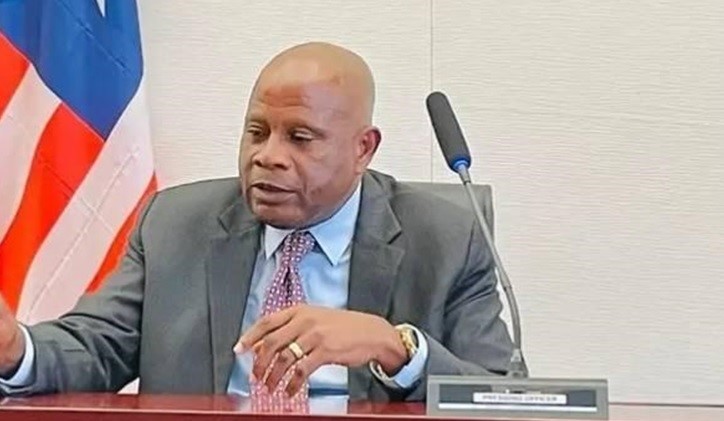
MONROVIA – Sinoe County Senator Cllr. Augustine S. Chea has entered Liberia’s intensifying national debate surrounding the acquittal of former Finance Minister Samuel Tweah, warning that public hostility toward judicial outcomes risks undermining constitutional democracy and weakening confidence in the rule of law. His intervention comes amid growing political tension following reactions from sections of the ruling establishment dissatisfied with the verdict delivered in Tweah’s corruption-related trial. In a sharply worded public commentary, Chea argued that democracy cannot survive where convictions are celebrated as justice while acquittals are treated as institutional failure or political betrayal. The senator’s remarks have since widened discussion surrounding judicial independence, prosecutorial ethics, anti-corruption efforts, jury autonomy, and Liberia’s fragile democratic credibility nationwide today, as THE ANALYST reports.
Sinoe County Senator Cllr. Augustine S. Chea has delivered one of the strongest political defenses yet of former Finance Minister Samuel Tweah’s recent acquittal, warning that Liberia risks undermining its democratic foundations if judicial verdicts are only respected when they align with political expectations.
In a lengthy and sharply critical public commentary titled “Convict Samuel Tweah Anyhow!”, the senator questioned what he described as mounting political pressure and public hostility directed at the judicial system following Tweah’s acquittal in a politically sensitive corruption-related case.
Chea’s intervention has rapidly intensified an already polarizing national debate surrounding the boundaries between anti-corruption enforcement, judicial independence, prosecutorial conduct, and political influence within Liberia’s governance system.
The controversy comes at a delicate moment for President Joseph Nyuma Boakai’s administration, whose anti-corruption campaign has become one of the defining pillars of its governance agenda. While supporters of the administration view prosecutions involving former officials as necessary efforts to confront impunity and restore accountability, critics increasingly fear that legal proceedings may gradually become entangled with political interests and public pressure for convictions.
Chea Warns Against Politicizing Judicial Outcomes
At the center of Senator Chea’s argument is the principle that democracy requires equal respect for both convictions and acquittals.
According to the senator, the integrity of any justice system depends not upon whether courts consistently produce politically satisfying outcomes, but upon whether legal institutions are permitted to function independently without intimidation, manipulation, or retaliation.
Chea argued that public reactions following Tweah’s acquittal revealed what he considers a dangerous misunderstanding of constitutional governance and judicial independence.
Under Article 20(a) of the Liberian Constitution, every accused person is entitled to due process of law and a fair trial, with innocence presumed until guilt is established through lawful judicial proceedings.
Legal experts note that within Liberia’s adversarial legal system, a jury’s verdict represents an independent determination based on evidence presented during trial proceedings. While verdicts may be challenged through lawful appeals under specific legal grounds, public dissatisfaction alone does not constitute a legitimate basis for rejecting judicial outcomes.
Chea contends that reactions from some ruling party supporters following Tweah’s acquittal appeared to treat the verdict itself as politically unacceptable rather than legally authoritative.
According to him, such attitudes threaten the very foundations of constitutional democracy because they imply that courts and juries are only legitimate when they produce convictions.
“The rule of law requires consistency,” Chea asserted, arguing that judicial outcomes must be respected regardless of whether they satisfy prevailing political expectations.
Debate Deepens Over Judicial Independence
The senator expressed particular concern regarding criticism directed toward the Ministry of Justice and prosecutors following the verdict.
According to Chea, some political voices portrayed the acquittal as a political defeat while faulting justice officials for failing to aggressively secure a conviction.
Legal scholars observing the matter note that prosecutors possess a duty to present evidence and pursue justice within the boundaries of law, fairness, and constitutional procedure. They are not ethically obligated to guarantee convictions at all costs.
Internationally recognized standards governing prosecutorial independence emphasize that prosecutors are expected to seek justice rather than predetermined political outcomes.
For this reason, many legal analysts argue that prosecutorial success cannot reasonably be measured solely through conviction rates, particularly in politically sensitive cases where public pressure may become intense.
Chea therefore warned that expecting prosecutors to guarantee convictions risks transforming criminal proceedings into political exercises rather than impartial legal processes.
Some legal observers further argue that democracies begin deteriorating when political actors attempt to define acquittals as evidence of prosecutorial weakness or judicial compromise simply because verdicts fail to satisfy political interests.
According to them, such attitudes gradually erode public trust in judicial independence and create dangerous incentives for politically influenced prosecutions.
Jury Tampering Concerns Fuel Additional Anxiety
The controversy has become even more complicated following reports regarding investigations into alleged jury tampering associated with the case.
While authorities maintain that such allegations require examination wherever credible evidence exists, Chea cautioned against creating the impression that every politically unpopular acquittal must automatically trigger suspicions of misconduct.
Under Liberian law, jury tampering allegations constitute serious criminal matters deserving proper investigation. However, legal observers note that such investigations must themselves remain impartial and carefully managed to avoid undermining future jury independence.
Chea warned that if jurors begin fearing public attacks, political backlash, investigations, or intimidation whenever they deliver unpopular verdicts, the integrity of Liberia’s jury system could gradually weaken.
Some constitutional scholars observing the debate argue that jury independence remains one of the most critical safeguards within democratic justice systems because it protects ordinary citizens from excessive concentration of state power.
According to them, any atmosphere capable of intimidating jurors risks damaging public confidence in fair trial protections.
Several legal commentators have therefore stressed the importance of distinguishing between legitimate criminal investigations and politically driven attempts to delegitimize acquittals merely because they generate public controversy.
Anti-Corruption Campaign Faces Scrutiny
Perhaps the most politically sensitive aspect of Chea’s remarks involves his warning against what he described as the potential weaponization of anti-corruption efforts.
Liberia remains a signatory to several international anti-corruption frameworks, including the United Nations Convention Against Corruption, which encourages aggressive pursuit of corruption while simultaneously protecting due process rights and judicial independence.
Chea acknowledged that public officials must be held accountable where wrongdoing occurs. However, he argued that anti-corruption efforts lose legitimacy when prosecutions begin appearing selective, vindictive, or politically obsessive.
His comments reflect a growing debate visible across several African democracies where anti-corruption campaigns have frequently generated both praise and suspicion simultaneously.
While reform advocates often celebrate prosecutions as evidence of accountability, opposition groups sometimes accuse governments of using legal institutions to weaken political rivals.
Chea warned that anti-corruption loses moral credibility whenever prosecutions appear driven more by political calculations than consistent legal standards.
“The fight against corruption is necessary and legitimate,” the senator stated, “but accountability loses moral authority when it appears selective, vindictive, or politically obsessive.”
Concerns Raised Over Democratic Stability
Beyond the immediate controversy involving Samuel Tweah, Chea’s remarks focused heavily on the long-term implications for Liberia’s democratic future.
He warned that if every transition of political power becomes followed by aggressive efforts to prosecute former officials while acquittals are politically rejected, Liberia risks becoming trapped within a cycle of retaliatory justice.
According to the senator, such a pattern would gradually weaken state institutions, deepen political polarization, erode judicial credibility, and discourage peaceful democratic transitions between rival political groups.
Political analysts note that Liberia’s postwar democratic progress has depended significantly upon strengthening institutions capable of functioning independently of partisan political pressure.
The Judiciary, in particular, remains central to maintaining national confidence in constitutional governance.
Some governance experts warn that if judicial verdicts become politically negotiable rather than legally respected, public trust in democratic institutions could deteriorate rapidly.
Others fear that future governments may become increasingly tempted to use criminal prosecution as a political weapon against predecessors if strong institutional safeguards are not preserved.
National Debate Expands Beyond Tweah
As public discourse surrounding the case intensifies, many observers argue that the controversy has already evolved beyond the personal fate of Samuel Tweah himself.
For Chea and several governance analysts, the deeper issue concerns whether Liberia’s institutions possess sufficient independence and resilience to withstand political pressure when legal outcomes fail to satisfy powerful interests.
The controversy has consequently reignited broader national conversations surrounding judicial autonomy, prosecutorial ethics, jury independence, constitutional governance, and the balance between accountability and due process.
Some legal scholars argue that anti-corruption campaigns and fair trial rights must coexist rather than operate as competing principles.
According to them, genuine democratic accountability requires both vigorous prosecution of wrongdoing and unwavering respect for judicial independence whenever courts issue legally binding verdicts.
For others, the current controversy exposes lingering tensions within Liberia’s democratic transition, where public demand for accountability sometimes collides with constitutional protections designed to prevent politically motivated justice.
Rule Of Law Debate Intensifies Nationwide
Ultimately, Senator Chea’s intervention has transformed the Tweah acquittal debate into a larger national reflection on the meaning of democracy and rule of law within Liberia’s evolving political system.
According to the senator, democracy is not measured merely by a government’s ability to prosecute perceived wrongdoing but by its willingness to respect the decisions of independent courts even when verdicts become politically inconvenient.
As tensions surrounding the case continue unfolding, the controversy increasingly represents more than a disagreement over a single trial outcome.
It has instead become a national test of Liberia’s institutional maturity, judicial independence, prosecutorial integrity, and democratic resilience.
For many observers, the critical question now confronting Liberia is whether the country’s political actors can preserve respect for constitutional processes even amid emotionally and politically charged legal disputes.
How Liberia answers that question, some warn, may significantly shape public confidence in the rule of law for years to come.
Comments are closed.