

NaFAA Chief Urges Sustainable Fisheries Management -New Plan Targets Livelihoods, Marine Protection
MONROVIA – Pressure continue to mount on Liberia’s marine ecosystems from overfishing, climate change, and weak enforcement, and the government has been advancing a structured framework to safeguard the country’s fisheries resources while protecting coastal livelihoods. At a national pre-validation workshop in Monrovia, the National Fisheries and Aquaculture Authority (NaFAA) emphasized that sustainability is no longer optional but central to economic resilience and food security. The proposed Fisheries Management Plan for Artisanal Fisheries is being positioned as both a governance and development tool, seeking to balance conservation with productivity. With artisanal fishing supporting thousands of households along Liberia’s coast, the success of the plan will depend heavily on stakeholder ownership, inter-agency collaboration, and consistent implementation beyond policy adoption. The Analyst reports.
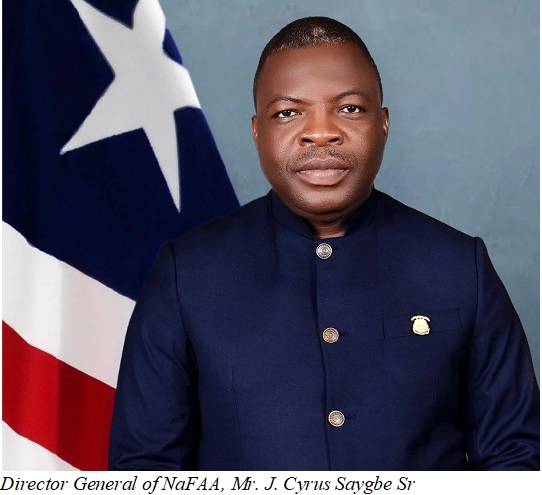
The Director General of the National Fisheries and Aquaculture Authority (NaFAA), Mr. J. Cyrus Saygbe Sr., has emphasized that the sustainability of Liberia’s marine resources is critical to the long-term growth and development of the country’s fisheries sector.
Mr. Saygbe made the remarks on Thursday, January 29, 2026, at a one-day pre-validation workshop on the Fisheries Management Plan for Artisanal Fisheries of Liberia, organized under the European Union (EU) Technical Assistance “Food Systems Governance” Fisheries Project.
Addressing participants, the NaFAA Director General challenged key stakeholders—including fishermen, fishmongers, and fishing communities—to actively support efforts aimed at safeguarding the nation’s fisheries resources, warning that unsustainable practices threaten both livelihoods and food security.
The workshop brought together NaFAA Technical Directors, Fisheries Officers from Liberia’s nine coastal counties, representatives of government institutions, and members of fishing communities. Participants were urged to contribute meaningfully to the validation of the Fisheries Management Plan to ensure the sustainable development of the artisanal fisheries sector.
Mr. Saygbe stressed that effective collaboration and stakeholder ownership of the plan are essential for strengthening fisheries governance and improving livelihoods within coastal communities. He noted that government-led regulation alone would not succeed without the full participation and commitment of those who depend directly on marine resources for survival.
Providing an overview of the purpose and expected outcomes of the workshop, Dr. Ashley Halls, Project Key Expert, explained that the Fisheries Management Plan is designed to ensure the long-term management, conservation, development, and sustainable use of fisheries and aquaculture resources and related ecosystems for the overall benefit of the Liberian people.
The Fisheries Management Plan for Liberia’s artisanal fishery was developed under the EU-funded Technical Assistance “Food Systems Governance” Fisheries Programme in close collaboration with NaFAA through an inclusive and consultative process.
The development process involved multiple stakeholders, including relevant government agencies, the Food and Agriculture Organization (FAO), the World Bank, the Liberian Artisanal Fishermen Association (LAFA), the Environmental Justice Foundation (EJF), and fishing communities across the country.
In line with Liberia’s Fisheries Policy, the plan seeks to “ensure the long-term management, conservation, development and sustainable use of the fisheries and aquaculture resources and related ecosystems for the benefit of the people of the Republic of Liberia.”
The management framework covers both Fanti and Kru small-scale (artisanal) fisheries operating within Liberia’s inshore waters, reflecting the diversity of fishing practices and communities along the coast.
Other participants at the workshop included representatives of the artisanal fisheries sector from all coastal counties, including members of the Liberian Artisanal Fishermen Association, Community Management Associations (CMAs), fishing communities, fishmongers, fish markets, and fish importers.
Organizers said inputs from the pre-validation workshop will inform final adjustments to the Fisheries Management Plan before its formal adoption, with the ultimate goal of strengthening governance, protecting marine ecosystems, and securing sustainable livelihoods for Liberia’s coastal populations.
Comments are closed.