
Massaquoi Drives Telecom Transformation -Digital inclusion anchors nationwide connectivity agenda
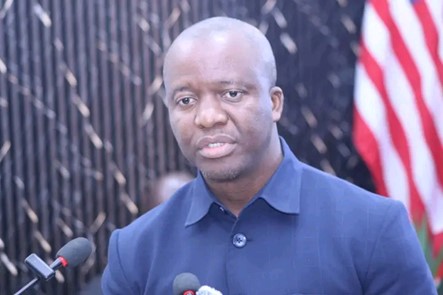
MONROVIA – Digital connectivity has become an essential driver of economic growth, education, commerce and public service delivery. As Liberia accelerates implementation of its digital transformation agenda, the Liberia Telecommunications Authority (LTA) is introducing regulatory reforms designed to expand internet access, strengthen sector oversight and stimulate greater competition. The initiatives announced by LTA Chairman Clarence Massaquoi extend beyond infrastructure development to encompass consumer protection, rural connectivity, revenue mobilization and regional integration. They also reflect government’s effort to ensure that telecommunications become a catalyst for inclusive national development rather than remaining concentrated in urban centers. As THE ANALYST’S George C. Flomo reports, the measures collectively signal a more assertive regulatory posture aimed at improving services while broadening digital opportunities nationwide.
The Chairman of the Liberia Telecommunications Authority (LTA), Hon. Clarence Massaquoi, has announced a broad package of reforms intended to accelerate Liberia’s digital transformation through expanded telecommunications infrastructure, stronger regulatory oversight, increased government revenue and wider access to affordable digital services across the country.
Speaking Thursday during the Ministry of Information’s regular press briefing, Massaquoi said the Authority, under the leadership of President Joseph Nyuma Boakai, has made significant progress toward improving internet accessibility, strengthening mobile telecommunications services, promoting greater Liberian participation within the telecommunications industry and ensuring improved compliance among licensed operators.
He began by commending the Ministry of Information for what he described as its professionalism in communicating government policies and programs, emphasizing that governments must proactively tell their own stories while ensuring citizens receive timely and accurate information.
INTERNET REACHING PUBLIC SCHOOLS
Among the LTA’s flagship achievements, Massaquoi highlighted the nationwide project to connect public high schools to reliable high-speed internet services.
He disclosed that when the current administration assumed office, Liberia had virtually no public high schools connected to broadband internet. To address that gap, the LTA partnered with the Ministry of Education to launch an ambitious connectivity initiative targeting 156 public high schools throughout the country.
According to the Chairman, the project has already recorded substantial progress.
“As of this week, 89 public high schools have already been connected, with the remaining schools expected to be completed within the next two weeks,” Massaquoi announced.
He further revealed that an assessment visit to Maryland County uncovered an additional 28 public schools that had not been included in the original implementation plan.
Following a briefing presented to President Boakai, the Chairman said the President immediately instructed the LTA Board of Commissioners to incorporate the additional schools into the national connectivity program.
Massaquoi explained that the initiative is intended to bridge Liberia’s educational digital divide by ensuring that students in remote communities enjoy access to the same online educational resources available elsewhere around the world.
IMEI SYSTEM TO CURB ILLEGAL DEVICES
Turning to telecommunications quality, Massaquoi acknowledged that consumers frequently attribute poor mobile service entirely to network operators.
However, he argued that many connectivity problems originate from substandard mobile devices entering Liberia through unauthorized import channels.
To address that challenge, the LTA is finalizing plans to establish a national International Mobile Equipment Identity (IMEI) registration system.
According to the Chairman, the system will verify every mobile phone and electronic device entering Liberia.
Only devices meeting internationally accepted technical standards will be permitted to operate on Liberian telecommunications networks.
He explained that the initiative will simultaneously improve service quality, strengthen customs enforcement and increase government revenue by preventing illegally imported devices from bypassing regulatory oversight.
The proposed system also carries important security implications.
Massaquoi noted that once a stolen mobile phone is officially reported to the Authority, it can be permanently blocked through the IMEI database, making the device unusable and discouraging theft.
LTA REGAINS NUMBERING CONTROL
The LTA Chairman further announced that the Authority has regained full control over Liberia’s telecommunications numbering resources, including valuable short codes widely used for mobile money services and other digital applications.
He emphasized that these numbering resources belong to the Government of Liberia rather than individual telecommunications operators.
As part of the reform, the Authority has licensed 15 Liberian-owned Value Added Service (VAS) aggregators to administer these services.
According to Massaquoi, the move creates new commercial opportunities for Liberian entrepreneurs while ensuring that local businesses participate directly in the expanding digital economy instead of remaining passive observers.
The Chairman described the initiative as another important step toward increasing Liberian ownership and participation within the country’s rapidly evolving technology sector.
RURAL CONNECTIVITY PRIORITIZED
Another major policy initiative announced during the briefing concerns reform of Liberia’s telecommunications licensing framework.
Massaquoi disclosed that the Authority is reviewing existing licensing arrangements to encourage greater investment in underserved counties, particularly in southeastern Liberia.
He acknowledged that telecommunications companies frequently avoid extending services into remote regions because of the substantial costs associated with constructing fiber-optic infrastructure.
To address this imbalance, the proposed licensing reforms will create incentives encouraging investors to expand quality telecommunications services beyond Monrovia.
“Monrovia is not Liberia,” Massaquoi declared, emphasizing that digital transformation must benefit citizens across all fifteen counties rather than remaining concentrated within the capital.
STAR CELL LICENSE REVOKED
In one of the briefing’s most significant regulatory announcements, Massaquoi disclosed that the LTA Board of Commissioners has revoked the operating license previously granted to Star Cell.
According to him, the company failed to commence operations despite receiving its telecommunications license in May 2020—nearly six years ago.
He stressed that although Liberia remains open to foreign and domestic investment, the government cannot permit companies to indefinitely retain valuable spectrum resources without delivering services to the public.
“Star Cell never operated despite repeated regulatory engagements, leaving the Board with no alternative but to revoke the license,” Massaquoi explained.
The decision reflects what the Chairman described as the Authority’s determination to enforce regulatory compliance while ensuring that scarce national telecommunications resources are utilized effectively.
REGIONAL ROAMING AGREEMENTS
The LTA also announced significant progress in regional telecommunications cooperation.
According to Massaquoi, Liberia has concluded bilateral free-roaming agreements with The Gambia, Sierra Leone and Ghana.
Once fully implemented, the arrangements will enable Liberians traveling within those ECOWAS countries to receive telephone calls without incurring roaming charges.
The Chairman said the agreements are expected to reduce communication costs for traders, businesspeople and ordinary travelers while strengthening regional economic integration.
LOWER CALL CHARGES UNDER REVIEW
Consumers may also benefit from lower telecommunications costs under reforms currently being considered by the Authority.
Massaquoi disclosed that the LTA is reviewing Liberia’s telecommunications pricing structure following completion of a comprehensive sector-wide study.
The review could ultimately result in reductions in retail call charges and interconnection fees among mobile operators.
However, he emphasized that final decisions will rest with the LTA Board of Commissioners after careful evaluation of the study’s recommendations.
MEDIA COMPLIANCE ENFORCEMENT
Addressing broadcasters, Massaquoi expressed concern over widespread non-compliance with telecommunications regulations among several media institutions.
He disclosed that while some broadcasters remain fully compliant, others possess valid operating licenses but have failed to satisfy required financial obligations.
A third category, he noted, consists of institutions operating without valid licenses or officially assigned frequencies.
Without identifying specific organizations, the Chairman urged all affected media institutions to regularize their regulatory status before the Authority commences formal enforcement proceedings.
Although the LTA possesses legal authority to sanction violators, Massaquoi said the Authority prefers awareness and voluntary compliance before imposing penalties.
GATEWAY CONTRACT DEFENDED
Responding to recent allegations concerning the LTA’s international gateway monitoring contract, Massaquoi defended the Authority’s actions, explaining that the current administration inherited an unfavorable arrangement that significantly reduced government revenue.
He disclosed that President Boakai ordered suspension of the previous agreement in October 2025 and instructed the Authority to procure a qualified service provider under a more transparent framework.
According to Massaquoi, the previous contract had been extended from eight years to twenty years under terms inconsistent with the objectives of Build-Operate-Transfer arrangements, which are intended to develop local technical capacity.
The current administration has replaced that arrangement with a three-year contract, which the Chairman believes will allow Liberia gradually to develop the expertise required to manage the system independently while retaining a larger share of national revenue.
When asked how much additional revenue government expects to generate under the new arrangement, Massaquoi explained that precise projections remain difficult because telecommunications revenue fluctuates according to monthly traffic volumes.
Nevertheless, he maintained that the revised revenue-sharing formula is substantially more favorable to government than the previous agreement.
“Revenue is not a flat rate because the volume of calls changes from month to month,” Massaquoi explained. “But based on the new revenue-sharing ratio alone, government will certainly receive more revenue than it did under the previous arrangement.”
Concluding the briefing, the LTA Chairman maintained that the reforms collectively demonstrate the Boakai administration’s commitment to transparency, digital inclusion, improved telecommunications services and ensuring that Liberia’s communications sector contributes meaningfully to national economic transformation.
Comments are closed.