

Bility Takes Side in Fahnbulleh-Yhap Debate -Says history Sets both men clearly apart
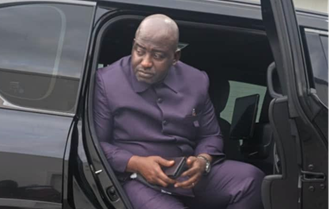
MONROVIA – Musa Hassan Bility’s entry into the Fahnbulleh-Yhap exchange pulls a deeply personal quarrel into Liberia’s unresolved argument about its own past. The Citizens Movement for Change leader accepts that both men may speak freely. But equal voice, he insists, does not mean equal historical standing. His intervention weighs progressive resistance, the True Whig era, the 1980 coup and the war years against the personalities now trading barbs. He defends Dr. H. Boima Fahnbulleh Jr. as a genuine freedom fighter, while cautioning against condemning Ian Yhap merely for his lineage. In doing so, Bility reframes a viral spat as a broader test of how Liberians reconcile competing versions of their history. THE ANALYST reports.
In his latest “Letter from Saclepea,” the Political Leader of the Citizens Movement for Change (CMC), Musa Hassan Bility, has entered the increasingly heated public debate between Dr. H. Boima Fahnbulleh Jr. and engineer Ian Yhap, declaring that while both men have the right to express their views, Liberia’s political history does not place them on equal historical ground.
Bility, in a lengthy social media commentary titled “Letter from Saclepea: The Debate: H.B. Fahnbulleh Versus Ian Yhap,” said he had followed the exchange for nearly two weeks and initially wished Fahnbulleh had allowed the matter to end as it became increasingly personal.
However, after following the arguments closely, Bility said he had come to believe that the controversy raises broader and more consequential questions about Liberia’s history, the country’s struggle for political freedom and the manner in which Liberians assess individuals who participated in or were associated with those struggles.
“Having followed it carefully, I now believe the exchange raises important questions about Liberia’s history, our struggle for freedom and how we judge those who participated in that struggle,” Bility wrote.
His intervention seeks to move the discussion beyond the immediate personal exchanges between Fahnbulleh and Yhap and into what he considers the larger historical context in which both men should be assessed. That context, he argues, is essential to any fair judgment of their respective records.
BILITY DISTANCES H.B. FROM MIATTA
Bility began by clarifying his position on Miatta Fahnbulleh, whose comments about former President George Weah and former President Ellen Johnson Sirleaf had previously attracted his disagreement.
He said he did not entirely reject Miatta Fahnbulleh’s views on former Liberian President Charles Taylor, describing those views as her interpretation of history and emphasizing her right to express them.
His objection, he said, was directed at what he considered the disparaging manner in which she spoke about former President Weah, particularly her suggestion that Sirleaf had “unleashed” Weah upon Liberia.
Bility strongly rejected that characterization, arguing that Weah’s rise to the presidency was the result of a democratic electoral process.
“President Weah was not unleashed upon Liberia. He was elected by the Liberian people through a constitutional and democratic process,” Bility stated.
He acknowledged that Liberians may hold differing opinions about Weah’s presidency, qualifications and performance, but argued that the democratic choices of the electorate must be respected.
“The same electorate that chose President Weah in 2017 voted against him in 2023. Both decisions deserve equal democratic respect,” he said. However, Bility cautioned against transferring his disagreement with Miatta Fahnbulleh to her brother, H.B. Fahnbulleh.
He argued that Fahnbulleh should not be held responsible for statements made by his sister and maintained that his political views, including any disagreement with Weah or the Coalition for Democratic Change (CDC), are matters of individual political freedom.
“Even if he agrees with her views or disagrees entirely with President Weah and the CDC, that is his right,” Bility said, describing the freedom to hold unpopular political positions as part of the very political freedom for which Fahnbulleh’s generation struggled.
DON’T JUDGE YHAP BY FAMILY
At the same time, Bility extended a similar principle to Ian Yhap, arguing that Yhap should not be condemned because of his family background or relationship to former President William R. Tolbert.
According to Bility, Yhap’s association with Tolbert does not make him personally responsible for the policies or failures of the True Whig Party.
“His relationship to President William R. Tolbert does not make him personally responsible for the failures of the True Whig Party,” he wrote. Bility said individuals should instead be assessed according to the positions they personally adopted, the causes they supported and the records they established.
But he immediately drew a distinction between equality in the right to speak and equality in historical standing. “Equality in the right to speak does not mean equality in historical standing,” he declared. That distinction forms the central argument of Bility’s intervention.
‘A FIGHTER FOR POLITICAL FREEDOM’
Bility mounted a strong defense of H.B. Fahnbulleh’s place in Liberia’s political history, describing him as a progressive and a fighter for political freedom. He acknowledged that Fahnbulleh could be disliked, criticized or challenged over his language, ideology and decisions, but argued that such disagreements should not erase his historical role.
“You may dislike H.B. Fahnbulleh. You may disagree with his language, his ideology or some of his decisions. But history cannot honestly deny that he is a progressive and a fighter for political freedom,” Bility stated.
He situated Fahnbulleh within the generation that confronted Liberia’s long-running one-party political order, arguing that members of that generation experienced imprisonment, persecution and exile.
According to Bility, that political generation helped introduce concepts of justice, equality, democracy and national inclusion into Liberia’s political consciousness. His argument is that the political and social circumstances of that period must be taken into consideration when judging the actions and positions of those who challenged the prevailing order.
‘RESISTANCE DID NOT ARISE IN VACUUM’
Bility, however, stopped short of portraying Fahnbulleh as beyond criticism. He acknowledged that Fahnbulleh’s participation in the military government and his revolutionary activities are legitimate subjects for public scrutiny, but cautioned against examining Liberia’s subsequent political collapse without considering the conditions that preceded the resistance.
“Resistance did not arise in a vacuum,” Bility wrote. He argued that Liberia’s descent into conflict cannot be understood solely by examining those who resisted the existing political order while ignoring the political system and conditions that, in his view, produced the resistance.
For Bility, this historical context is critical to understanding the political choices made by Fahnbulleh and others of his generation.
POINTING TO FAHNBULLEH’S WRITINGS
Bility further strengthened his defense of Fahnbulleh by pointing to his published works and intellectual contributions to Liberia’s political discourse. He referenced Fahnbulleh’s books, including The Diplomacy of Prejudice, Voices of Protest, Across the Landscape and Behind God’s Back, as evidence of his longstanding engagement with Liberia’s political evolution.
According to Bility, the writings demonstrate Fahnbulleh’s sustained examination of one-party rule, the 1980 military coup, Liberia’s political transformation and the failures that eventually contributed to the country’s devastating conflict.
“One may reject his conclusions, but no serious person can deny his intellectual contribution or his influence on generations of Liberians,” Bility argued.
His position is that disagreement with Fahnbulleh’s political philosophy should not become a basis for erasing his contribution to Liberia’s political and intellectual history. That contribution, he suggests, stands independent of any single reader’s verdict on his ideas.
BILITY CHALLENGES YHAP’S RECORD
While acknowledging Yhap’s professional accomplishments as an engineer and energy-sector leader, Bility argued that the debate is fundamentally about political history. He therefore raised questions about Yhap’s political positions during some of Liberia’s most turbulent periods.
“But this debate concerns political history,” Bility said. He questioned where Yhap stood during the years of political exclusion, dictatorship, war and national suffering, and asked what political causes he embraced during those periods.
Bility stressed that the questions should not be interpreted as personal attacks. “These are not insults. They are the same historical questions he has asked of Dr. Fahnbulleh,” he stated. The argument effectively challenges what Bility sees as an attempt to judge Fahnbulleh’s political record without applying the same historical standard to others involved in the debate.
‘NO HISTORICAL AMNESIA’
Bility also used the controversy to reflect on Liberia’s broader challenge of national reconciliation. He described himself as a product of Liberia’s progressive political tradition, although he said experience has moved him toward the political center and taught him to appreciate different sides of the Liberian story.
“I am a product of Liberia’s progressive tradition, and I remain proud of it,” he wrote. At the same time, he said he knows and works with descendants of repatriated settlers whose patriotism and commitment to Liberia he considers unquestionable.
But he cautioned that national reconciliation should not require Liberians to forget or distort their history. “Reconciliation cannot demand historical amnesia, and balance cannot mean creating a false equivalence between two very different political records,” Bility argued.
That statement appears to capture the central thrust of his intervention. Liberia can pursue reconciliation and recognize different perspectives, he suggests, without declaring all historical actors equally situated or equally responsible for the country’s political evolution.
‘I STAND WITH H.B.’
Bility concluded by acknowledging that the Fahnbulleh-Yhap debate could continue and potentially become even more contentious. But he maintained that when the two men are considered against Liberia’s broader political history, their respective positions and records must be examined differently.
“The debate may continue, and the questions may become harder,” he wrote. “But when both men are placed within the full history of Liberia’s political struggle, they do not occupy the same position.” Bility then made his position unequivocal: “On this debate, and for the record, I stand with H.B.”
His intervention is likely to add another dimension to the ongoing public discourse, shifting attention from the personalities involved to larger questions about Liberia’s political history. Those questions touch the legacy of the progressive movement, the True Whig era, the 1980 military takeover, the country’s subsequent conflicts and the continuing struggle to reconcile competing interpretations of Liberia’s past.
Comments are closed.