

Koijee on Power, Policy, And Public Service-Reviews Gains, Gaps of Boakai-Koung Administration
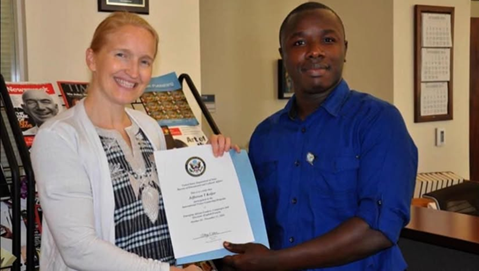
MONROVIA – In Liberia, incumbency brings distinct advantages, from control over public institutions to access to state resources and influence over policy agendas. Yet these advantages carry inherent challenges when leadership decisions do not fully reflect the needs and realities of citizens. In this analysis, the Secretary General of the former ruling Coalition for Democratic Change, Mayor Jefferson Koijee examines the first two years of the Unity Party administration under President Joseph Nyuma Boakai and Vice President Jeremiah Kpan Koung, highlighting the tension between executive authority, fiscal policy, and equitable governance. While national budgets and payroll allocations have increased, the benefits have not consistently reached lower-income civil servants, underscoring the complexities of translating incumbency into inclusive and accountable leadership. See Mr. Koijee’s article below.
The Power of Incumbency and the Deficit of Incumbency
In politics, the power of incumbency is often mistaken for permanence. It confers control over institutions, access to state resources, command of narratives, and the illusion of invincibility.
History, however, is unforgiving to such illusions. For every incumbent power that rises, there emerges an equal and opposite force that regimes rarely acknowledge until it is too late, the deficit of incumbency.
This deficit does not appear overnight; it grows when leadership abandons conscience for comfort and governance detaches from the lived realities of the people.
Two years into its tenure, the Unity Party administration under Joseph Nyuma Boakai and Jeremiah Kpan Koung illustrates this deficit with unsettling clarity.
What was promised as rescue has translated into calculated suffering for the poor and working class. Teachers remain underpaid and demoralized, civil servants struggle to survive, yet the state speaks the language of reform while practicing exclusion.
The numbers tell the story more honestly than speeches. In 2023, when the Congress for Democratic Change exited government, the national payroll stood at approximately 296 million USD.
Two years later, it has risen to about 354 million USD, a 58 million USD increase.
This increase did not translate into salary relief for the more than 20,000 civil servants who were trapped below 200 USD and promised improvement.
Instead, it has largely financed new hires aligned with Unity Party structures, many now earning above 500 USD with generous benefits.
The much-publicized call to undo wage harmonization quietly evaporated once incumbency tasted comfort.
Harmonization was neither reversed nor corrected; it was selectively applied, preaching equality while practicing privilege.
Paulo Freire warned that oppression survives by masking itself as reform, by asking the oppressed to applaud policies that deepen their marginalization.
This is the anatomy of a regime gone rogue. Incumbency has become a shield for inequity, and fiscal policy a tool of political reward rather than social justice.
Institutions are not being strengthened; they are being repurposed. Suffering is not accidental; it is engineered through choices that prioritize loyalty over competence and proximity over productivity.
When a government inflates its payroll without broad-based equity, it signals capture, not reform.
Liberia has seen this before. From prolonged one-man dominance to eras of silence and repression, our history teaches a consistent lesson: no regime survives the deficit of incumbency.
When empathy gives way to arrogance and hunger is met with speeches instead of solutions, power begins to rot from within. Collapse may be slow, but it is inevitable.
To the young people of Liberia, this is not a moment for despair but for awakening. The deficit of incumbency is a warning bell that change is near.
Governments write their own endings when they abandon the people. The power of incumbency fades with time; the power of a conscious and courageous people endures.
History is not waiting for the Unity Party. It is waiting for Liberians who refuse to normalize suffering and who understand that liberation is never gifted by incumbents, it is claimed by those ready to rise. JTK
Comments are closed.