
From Roads to Runways -GoL Unveils Sweeping Public Works, Aviation, Other Initiatives
MONROVIA – Nearly two decades after the guns fell silent, Liberia is undertaking a comprehensive reassessment of how it plans, finances, and delivers national infrastructure. Years of fragmented investments, donor-driven projects, and post-conflict recovery programs have expanded access in some areas while leaving persistent gaps in others. Against this backdrop, the government says a new, integrated approach is required—one that links roads to markets, airports to trade, and social protection to economic opportunity, while strengthening institutions that deliver public services. The forthcoming post-war national infrastructure conference, alongside a slate of reforms announced this week, signals an effort to move beyond piecemeal development toward long-term, coordinated national planning. THE ANALYST’S George C. Flomo reports.
The Government of Liberia has announced plans to host its first post-war national infrastructure conference as part of a broader effort to review past development strategies and adopt a more comprehensive approach to infrastructure planning and implementation across the country.
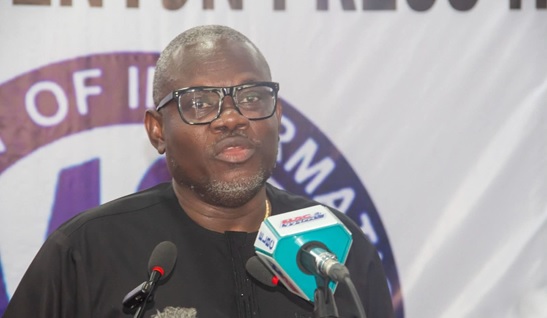
Speaking Tuesday at the Ministry of Information’s regular press briefing, Information Minister Jerolinmek M. Piah said the conference will take place from January 19 to 23, 2026, in the commercial city of Ganta, Nimba County.
The event is expected to bring together senior government officials, development partners, private-sector actors, and about 15 international participants to deliberate on Liberia’s infrastructure future.
According to Minister Piah, the conference will focus on a holistic review of the country’s infrastructure landscape, covering roads, airports, seaports, energy systems, and public buildings.
He disclosed that the Minister of Works of the Republic of Ghana will serve as keynote speaker, underscoring the regional dimension of infrastructure development and the value of shared experiences among West African states.
Beyond the conference, Minister Piah outlined several major developments within the Ministry of Public Works, including the completion and acceptance of a feasibility study for a proposed 90-kilometer road corridor from Brewerville to Bopolu in Gbarpolu County.
The study assessed the technical, environmental, economic, and financial viability of the project and was conducted by Eichen B and C of South Korea, with full funding from the International Contractors Association of Korea.
With the feasibility report formally accepted on January 13, 2026, the government’s next step will be to mobilize financing for construction, estimated at approximately US$134 million.
The corridor, officials say, is expected to significantly improve connectivity between Monrovia and the western region, easing the movement of goods and people while stimulating local economies along the route.
The Information Minister further announced that the long-anticipated procurement of yellow machines—heavy equipment critical to road construction and maintenance—has entered the delivery phase.
The total cost of the equipment package stands at US$21.64 million and is aimed at transforming Liberia’s road infrastructure program over the next two years.
Twenty-five percent of the cost has already been paid through the Road Fund, while the remaining 75 percent, estimated at US$16.8 million, will be financed through a loan arrangement with the United Bank for Africa.
According to Minister Piah, the package includes nearly three categories of heavy equipment, along with 20 brand-new pickup trucks provided at no additional cost to Liberia. Two 44-foot containers of spare parts for the yellow machines and two additional containers for other equipment are also included free of charge.
The agreement further provides for the deployment of technical experts who will remain in Liberia for two years to service the machines and train local operators, helping to build domestic capacity.
He explained that loading of the equipment is expected to be completed by January 20, 2026, at various ports in China, using different categories of vessels, including roll-on/roll-off ships.
While shipping time is estimated at 45 days, the government has projected a 70-day arrival window to allow flexibility, with an anticipated arrival around March 30, 2026.
Upon arrival, the equipment will be distributed across 19 locations nationwide. Bong, Lofa, Nimba, and Grand Bassa counties will each receive two sets of machines, while the remaining counties will receive one set each.
Minister Piah said the Vice President, who is overseeing the initiative, has recommended that deployment begin in early April, starting in western Liberia around April 6 and 7.
He added that the President is expected to undertake a county tour around the same period to formally present the equipment to local authorities.
On foreign relations and development cooperation, Minister Piah announced the signing of a 100-million-RMB development cooperation agreement between Liberia and the People’s Republic of China on Friday, January 9, 2026, at the Ministry of Foreign Affairs.
The agreement reaffirms both countries’ commitment to deepening bilateral relations and advancing Liberia’s national development priorities.
China’s Ambassador to Liberia, who signed on behalf of his government, described the agreement as strategically important and aligned with Liberia’s development frameworks, including President Joseph N. Boakai’s ARREST Agenda.
Foreign Minister Sara Beysolow Nyanti, signing for Liberia, conveyed the gratitude of the President and the Liberian people, describing the agreement as timely and critical to accelerating economic and social development.
Minister Piah also highlighted major achievements by the Liberia Airport Authority in 2025, noting reforms that strengthened airport security and safety, improved customer service, and reinforced transparency and accountability.
He said these measures restored operational reliability, improved passenger confidence, and aligned Liberia’s airports with international aviation standards.
Key improvements included restructuring airport security personnel, enhanced collaboration with the Liberia National Police, rehabilitation of critical infrastructure such as the reopening of Taxiway Bravo after nearly two years, repair of sinking aircraft parking pavement, and restoration of jet bridges.
Navigational aids and screening equipment were upgraded, while wildlife management and perimeter safety initiatives were introduced to reduce bird strikes and enhance compliance.
On social protection, Minister Piah reported that the Ministry of Gender, Children and Social Protection, through the Save the Future Project, removed 13,599 children from the streets in 2025 and reunified them with their families.
He said 4,110 previously out-of-school children were enrolled, while 3,774 caregivers received business grants and training. Child support mediation secured over US$1.6 million in payments.
He added that more than US$1.17 million in cash transfers was provided to poor households in four counties, primarily benefiting women, alongside US$304,000 in livelihood grants to over 3,300 beneficiaries, with plans to mobilize more than 32,000 women in additional counties.
Institutional reforms, Minister Piah noted, increased gender and social inclusion units in government from nine to 42 between 2024 and 2025.
He also announced the launch of Liberia’s 20-year Civil Aviation Master Plan by the Liberia Civil Aviation Authority, covering 2025–2047, and the Senate’s decision to establish a new Ministry of Local Government to advance decentralization under the Local Governance Act of 2018.
Together, officials say, these initiatives reflect a renewed push to align infrastructure, social services, and governance reforms with Liberia’s long-term development ambitions.
Comments are closed.