

UP Alliance Chairmanship Sparks Feud -Patronage claims shadow twenty-two-party coalition dispute
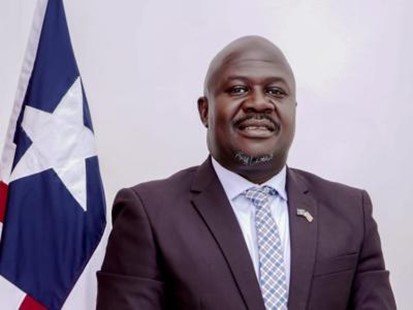
MONROVIA – A power struggle inside the Unity Party Alliance is testing the coalition’s claim to be a government in waiting. The twenty-two-party bloc is split over whether its acting chairman holds any legitimate mandate. At the center sits Gabriel H. Salee, whose authority is now openly contested by senior coalition figures. Critics allege his leadership was never ratified by a collective vote and functions mainly to distribute political patronage. Defenders insist the alliance must be governed by rules rather than personalities. The dispute exposes a bloc uncertain of its own founding procedures and direction. Whether it can resolve the quarrel through a convention will determine its survival as a credible force. THE ANALYST reports.
A political dispute inside the Unity Party Alliance, the twenty-two-party coalition that brands itself a government in waiting, has burst into the open. At issue is the legitimacy of the bloc’s acting leadership and the process by which it was installed.
The coalition’s Acting Chairman, Gabriel H. Salee, who also serves as Deputy Minister at the Ministry of Foreign Affairs, faces open challenge from senior members. They question his authority to occupy a seat they say was never sanctioned by the collective vote of the constituent parties.
Patronage at the Center
Albert C. Wah, Vice Chairman for Inter-Party and National Elections Commission (NEC) Affairs of the Economic Freedom Fighters of Liberia, leveled the sharpest accusations in a letter to fellow executives. He alleged that Salee’s leadership had become transactional, summoning member parties only to endorse the government or fill press conferences.
Wah charged that a desperation for appointments had driven some members to defend an arrangement that lacked collective approval. He framed the quarrel as a familiar contest over jobs, appointments and access to power rather than principle.
An Alliance in Confusion
The dueling correspondence reveals a coalition unsure of its own founding rules. Thomas Obediah Walker, Acting Chairman of the Greater Action Party, defended the current structure and insisted the alliance must be governed by rules and institutions rather than individuals.
Wah’s rebuttal countered that the rules Walker invoked were never written, ratified or agreed by the collective membership. He described a bloc that convenes meetings selectively and lacks any settled roadmap for governance.
Question of Legitimacy
The most combustible charge concerns legitimacy itself. Wah disputed the claim that Salee holds a duly recognized chairmanship, alleging that no consultation among the twenty-two parties ever endorsed his rise.
According to Wah, Salee effectively displaced Richard Hoff, who had been serving as Acting Chairman, without procedural sanction. Wah’s camp insists it seeks not to remove an elected leader but to correct what it calls an unauthorized imposition.
What Comes Next
Wah and his allies have called for an All-Alliance Convention open to all member parties to elect leadership through democratic means. Whether the current leadership accepts such a contest or resists it as an unlawful removal will shape the coalition’s future.
The stakes extend beyond internal procedure to the alliance’s public credibility as an alternative government. For a bloc marketing collective governance, the display of internal disarray carries clear political cost.
The report draws on position statements and internal correspondence exchanged between alliance officials. Both sides’ accounts are presented as claims made by the respective parties, and Salee had not publicly responded at press time.
Comments are closed.