
AML Rehabilitates 167 Kilometers of Roads -Improves Nimba, Bong, Grand Bassa Corridors
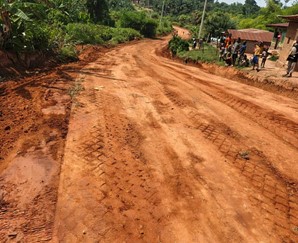
MONROVIA – ArcelorMittal Liberia (AML) has rehabilitated more than 167 kilometers of roads across Nimba, Bong, and Grand Bassa counties in five months. Completed between February and June 2026, the work restored roads that had become nearly impassable during the rainy season. For rural Liberians, the true stakes here go beyond transportation alone. Roads are the infrastructure through which agriculture reaches markets, patients reach clinics, and children reach schools. The program exposes a governance gap policymakers cannot ignore. In too much of rural Liberia, it is a mining company delivering the roads the state has long failed to provide. As THE ANALYST reports, AML says the next phase will focus on culverts, drainage systems, and flood resilience.
More than 167 kilometers of roads serving dozens of communities across Nimba, Bong, and Grand Bassa counties have been rehabilitated by ArcelorMittal Liberia (AML). The program has significantly improved transportation, trade, and access to essential services for thousands of residents living along the company’s mining and rail corridors.
According to the latest progress report released by AML’s Mines Infrastructure Department, the road rehabilitation program restored critical road networks between February and June 2026 that had become nearly impassable during the rainy season, reconnecting isolated communities with nearby towns, markets, schools, and healthcare facilities.
The report shows that 43.7 kilometers of roads were rehabilitated in the Yarmein area, 24.3 kilometers in the Sehyi area, 32 kilometers across Nimba rail communities, and 67 kilometers in Bong County rail communities, bringing the total distance rehabilitated to 167 kilometers within five months. Road rehabilitation activities are also continuing in Grand Bassa County.
Communities reconnected across three counties
The rehabilitation covered numerous AML fenceline communities, including Barpa, Karnla, Lugbehyee, Bonla, Baintonwin, Bololehwee, Gbeleyee, Kinon, Gbondin, Camp-4, Gbapa, Makinto, Sehyi-Geh, and New Barrack. Along the railway corridor in Nimba, work benefited communities including Garr Whynor, Tunukpuyee, Zarsonnon, Tunudin, Tiahyee, Zao, Gblehyee, Yoko Village, Bunadin, Duo, and Fire Village. In Bong County, the intervention extended to LAMCO Camp, Gaye Town, Yoopea, Yela, Greenhill Quarry, Zoweintaa, Monakpoloi, Dahn’s Town, Gold Camp, Walaweu, Balakpah, Botota, and Gbomon, among other communities that have historically struggled with deteriorating road conditions.
For many residents, the rehabilitation represents much more than improved roads. In rural Liberia, roads are often the only connection between farming communities and local markets. During the rainy season, damaged roads frequently trap vehicles for hours or even days, increase transportation costs, and make it difficult for farmers to move produce before it spoils.
Roads unlock agriculture, healthcare, education
With the roads now reopened to vehicles and motorcycles, farmers are expected to transport rice, cassava, vegetables, palm products, and other agricultural produce to surrounding markets more quickly and at lower cost.
Traders can also move goods more efficiently, reducing delays and improving the availability of essential commodities in remote communities. The improved road network is also expected to lower transportation costs for commercial drivers, reduce vehicle maintenance expenses caused by poor road conditions, and encourage greater movement of people and goods between rural towns and major commercial centers.
Healthcare delivery is another major beneficiary of the rehabilitation effort. Residents living in remote communities often face enormous challenges reaching clinics and hospitals, particularly during medical emergencies.
The newly rehabilitated roads will improve access for ambulances, healthcare workers, and patients while ensuring that essential medical supplies can reach rural health facilities more reliably.
Education is also expected to benefit. School buses, teachers, and students traveling between towns will face fewer transportation challenges, especially during the rainy season when poor road conditions have traditionally disrupted school attendance.
The road improvements are equally important for humanitarian response and public safety, enabling faster movement by emergency responders, government agencies, and development partners during emergencies such as flooding, disease outbreaks, or natural disasters.
Next phase focuses on drainage, flood resilience
The rehabilitation program is being led by Mines Infrastructure Lead Felix Abaidoo and General Manager Jallah Selmah, whose team has focused on restoring accessibility while laying the foundation for longer-lasting road infrastructure.
According to AML, the next phase will emphasize sustainability through the installation of culverts, improved drainage systems, and reinforcement of flood-prone sections to help roads withstand Liberia’s heavy seasonal rains and reduce the need for repeated emergency repairs.
AML says the rehabilitation forms part of its commitment to improving infrastructure in communities located around its mining operations and railway under its fenceline community policy.
For many communities along the mining and rail corridors, reliable roads mean more than convenience — they represent access to healthcare, education, employment opportunities, agricultural markets, and economic growth. By restoring these vital transport links, ArcelorMittal Liberia is helping strengthen local livelihoods while improving the quality of life for thousands of people across Nimba, Bong, and Grand Bassa counties.
Comments are closed.