

AML Honors Nurses Amid Healthcare Challenges -Praises frontline resilience and national service
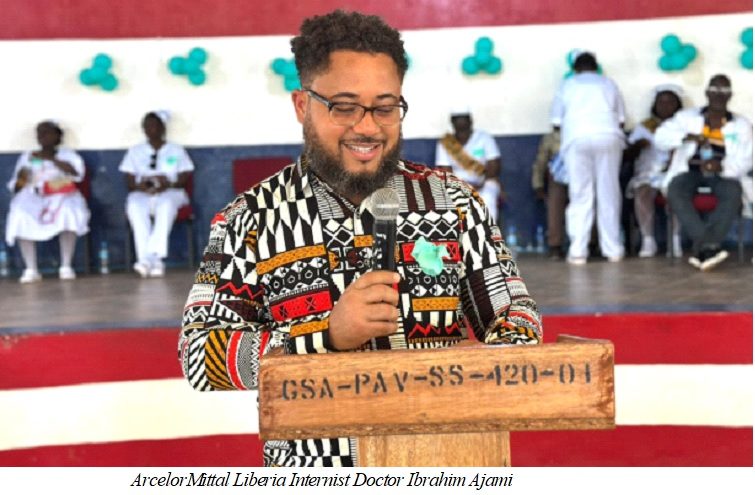
MONROVIA – Liberia’s healthcare system, still recovering from years of conflict, epidemic trauma, workforce shortages, and chronic underinvestment, paused this week to recognize the extraordinary role nurses continue playing in sustaining medical services under difficult national conditions. The observance, led by the African Methodist Episcopal University School of Nursing and Midwifery alongside healthcare stakeholders, evolved beyond ceremonial celebration into a broader reflection on the pressures confronting Liberia’s frontline health workers and the indispensable role nurses occupy within the country’s fragile public health infrastructure. At a time when renewed Ebola concerns are again testing national preparedness, the event also underscored how deeply Liberia’s healthcare stability depends on a workforce often underpaid, overstretched, yet persistently committed to service, as THE ANALYST reports.
Liberian nurses have been honored for their sacrifice, professionalism, resilience, and frontline service during a major healthcare observance that highlighted both the critical importance of nursing within the country’s fragile health system and the continuing hardships confronting healthcare workers nationwide.
The program, organized by the African Methodist Episcopal University School of Nursing and Midwifery in collaboration with healthcare stakeholders, brought together medical professionals, educators, students, institutional leaders, and invited guests in recognition of the central role nurses continue playing in sustaining Liberia’s healthcare delivery system under difficult national circumstances.
What might ordinarily have remained a routine commemorative event instead evolved into a deeper national reflection on healthcare resilience, workforce dedication, public health insecurity, and the unfinished struggle to rebuild Liberia’s medical system after years of war, epidemics, and institutional strain.
Speakers at the event repeatedly emphasized that nurses remain the backbone of Liberia’s healthcare infrastructure.
From overcrowded hospitals and under-resourced clinics to remote rural communities with limited medical access, nurses frequently represent the most visible and consistent point of healthcare contact for ordinary Liberians.
In many parts of the country, they are not merely caregivers but counselors, educators, emergency responders, public health advocates, and emotional support systems for patients and families confronting illness under extremely challenging conditions.
Healthcare leaders at the ceremony praised nurses for continuing to serve despite difficult working environments often characterized by inadequate equipment, staffing shortages, limited supplies, long hours, emotional exhaustion, and financial constraints.
“Nurses are the heartbeat of the healthcare system,” one speaker declared, capturing a sentiment echoed repeatedly throughout the event.
The tribute arrives at a particularly sensitive period for Liberia’s health sector.
Renewed Ebola concerns linked to outbreaks in eastern Democratic Republic of Congo have once again reminded Liberians of the enormous burden healthcare workers carry whenever epidemic threats emerge.
During the devastating 2014–2016 Ebola epidemic, nurses stood among the most exposed and vulnerable frontline responders. Many lost their lives treating infected patients under dangerous conditions while the healthcare system itself struggled to survive unprecedented pressure.
The memory of those sacrifices remains deeply embedded within Liberia’s national consciousness.
Hospitals became overcrowded, fear spread across communities, and healthcare workers often continued reporting for duty despite severe risks to their own lives and families.
Numerous nurses died while responding to the crisis, transforming them into enduring symbols of courage and public service during one of Liberia’s darkest modern chapters.
That painful history continues shaping how the country now views healthcare professionals.
At the observance, speakers reportedly reflected on the profession’s role not only during emergencies, but in sustaining ordinary healthcare delivery every day despite enormous systemic weaknesses.
Liberia’s healthcare system remains heavily strained by years of underinvestment, infrastructure limitations, workforce shortages, and uneven access between urban and rural communities.
In many rural areas, nurses often operate with minimal equipment, inadequate transportation systems, unreliable electricity, and insufficient institutional support while serving populations with significant healthcare needs.
Even in urban facilities, healthcare workers continue confronting overcrowding, limited resources, and growing patient demand.
Against that backdrop, nursing has become one of the most socially and institutionally important professions within Liberia’s recovery and development process.
Health sector stakeholders at the event reportedly stressed that strengthening nursing education and professional support systems must become a national priority if Liberia hopes to improve healthcare outcomes sustainably.
The African Methodist Episcopal University School of Nursing and Midwifery itself was recognized for its role in helping train future healthcare professionals during a period when the country continues needing expanded medical workforce capacity.
Medical educators emphasized that Liberia cannot build a resilient healthcare system without investing seriously in professional training, ethical standards, continuous learning, and improved working conditions for nurses and healthcare personnel generally.
That issue remains especially urgent.
Liberia continues facing shortages of trained healthcare professionals across multiple disciplines. Brain drain, financial limitations, and difficult working environments have periodically weakened the healthcare workforce, particularly outside major urban centers.
Healthcare analysts warn that unless conditions improve substantially, retaining skilled professionals will remain difficult.
At the same time, demand for healthcare services continues increasing due to population growth, public health pressures, and expanding awareness surrounding preventive care and medical access.
Nurses therefore increasingly find themselves operating at the center of multiple national pressures simultaneously.
The observance also highlighted the emotional dimensions of nursing often overlooked within public discourse.
Speakers reflected on the psychological burdens carried by healthcare workers who regularly witness suffering, death, trauma, and family distress while often lacking adequate mental health support themselves.
The profession, participants noted, demands not only technical competence but extraordinary emotional endurance and compassion.
That reality became particularly visible during Ebola, when nurses and healthcare workers faced social stigma, fear, and emotional isolation while continuing to provide treatment under frightening conditions.
Several participants reportedly argued that national appreciation for nurses must extend beyond ceremonial recognition into practical institutional support.
Calls emerged for improved salaries, better working conditions, stronger healthcare infrastructure, expanded training opportunities, and increased investment in professional development.
Healthcare professionals emphasized that praising nurses publicly while failing to strengthen the systems within which they work ultimately undermines long-term healthcare reform.
“A nation that values healthcare must value its nurses,” one speaker reportedly observed.
The event additionally underscored broader concerns regarding Liberia’s public health resilience.
Recent Ebola alerts have reminded authorities that epidemic threats remain persistent across the continent and that frontline healthcare workers will inevitably remain central to any future national response.
Preparedness experts argue that resilient healthcare systems depend not only on buildings and equipment, but on motivated, protected, and professionally supported healthcare personnel capable of responding during crises.
The nursing profession therefore occupies strategic importance extending far beyond ordinary clinical care.
Nurses often serve as the operational foundation of vaccination campaigns, maternal healthcare, disease surveillance, emergency response, health education, and community-level public health engagement.
In fragile health systems such as Liberia’s, their role becomes even more indispensable.
The observance also reflected growing awareness that healthcare reform must become tied to broader national development planning.
Poor healthcare systems affect not only medical outcomes but economic productivity, educational continuity, workforce stability, and social confidence. Families pushed into financial crisis by illness frequently face long-term economic hardship, while weak healthcare infrastructure discourages investment and weakens public trust in institutions.
Strengthening healthcare personnel therefore increasingly is being viewed as both a public health necessity and a national development imperative.
The AME University program reportedly encouraged nursing students and younger healthcare professionals to view the profession not merely as employment, but as national service requiring integrity, compassion, discipline, and continuous learning.
Educators emphasized that Liberia’s future healthcare resilience will depend heavily on the next generation of nurses entering the profession at a time when the country continues confronting both old and emerging public health challenges.
For many attendees, the observance ultimately carried a message larger than celebration alone.
It became a reminder that Liberia’s healthcare system continues functioning largely because thousands of nurses and frontline medical workers persist daily despite difficult conditions, institutional weaknesses, and emotional pressures often invisible to the broader public.
Their labor sustains clinics, hospitals, vaccination programs, emergency response systems, maternal care services, and community health interventions across the country.
Yet their sacrifices frequently occur without sufficient recognition, protection, or support.
As Liberia again strengthens epidemic preparedness amid regional Ebola concerns and broader healthcare pressures, the country’s dependence on nurses has perhaps never been clearer.
The challenge now is whether national policy, institutional investment, and public commitment will finally begin matching the enormous burden nurses continue carrying in defense of Liberia’s public health system every single day.
Comments are closed.