

LACC Launches Anti-Corruption Dashboard-World Bank-Backed GREAT Project Funds Platform
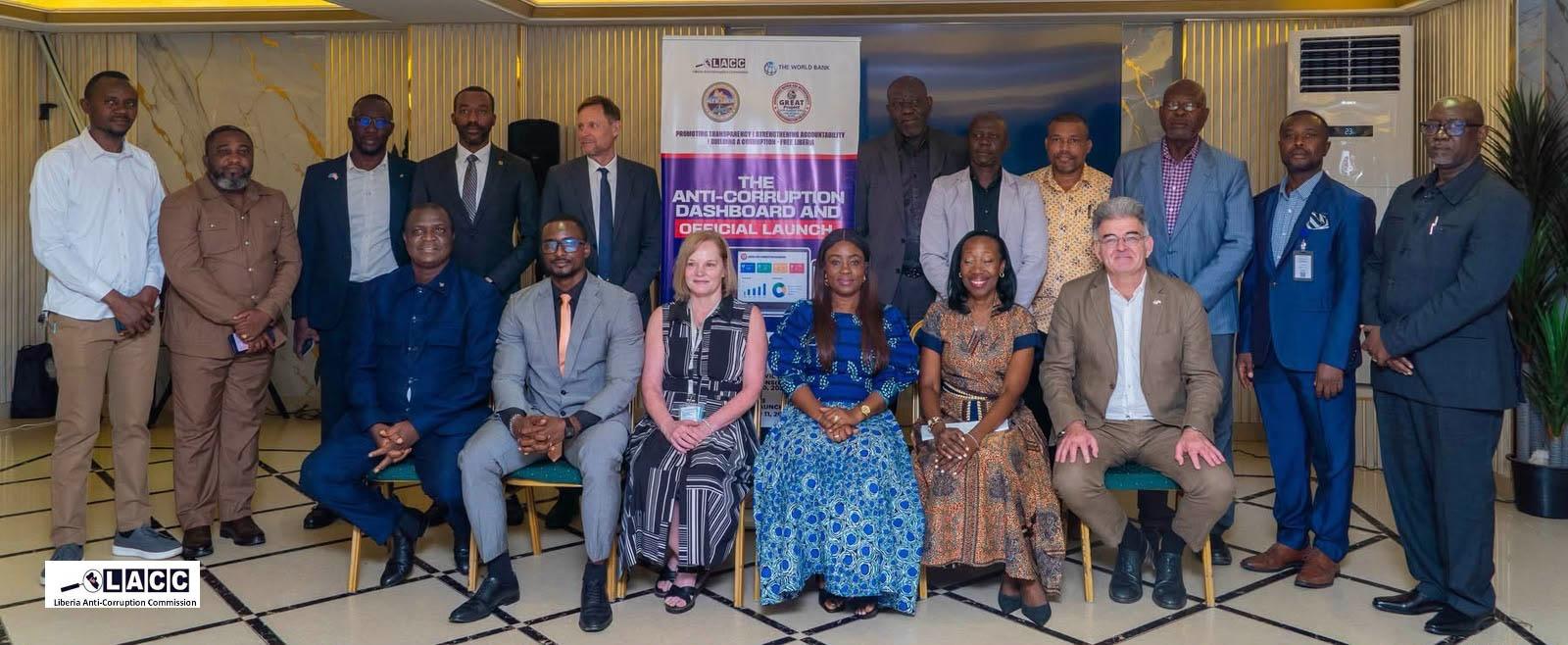
MONROVIA – Liberia has never lacked anti-corruption speeches. What it has lacked is a public scoreboard. The Liberia Anti-Corruption Commission (LACC) now says it has one. Its new Anti-Corruption Dashboard will track investigations, prosecutions, audit findings and procurement compliance. Chairperson Cllr. Alexandria K. Zoe framed it as an accountability instrument, not a digital novelty. The World Bank-supported tool shifts the burden onto institutions that must feed it accurate data. The General Auditing Commission (GAC) pointed to the deeper problem. Audits matter, it warned, only when their recommendations are implemented. A dashboard can expose that gap, but it cannot close it alone. THE ANALYST reports.
In a major push to strengthen public sector transparency and institutional performance, the Liberia Anti-Corruption Commission (LACC) has officially launched a cutting-edge Anti-Corruption Dashboard, which seeks to bridge the gap between policy and institutional performance, directly reinforcing President Joseph Nyuma Boakai Sr.’s ARREST Agenda.
The digital accountability platform is designed to provide a structured, technology-driven mechanism for tracking key performance indicators across selected accountability institutions. The launch marks a pivotal shift from fragmented reporting toward a coordinated, measurable, and results-oriented national anti-corruption response.
Beyond Digital Innovation to Results
Addressing a gathering of government officials, development partners, civil society actors, and media representatives, Cllr. Alexandria K. Zoe, Chairperson of the LACC, emphasized that the platform is much more than a digital novelty.
“Today, we are not merely launching a digital platform. We are introducing an important accountability instrument that reinforces a fundamental principle of democratic governance: public institutions must be accountable, their performance must be measurable, and the people must have confidence in the manner in which public resources are managed,” Zoe declared.
The Chairperson stressed that Liberia’s long-term democratic stability and economic recovery cannot rely on policies and promises alone. Instead, they demand strong institutions, responsible leadership, and transparent systems that hold public officials accountable to citizens. The Dashboard will enable stakeholders to monitor performance, assess progress, spot institutional gaps, and drive evidence-based decision-making.
Alignment with Boakai’s ARREST Agenda
The newly launched Dashboard directly supports the governance and development aspirations of Boakai, specifically anchoring the Rule of Law pillar of the Government’s ARREST Agenda for Inclusive Development (Agriculture, Roads, Rule of Law, Education, Sanitation, and Tourism).
Zoe underscored that the fight against corruption is not separate from national development, but rather a vital precondition for it. By monitoring institutional performance and identifying accountability gaps, the platform ensures that public resources are prudently managed to yield tangible improvements in the lives of ordinary Liberians.
Strong Partnerships, International Support
The realization of the Anti-Corruption Dashboard is the product of robust multi-stakeholder collaboration. During the launch, the LACC leadership extended profound gratitude to the World Bank for its invaluable technical and financial backing through the Governance Reform and Accountability Transformation (GREAT) Project.
Special appreciation was also conveyed to the Ministry of Finance and Development Planning (MFDP) for coordinating the GREAT Project, as well as to technical consultants, LACC professionals, civil society organizations, and the media for their unwavering dedication to transparency.
A Direct Challenge to Public Institutions
Concluding her address, Zoe issued a direct challenge to all participating accountability institutions. She urged public entities to embrace the Dashboard not merely as another bureaucratic reporting requirement, but as a dynamic tool for internal reform and institutional improvement.
“Let us ensure that the information entered into the system is accurate, timely, and verifiable,” Zoe charged, adding, “The Liberian people deserve institutions that work. They deserve public officials who are accountable.
They deserve development resources that produce tangible results.” With the official declaration launching the platform under the motto “Building Integrity for Development,” the LACC expressed optimism that the technology, backed by strong political will, will restore public confidence and foster a more prosperous, transparent, and inclusive Liberia.
Partners Applaud the Commission
Earlier during the program, the Executive Vice President of the LACC, Mr. Arthur W. B. Fumbah, in his welcome remarks, said the institution was excited to form strategic partnerships with all stakeholders who made the project possible and extended appreciation to the government and all development partners for making the project possible.
He described the project as a major breakthrough in the combat against corruption, stressing that the dashboard will go a long way in enhancing the work of the commission.
The overview and purpose of the dashboard were presented by Ms. Vivian S. Akoto, Executive Assistant at the commission. In brief remarks, the Public Procurement and Concessions Commission (PPCC) Executive Director, Bodger Scott, praised the LACC for the innovation that will allow the public to get access to information.
The World Bank Country Manager, Madam Georgia Wallen, congratulated the LACC and the MFDP on the successful launch.
The Dashboard provides citizens with access to information on corruption investigations and prosecutions, audit findings, procurement compliance, and other accountability actions, allowing the public to monitor institutional commitments, progress, and performance.
In attendance were Irish Ambassador to Liberia, Gerard Considine; German Ambassador to Liberia, Carsten Hölscher; Integrity Watch Liberia Executive Director, Harold Marvin Aidoo; PPCC Executive Director, Hon. Bodger Scott Johnson; and General Auditing Commission (GAC) Deputy Auditor General for Administration, Hon. Foday G. Kiazolu. In their remarks, they applauded the LACC for the initiative and recognized the strides the Commission is making in the fight against corruption.
Through this initiative, the LACC and its partner institutions seek to strengthen coordination, expand public oversight, and build citizens’ confidence in Liberia’s fight against corruption.
GAC: Audits Alone Not Enough
Also speaking on behalf of the Auditor General, P. Garswa Jackson, Deputy Auditor General Kiazolu said the fight against corruption cannot be won by one institution alone, stressing that it requires collective efforts.
“Corruption strides in darkness, strides when processes are unclear, when citizens cannot see what is happening in government,” he said, adding, “The dashboard will also move us from promises to evidence, and from speeches to impact.”
“At the GAC, our mandate is clear, to promote accountability, transparency, and good governance in the use of public funds through the conduct of quality and timely audit. Our audits exposed weaknesses, leakages, and non-compliance. But audits alone are not enough; what happens after the audits is what matters: whether recommendations are implemented,” he concluded.
Comments are closed.