
Liberia Showcases Historic Heritage Collection -Rare images preserve Liberia’s national memory
MONROVIA – A nation’s history is preserved not only in written records but also in the images that capture defining moments, remarkable personalities and changing landscapes across generations. As Liberia prepares to celebrate its 179th Independence Anniversary, a new historical photographic exhibition promises to transform public appreciation of the country’s past by bringing together some of the nation’s rarest visual records under one collection. Beyond commemorating independence, the initiative seeks to preserve Liberia’s documentary heritage, strengthen historical research and provide future generations with authentic visual evidence of the country’s political, cultural and environmental evolution. The project also highlights the growing importance of archival preservation as an indispensable pillar of national identity. THE ANALYST’s George C. Flomo reports.
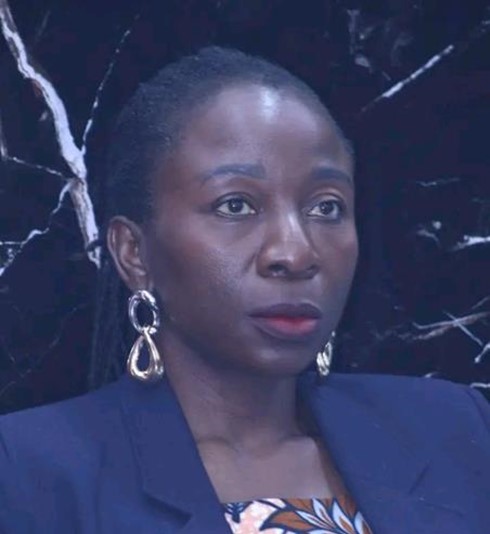
Historian and cultural preservation advocate Kou Fahnbulleh has announced the unveiling of a landmark mobile photographic exhibition featuring 100 rare historical photographs documenting Liberia’s political, cultural and environmental history as part of activities commemorating the country’s 179th Independence Anniversary.
Speaking during the Ministry of Information’s regular press briefing, Fahnbulleh described the exhibition as the culmination of years of painstaking work undertaken by a dedicated team committed to collecting, preserving and safeguarding Liberia’s historical documents and photographic records for future generations.
According to her, the initiative is intended to establish a centralized historical archive that will make Liberia’s documentary heritage readily accessible to students, researchers, historians and ordinary citizens at little or no cost.
“We have been in the process of gathering Liberian documents and photographs in one location so that we will be able to tell the Liberian story,” Fahnbulleh said. “These resources will be available to Liberian students and citizens at no cost.”
She explained that the exhibition has been designed not merely to preserve historical materials but also to encourage younger Liberians to appreciate the country’s rich history through authentic visual records spanning nearly 170 years.
Historic Milestones Commemorated
Fahnbulleh disclosed that the exhibition coincides with two important centennial anniversaries in Liberia’s history.
According to her, this year marks 100 years since the signing of the Firestone Agreement as well as the 100th anniversary of the Harvard University Medical Expedition to Liberia, both of which occurred in 1926.
She noted that both historical events generated extensive documentation and photographic collections that today provide invaluable insights into Liberia’s political development, environment and society during the early twentieth century.
Those records, she said, constitute an important component of the exhibition and offer visitors a rare opportunity to examine Liberia through the lenses of some of the earliest documentary photographers and researchers.
Rare Environmental Records
Among the exhibition’s most remarkable collections are photographs produced during the Harvard University Medical Expedition.
According to Fahnbulleh, members of the expedition carefully documented Liberia’s natural environment, producing photographic records of forests, wildlife and ecosystems that remain historically significant today.
She said visitors will have the opportunity to view rare photographs of several wildlife species, including the elusive pygmy hippopotamus and other animals scientifically documented during the expedition.
The exhibition, she explained, provides a unique opportunity for Liberians to compare the country’s biodiversity as it existed a century ago with contemporary environmental conditions.
Beyond their historical importance, the photographs also provide valuable reference materials for environmental researchers, conservationists and students studying Liberia’s ecological heritage.
Spotlight On Grand Bassa
Because this year’s national Independence Day celebrations will be hosted in Buchanan, Grand Bassa County, the exhibition will feature a special collection highlighting the county’s historical development.
Fahnbulleh said visitors will be able to view rare photographs depicting Buchanan and other communities in Grand Bassa during the early decades of the twentieth century.
The images document historical architecture, public buildings, transportation, community life and social development during a formative period in Liberia’s history.
She explained that the collection offers an unusual opportunity to examine how one of Liberia’s oldest counties evolved over time while preserving visual records that have remained largely inaccessible to the general public.
Augustus Washington Collection
One of the exhibition’s principal attractions will be a collection of Liberia’s earliest surviving photographs taken by Augustus Washington.
Fahnbulleh described Washington as Liberia’s pioneering photographer and explained that the repatriated African American introduced one of photography’s earliest techniques, the daguerreotype, after settling in Liberia in the nineteenth century.
According to her, Washington produced some of the country’s first known photographic portraits, documenting prominent Liberian statesmen whose images have become enduring symbols of the nation’s early history.
Among those photographed were Liberia’s first President, Joseph Jenkins Roberts, and President Stephen Allen Benson.
She further noted that Washington’s collection also includes portraits of Daniel Bashiel Warner and several other prominent figures who later assumed the presidency.
The photographs remain among Liberia’s most treasured historical artifacts and will form one of the exhibition’s central attractions.
Mobile National Exhibition
Beyond the Independence Anniversary celebrations, Fahnbulleh revealed that the exhibition has been deliberately designed as a mobile gallery capable of traveling throughout Liberia.
Rather than remaining permanently in one location, the collection is intended to reach schools, universities and communities across the country, allowing broader public access to Liberia’s documentary heritage.
She expressed hope that the Government of Liberia will eventually preserve the collection as a permanent national asset and facilitate its exhibition at educational institutions and other public venues.
“If you can come to Buchanan, that’s wonderful,” she stated. “If you can’t, the gallery is mobile and will become a permanent asset of the country. Hopefully, the government will display it at universities and other locations for people to appreciate.”
Vision Of Dr. Elwood Dunn
Fahnbulleh credited renowned Liberian historian Dr. Elwood Dunn with conceiving the vision that inspired the exhibition.
She described Dunn as an elder statesman, distinguished historian, accomplished author and former Minister of State for Presidential Affairs during the administration of former President William R. Tolbert Jr.
While acknowledging the contributions of members of her own team, she emphasized that their work principally supports Dr. Dunn’s longstanding vision of preserving Liberia’s historical memory for future generations.
According to Fahnbulleh, the initiative represents a collective national effort rather than the accomplishment of any single individual.
Preserving National Identity
Encouraging Liberians attending the Independence celebrations in Buchanan to visit the exhibition, Fahnbulleh said the collection provides an opportunity to experience Liberia’s history through authentic visual records spanning almost 170 years.
She maintained that preserving photographs and historical documents is essential to protecting Liberia’s national identity because such materials enable future generations to understand where the nation has come from and appreciate the people, institutions and events that shaped its development.
The exhibition, she concluded, represents a significant investment in preserving Liberia’s historical memory while ensuring that authentic visual records of the nation’s remarkable journey remain accessible to scholars, students and citizens for generations to come.
Comments are closed.