
GMCL Unveils Strategic Plan -Targets Evangelism, Expansion, Community Development Drive
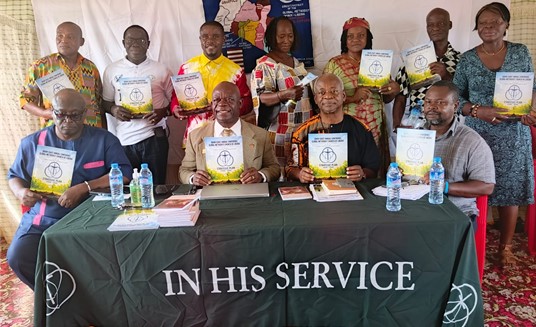
MONROVIA – The Grain Coast Annual Conference of the Global Methodist Church of Liberia (GCAC/GMCL) has officially launched an ambitious Five-Year Strategic Plan designed to deepen the Church’s spiritual influence while expanding its contribution to national development through 2030, anchoring the denomination’s future on four interconnected pillars of evangelism, discipleship, church planting, and sustainable community development. Unveiling the document on Monday, July 6, 2026, Conference Superintendent Rev. Dr. Jerry P. Kulah described the blueprint as both a spiritual commitment and a practical working framework that will guide budgeting, ministry priorities, resource allocation, and performance evaluation across the Conference’s six districts, nine circuits, and 163 local churches over the next half-decade. As THE ANALYST ‘S H. Matthew Turry reports.
Launching the document, Rev. Dr. Kulah anchored the initiative in Proverbs 16:3, declaring, “Commit to the Lord whatever you do, and He will establish your plans.”
According to Rev. Kulah, the launch comes at what he characterized as a defining moment in Liberia’s spiritual and social history, one that demands renewed commitment to the Church’s Wesleyan heritage while responding more intentionally to the everyday challenges confronting Liberians.
Rather than serving as a symbolic declaration, Rev. Kulah emphasized that the strategic plan is intended to function as a working document that will guide decision-making, budgeting, ministry priorities, resource allocation, and performance evaluation across the Conference over the next half-decade.
Implementing Against National Challenges
He acknowledged that the strategy is being implemented against the backdrop of significant national challenges.
“Liberia remains one of the world’s most development-challenged nations, with a notably young population facing urgent educational, employment and spiritual needs. Poverty and multidimensional deprivation remain widespread, while emerging digital and environmental realities present both risks and opportunities that require evolving, Christian-based responses,” Rev. Kulah stated.
Despite these realities, he expressed confidence that the Conference possesses important strengths upon which to build, including a clear doctrinal identity, an expanding membership, committed clergy and lay leaders, and an emerging generation of local leadership capable of advancing the Church’s long-term mission.
At the same time, he candidly identified institutional limitations that could impede implementation, particularly inadequate infrastructure and difficulties in mobilizing resources at the local level. He said the strategic plan has been specifically crafted to gradually address those constraints while strengthening the Conference’s institutional capacity.
Four Interconnected Pillars
Rev. Kulah explained that the blueprint is anchored on four interconnected pillars—Evangelism, Discipleship, Church Planting, and Sustainable Development—which together seek to advance both the spiritual and social mission of the Church.
He noted that the strategy responds not only to the theological convictions of the Global Methodist Church but also to Liberia’s pressing developmental realities, arguing that effective ministry in today’s context requires addressing both spiritual transformation and practical human needs.
To ensure accountability, every pillar contains measurable, time-bound objectives extending from 2026 through 2030, enabling Conference leadership to monitor progress annually and make adjustments where necessary instead of pursuing open-ended aspirations.
Under the Evangelism pillar, the Conference plans to establish a national Gospel media ministry during 2026, ensure that every local congregation has an active evangelism team by 2027, develop a Conference-wide evangelism training manual by 2028, and equip approximately 500 evangelists by the end of the strategic period in 2030.
The Discipleship component calls for the production of a Conference-wide discipleship guide this year, followed by the development of a context-specific discipleship curriculum in 2027. The strategy also envisions training at least 500 small-group leaders by 2029 while introducing digital discipleship platforms across the Conference by 2030.
Church Planting represents another major focus of the plan. Conference leaders intend to establish three regional church planting hubs by 2028, construct 45 new church buildings, introduce hybrid and digital worship models, and plant an ambitious 241 new congregations nationwide by 2030.
Development Beyond the Pulpit
Beyond expanding its spiritual footprint, the Conference also aims to strengthen its contribution to community development through its Sustainable Development pillar.
Among the key commitments are mobilizing every local church to undertake community development initiatives by 2028, implementing 15 community-based projects—equivalent to three projects annually—launching a church-based microfinance program to promote economic empowerment, and establishing functional development projects in every circuit district by 2027.
Rev. Kulah projected that successful implementation of the strategy would result in a 45 percent increase in church attendance and professions of faith, a 35 percent increase in congregational growth, and at least 60 percent of members participating in structured discipleship programs.
He further expressed optimism that the Church’s development interventions would contribute to measurable improvements in community livelihoods, environmental stewardship, and local resilience.
Phased Rollout, Firm Milestones
Implementation of the strategy will initially cover the Conference’s existing six districts, nine circuits, and 163 local churches before gradually expanding into additional counties as governance structures, monitoring systems, and resource mobilization mechanisms become stronger.
The Conference Superintendent reiterated that while the Church enjoys significant institutional strengths—including doctrinal clarity, committed leadership, and growing membership—it must continue investing in infrastructure, leadership development, and sustainable financing to realize the strategy’s full potential.
The plan also incorporates several cross-cutting priorities intended to ensure broad participation throughout the Church. These include strengthening the involvement of children, youth, young adults, women, men, and persons with disabilities, while simultaneously promoting climate resilience, environmental stewardship, and digital transformation across all ministries.
Church officials noted that the strategy’s five-year implementation schedule establishes important performance milestones, particularly in 2027 and 2028, when numerous targets across the four pillars are expected to be achieved. Those benchmarks are expected to provide early indicators of whether implementation remains on course or requires strategic adjustments before the plan concludes in 2030.
“This strategic plan reflects the Conference’s mission, vision and its strategic foresight for Liberia’s spiritual and social transformation,” church officials affirmed at the launch.
Comments are closed.