
Bishop Brown Questions Govt.’s Prophecy Response -Calls for tolerance, focus on national issues
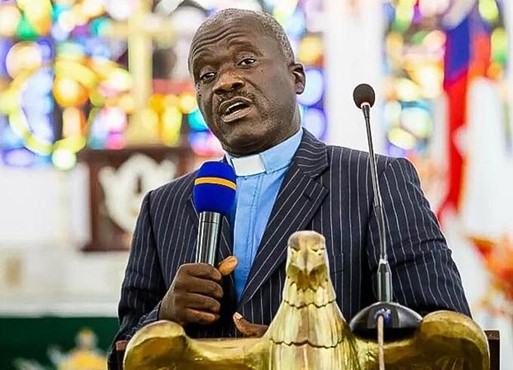
MONROVIA – As debate continues over a controversial prophecy by Nigerian cleric Pastor Elijah Ayodele regarding Liberia and President Joseph Nyuma Boakai, a prominent Liberian religious leader has entered the discussion with a sharply critical assessment of the government’s response. Bishop Kortu K. Brown, one of Liberia’s most respected evangelical voices, says he is surprised that state officials would devote significant attention to a prophecy they publicly reject while elevating the matter into a diplomatic concern. His intervention shifts the conversation beyond the prophecy itself and into broader questions about religious tolerance, freedom of expression, democratic maturity, and the appropriate balance between governance priorities and public controversy. THE ANALYST reports.
Urges Focus On National Challenges, Calls For Tolerance And Biblical Perspective
One of Liberia’s most influential Christian leaders, Bishop Kortu K. Brown, has publicly expressed shock and disappointment over the Government of Liberia’s response to a controversial prophecy issued by Nigerian cleric Pastor Elijah Ayodele, arguing that state officials have accorded undue significance to a prediction they themselves have dismissed as lacking credibility.
In a strongly worded statement released amid ongoing public debate surrounding the prophecy and the reported diplomatic engagement that followed, Bishop Brown questioned why government officials would expend considerable attention on the remarks of a religious figure they reportedly regard as a “fake prophet.”
According to the former President of the Liberia Council of Churches, the level of official reaction appears inconsistent with the government’s own apparent assessment of the cleric’s credibility.
“Given Liberia’s claims to being established on Christian principles, I am shocked about the level of response from government functionaries about a reported Nigerian primate’s prophecy concerning the Liberian Government,” Bishop Brown declared.
“I didn’t expect that the functionaries of government will give such credence to a prophecy they don’t believe in, given that they considered him as a ‘fake’ prophet.”
REJECTS ANY UNCONSTITUTIONAL CHANGE OF GOVERNMENT
While criticizing the government’s response, Bishop Brown made it clear that he does not support any suggestion of political instability or any attempt to alter Liberia’s government outside constitutional and democratic processes.
The respected cleric emphasized that Liberia’s democratic gains have been achieved through enormous sacrifice and must be protected.
According to him, the country’s painful history demands unwavering commitment to democracy, the rule of law, human rights, freedom of expression, and constitutional governance.
“No Liberian, not even me, wants to see any bad thing happen to Liberia,” he stated.
“Any inference to any change of government outside the democratic process is not only unwelcome but outrightly rejected because Liberia has paid the price with her blood, tears and sweat for the sustenance of democracy, rule of law, free speech, human rights and other democratic values.”
He added that Liberia must continue moving forward on the path of democratic governance and national stability.
“So there’s no turning back. This country, Liberia, must march forward.”
QUESTIONS DIPLOMATIC ENGAGEMENT
One of the strongest aspects of Bishop Brown’s statement concerned what he described as the apparent decision to elevate the matter beyond public debate and into the realm of diplomatic engagement.
The bishop argued that Liberia should be mature and confident enough to accommodate differing views, even when such opinions are unpopular, controversial, or disagreeable.
He suggested that government attention should remain focused on governance and national development challenges rather than becoming preoccupied with the pronouncements of foreign religious figures.
“Nonetheless, the country must be open to all shades of opinions whether good or bad,” he asserted.
“For a country like ours with the reported sophistication we have in government to be distracted from the affairs of the state to a foreign pastor’s spiritual assessment of the country, and to diplomatically engage a foreign country on such intervention, surprises me.”
His comments come amid widespread discussion over reports that Liberian officials formally raised concerns regarding Pastor Ayodele’s remarks.
Brown’s intervention places him among a growing number of voices questioning whether the controversy warranted the level of official attention it received.
EXPLAINS BIBLICAL UNDERSTANDING OF PROPHECY
Drawing upon Christian theology and biblical teachings, Bishop Brown sought to place the controversy within what he described as a proper scriptural framework.
According to him, prophecy is traditionally understood within Christianity in two distinct dimensions: forth-telling and foretelling.
He explained that forth-telling involves declarations concerning present realities and circumstances, often intended to provide correction, encouragement, instruction, or comfort.
Foretelling, by contrast, concerns predictions about future events.
“Prophecy is biblically considered in twofold: forth-telling and foretelling, with the former dealing with declarations or proclamations in the present while the latter deals with prediction of future events,” he explained.
“Unlike predicting the future, forth-telling focuses on speaking God’s will into a present situation to bring comfort, correction or encouragement.”
The bishop’s explanation sought to move public discussion away from sensationalism and toward a more nuanced understanding of how prophecy is traditionally interpreted within Christian doctrine.
BIBLE PROVIDES TEST FOR PROPHECY
Bishop Brown further argued that Christianity already provides clear guidance on how believers should assess prophetic claims.
Citing Deuteronomy 18:21-22, he noted that Scripture establishes fulfillment as the ultimate test of whether a prophecy genuinely originates from God.
Quoting directly from the biblical passage, Brown stated:
“You may say to yourselves, ‘How can we know when a message has not been spoken by the Lord?’ If what a prophet proclaims in the name of the Lord does not take place or come true, that is a message the Lord has not spoken. That prophet has spoken presumptuously, so do not be alarmed.”
According to the bishop, the biblical instruction is straightforward.
Believers are not required to panic over every prophetic declaration.
Rather, they are instructed to evaluate such claims based on whether they eventually come to pass.
“IF IT IS NOT TRUE, WHY WORRY?”
Perhaps the most pointed question raised by Bishop Brown concerned what he perceives as an apparent contradiction in the public response to the prophecy.
“If we believe in God’s word and also believe that the prophecy is not true, why then worry?” he asked.
The bishop questioned the intensity of public condemnation directed toward the cleric and challenged the logic of elevating remarks made by a private individual into a matter attracting governmental attention.
“What all the curses and condemnations?” he continued.
“Why go to the extent of complaining about a private citizen to their government for remarks made in public?”
The remarks are likely to resonate with those who have argued that the controversy has received disproportionate attention relative to more pressing national concerns.
CALLS FOR FOCUS ON NATIONAL CHALLENGES
Beyond the immediate controversy, Bishop Brown used the opportunity to urge government officials and citizens alike to concentrate on Liberia’s pressing developmental and governance challenges.
He stressed that the country continues to face significant economic, social, and institutional issues requiring serious attention and collective effort.
“I believe that Liberia has very serious challenges before us and we must focus therefore on finding solutions to our myriad of challenges,” he stated.
The bishop suggested that public energy would be better spent addressing issues affecting the daily lives of citizens rather than engaging in prolonged disputes over prophetic declarations.
His comments reflect a broader sentiment expressed by some observers who believe national discourse should remain focused on governance, economic recovery, job creation, education, healthcare, infrastructure, and public service delivery.
CALL FOR TOLERANCE AND DEMOCRATIC MATURITY
Bishop Brown also emphasized the importance of tolerance in a democratic society.
He argued that citizens should be prepared to hear and respond to differing viewpoints without resorting to excessive reactions or attempts to suppress opinions.
“We must also be tolerant of the assertions of other people however distasteful,” he said.
The statement underscores the bishop’s belief that democratic societies are strengthened when they accommodate diverse perspectives, even those that are controversial or unpopular.
For Brown, tolerance does not necessarily imply agreement.
Rather, it reflects confidence in democratic values and the ability of society to engage competing ideas without fear.
A VOICE OF MODERATION IN A GROWING DEBATE
As public discussion surrounding Pastor Ayodele’s prophecy continues, Bishop Brown’s intervention introduces a distinctly theological and civic perspective into an increasingly polarized conversation.
Rather than focusing on the accuracy of the prophecy itself, the bishop has directed attention toward how society and government should respond to prophetic claims, controversial opinions, and public criticism.
His message combines a firm rejection of unconstitutional political change, a defense of democratic principles, a call for religious and civic tolerance, and an appeal for national leaders to remain focused on the country’s substantive challenges.
In doing so, Bishop Brown has reframed the debate from one centered solely on prophecy to one encompassing governance priorities, democratic maturity, freedom of expression, and the role of faith in public life—issues that continue to shape Liberia’s evolving democratic journey.
Comments are closed.