
ANC Demands Sweeping Foya Project Inquest -Questions legality of controversial project
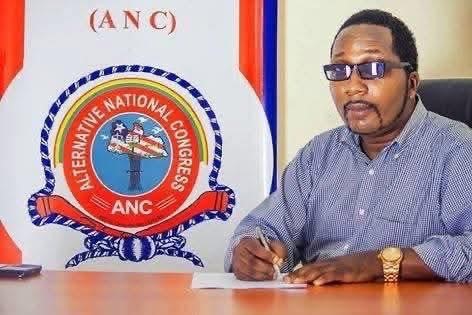
MONROVIA – A major political and governance storm is rapidly gathering around the controversial Mano River Union Center for Regional Peace and Development project in Foya, Lofa County, after the opposition Alternative National Congress formally petitioned the Liberia Anti-Corruption Commission to launch what it describes as an immediate and comprehensive investigation into the project’s financing, procurement, authorization, and implementation processes. The explosive request has now elevated the debate far beyond ordinary opposition criticism, drawing national attention toward allegations of secrecy, possible procurement violations, questionable funding mechanisms involving state-owned enterprises, and broader concerns surrounding constitutional accountability under the Boakai administration. Increasingly, the controversy is becoming a defining test of transparency, governance credibility, and institutional oversight nationwide. THE ANALYST reports.
ANC Escalates Pressure
The Alternative National Congress (ANC) has formally requested what could become one of the most politically sensitive anti-corruption investigations in recent years, calling on the Liberia Anti-Corruption Commission (LACC) to immediately launch a sweeping probe into the controversial Mano River Union Center for Regional Peace and Development project currently underway in Foya, Lofa County.
The opposition party’s communication, dated Monday, May 25, 2026, and addressed to the Executive Chairperson of the Liberia Anti-Corruption Commission in Congo Town, Monrovia, alleges that growing public disclosures, investigative reports, and conflicting official statements surrounding the project have generated profound national concern regarding transparency, legality, accountability, and constitutional compliance.
Signed by ANC Secretary General Desmond U. Nimely and approved by party Chairman Cllr. Lafayette E.O. Gould, the letter requests what the opposition describes as an “immediate, independent, and comprehensive investigation” into virtually every aspect of the multimillion-dollar undertaking, including its construction, financing arrangements, procurement processes, authorization mechanisms, and management structure.
The communication has already triggered renewed political debate across Liberia because the issue now touches not merely on infrastructure development, but on broader national questions involving executive transparency, procurement integrity, fiscal accountability, and democratic governance standards.
“These concerns strike at the very heart of Liberia’s public financial management architecture, procurement integrity system, and democratic governance framework,” the ANC declared in one of the strongest passages contained in the communication.
“National Secret” Raises Questions
At the center of the controversy are reports indicating that construction on the project allegedly commenced around September 10, 2024, under conditions multiple sources reportedly described as a “National Secret” initiative.
Those reports generated immediate public curiosity and political suspicion, especially after subsequent government clarifications acknowledged that the project is fully owned by the Government of Liberia and financed primarily through contributions from several major State-Owned Enterprises, including NASSCORP, the National Port Authority, the Liberia Petroleum Refining Company, and the Liberia Electricity Corporation.
For critics, the secrecy allegations surrounding the project’s early stages have become deeply troubling because they suggest the possibility that normal transparency safeguards may have been bypassed during the project’s conception and implementation.
Analysts say the phrase “National Secret” alone has become politically combustible within a democratic environment where public infrastructure projects financed directly or indirectly through state resources are generally expected to undergo visible procurement, legislative, and auditing scrutiny.
Opposition figures and governance advocates argue that public trust becomes vulnerable whenever major state projects appear to operate outside traditional accountability mechanisms.
The ANC’s letter reflects precisely those fears.
Procurement Concerns Intensify
The opposition party alleges that the project may have bypassed mandatory procurement and competitive bidding procedures established under Liberia’s Public Procurement and Concessions Commission Act.
That allegation alone carries potentially enormous legal and political implications because procurement compliance remains one of the most sensitive governance issues within Liberia’s public sector environment.
Over the years, procurement controversies have repeatedly emerged at the center of major corruption disputes involving public contracts, infrastructure initiatives, concession agreements, and state spending arrangements.
Consequently, any suggestion that a multimillion-dollar project involving public financing mechanisms may have avoided established bidding procedures immediately raises concerns regarding fairness, transparency, value-for-money protections, and possible abuse of public office.
The ANC further alleged that public resources controlled by State-Owned Enterprises may have been redirected absent transparent disclosure, legislative oversight, or independent auditing safeguards.
That aspect of the controversy is particularly sensitive because State-Owned Enterprises manage substantial public assets and revenues critical to Liberia’s economic and development framework.
Critics argue that if SOE funds can be mobilized into major national projects without sufficiently transparent oversight mechanisms, broader questions inevitably emerge concerning financial governance standards and institutional accountability.
Contradictory Statements Fuel Suspicion
The ANC additionally accused authorities of issuing contradictory public explanations regarding the project’s ownership structure, funding sources, purpose, authorization, and overall cost.
According to the opposition, those inconsistencies have materially undermined public trust and generated legitimate suspicion regarding possible misuse of state resources and abuse of public office.
Political analysts note that public confidence in governance systems often weakens rapidly when official explanations surrounding sensitive projects appear inconsistent or fragmented.
In politically charged environments, contradictory statements frequently fuel speculation far beyond the original issue itself, especially when projects involve large sums of money, executive involvement, and limited public disclosure.
The ANC’s communication strongly suggests that the opposition believes the controversy has already evolved beyond ordinary administrative confusion and entered territory requiring independent institutional intervention.
The party also warned that the reported secrecy surrounding the project’s implementation may constitute deliberate circumvention of transparency and accountability safeguards established under Liberian law.
That accusation now places enormous pressure on oversight institutions to respond credibly and independently.
Opposition Demands Full Investigation
The ANC is now urging the Liberia Anti-Corruption Commission to commence what it described as a “full-scale investigation” into every major component of the project.
Specifically, the opposition party wants investigators to examine financing arrangements, procurement processes, contracting procedures, approvals, memoranda, financial transfers, and all SOE disbursement mechanisms associated with the project.
The party additionally requested that investigators identify all public officials, contractors, private entities, intermediaries, and institutions involved in approving, financing, or executing the project.
The ANC further called on the LACC to determine whether any provisions of the Public Financial Management Act, Penal Law, anti-corruption statutes, or other applicable laws may have been violated during the project’s implementation.
Importantly, the opposition is not merely requesting administrative clarification.
The communication explicitly calls for criminal, civil, administrative, or restitutionary actions should investigators establish violations.
That language dramatically raises the political stakes surrounding the controversy.
Governance Debate Deepens
While sharply critical, the ANC attempted to frame its intervention as a defense of constitutional governance rather than opposition to development itself.
“The ANC wishes to emphasize that this request is not intended to oppose legitimate national development or regional cooperation initiatives,” the communication stated. “Rather, it reflects our firm conviction that development must always proceed within the framework of constitutional governance, fiscal transparency, procurement integrity, and the rule of law.”
That framing is politically strategic.
Opposition parties frequently face accusations of obstructing development initiatives whenever they challenge major infrastructure or state-backed projects. By emphasizing support for legitimate development while simultaneously demanding accountability, the ANC appears intent on positioning itself as defending governance standards rather than opposing national progress.
The party’s warning that “Liberia’s democratic future depends not merely upon what projects are undertaken, but how they are undertaken” has since emerged as one of the most quoted lines from the communication.
Observers say that statement captures the broader significance of the controversy.
Increasingly, the debate is no longer only about a single project in Foya. It is about whether public institutions can maintain transparency, procurement integrity, and constitutional accountability while pursuing ambitious national development initiatives.
Pressure Mounts On Oversight Institutions
The ANC’s communication was copied to several major national and international stakeholders, including the President Pro Tempore of the Liberian Senate, the Speaker of the House of Representatives, the General Auditing Commission, the Public Procurement and Concessions Commission, the Ministry of Justice, civil society organizations, media institutions, and members of the diplomatic community.
That broad distribution appears carefully designed to increase political pressure and ensure the issue remains within national and international public attention.
Governance observers say the controversy now places significant institutional pressure on the Liberia Anti-Corruption Commission itself.
If the Commission fails to respond decisively, critics may interpret silence or delay as institutional weakness or political reluctance. Yet if investigators aggressively pursue the matter, the controversy could evolve into one of the administration’s most politically difficult governance battles.
Either outcome carries serious implications.
For the Boakai administration, the MRU project controversy is increasingly becoming a test of its broader commitment to transparency and accountability reforms promised during the 2023 electoral transition.
For opposition parties, meanwhile, the issue presents an opportunity to aggressively challenge the administration’s governance credentials while positioning themselves as defenders of constitutional oversight and procurement integrity.
National Attention Intensifies
Across political circles, civil society organizations, and governance advocacy groups, interest in the controversy continues to grow.
Some analysts argue that the issue reflects deeper structural tensions within Liberia’s governance environment, particularly regarding the balance between executive discretion, rapid development ambitions, and institutional accountability safeguards.
Others warn that controversies involving secrecy and procurement compliance can quickly erode public confidence in government if not handled transparently and decisively.
Already, comparisons are emerging between the MRU controversy and previous national debates involving concession agreements, infrastructure financing arrangements, and extra-budgetary state spending initiatives.
For many Liberians, however, the central issue remains straightforward: whether laws, procurement standards, and public accountability mechanisms are being applied consistently regardless of the political importance or strategic significance of a project.
That question now sits squarely before Liberia’s anti-corruption and oversight institutions.
And as national scrutiny intensifies around the Foya project, the outcome of this controversy may ultimately shape not only the future of the MRU initiative itself, but broader public perceptions regarding transparency, governance credibility, and democratic accountability under the current administration.
Comments are closed.