
Sen. Konneh Rejects Joekai’s Public Defense -Insists neutrality laws were breached
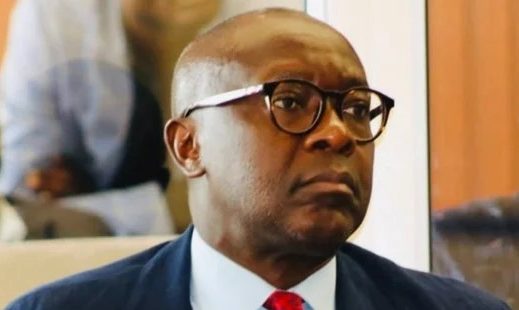
MONROVIA – Liberia’s intensifying debate over political neutrality, ethical governance, and selective enforcement within public institutions has deepened dramatically after Gbarpolu County Senator Amara Konneh publicly rejected Civil Service Agency Director-General Dr. Josiah F. Joekai’s defense regarding participation in activities linked to the National Independent Movement for Boakai Organization. The confrontation is rapidly evolving beyond a personal disagreement into a nationally consequential dispute over constitutional interpretation, the scope of Liberia’s Code of Conduct, and whether public officials connected to ruling political structures are being subjected to the same standards previously enforced against others. Increasingly, the controversy is exposing deeper anxieties surrounding institutional credibility, political consistency, and the fragile boundaries separating governance responsibilities from partisan political engagement nationwide. THE ANALYST reports.
Konneh Rejects CSA Boss Explanation
Gbarpolu County Senator Amara Konneh has sharply rejected the public defense mounted by Civil Service Agency Director-General Dr. Josiah F. Joekai, Jr., insisting that the controversy surrounding Joekai’s participation in activities linked to the National Independent Movement for Boakai Organization is fundamentally about adherence to Liberia’s laws and ethical standards governing public officials—not personal hostility or political misunderstanding.
The Senator’s latest statement has now significantly escalated what was already becoming one of the Boakai administration’s most politically sensitive governance controversies, transforming the issue into a broader national debate over political neutrality, constitutional freedoms, institutional consistency, and selective enforcement of Liberia’s Code of Conduct.
“I have taken note of the Director-General of the Civil Service Agency’s rebuttal regarding concerns raised about his participation in a recent political rally,” Konneh stated. “Respectfully, I remain unconvinced by his justification.”
That brief but firm rejection immediately signaled that the dispute was unlikely to subside quietly.
Instead, the controversy is increasingly evolving into a high-stakes political and legal confrontation capable of drawing in the Liberian Senate, governance institutions, civil society organizations, and legal analysts over unresolved questions concerning the ethical boundaries governing presidential appointees.
“This Is Not About NIMBO”
One of the most politically strategic aspects of Konneh’s response was his deliberate attempt to separate the controversy from NIMBO itself.
The Senator acknowledged openly that NIMBO represents what he described as “a political masterstroke” orchestrated by Deputy Speaker Thomas Fallah.
Yet Konneh insisted that the issue before the public is not opposition to political organizing or disagreement with the movement itself.
“This is not about NIMBO,” he declared. “The issue before us is not personal; it is a matter of adherence to the laws and ethical standards governing public officials in the Republic of Liberia.”
That distinction is important politically because it allows the Senator to frame his intervention not as partisan opposition to the ruling establishment’s political mobilization efforts, but rather as a defense of institutional integrity and equal application of governance rules.
Analysts say that framing substantially strengthens the broader political resonance of the controversy because it shifts public attention away from personalities and toward legal principles.
Code Of Conduct Takes Center Stage
At the center of Konneh’s argument is Part V, Section 5.1 of Liberia’s National Code of Conduct for Public Officials.
According to the Senator, the law clearly imposes restrictions on presidential appointees regarding partisan political activity, regardless of office, political proximity, or institutional importance.
Konneh specifically pointed to provisions prohibiting presidential appointees from engaging in political activities, holding leadership positions within political parties, canvassing for elective office, serving on campaign teams, or utilizing government resources to support political activities.
“These provisions were put in place to preserve the neutrality, integrity, and professionalism of the public service,” the Senator argued.
The controversy now hinges heavily upon interpretation of those provisions.
Joekai has argued forcefully that as a political appointee, he occupies a distinct legal category from ordinary civil servants and therefore exercised nothing more than constitutionally protected freedoms as a Liberian citizen.
But Konneh insists that presidential appointees themselves remain explicitly covered under the Code’s restrictions.
That disagreement is rapidly becoming one of the most consequential governance and constitutional debates presently unfolding within Liberia’s public sector environment.
Alleged Violation Raises Political Stakes
Konneh went even further by arguing that Joekai may have violated not merely abstract ethical principles, but direct commitments already signed as part of his official responsibilities.
The Senator referenced Joekai’s December 12, 2024 public post and argued that after signing both a performance contract and the Code of Conduct with President Boakai on behalf of the Civil Service Agency, the CSA Director-General became legally and ethically bound by those standards.
According to Konneh, publicly wearing apparel associated with a political movement supporting President Boakai’s anticipated re-election ambitions in 2029 crossed those boundaries.
“By wearing a t-shirt of a movement supporting the re-election of President Boakai in 2029, he broke the law and violated his commitment to the President,” Konneh declared.
That accusation dramatically raises the political stakes surrounding the dispute because it frames the issue not as a misunderstanding, but as a direct violation of legally recognized ethical obligations attached to public office.
Double Standards Debate Deepens
Perhaps the most politically explosive dimension of the controversy involves Konneh’s argument regarding selective enforcement and double standards within Liberia’s governance system.
The Senator reminded the public that during previous political transitions, several individuals associated with opposing political forces reportedly lost jobs, livelihoods, or positions because of overt political involvement while serving within government structures.
He specifically referenced dismissals involving officials connected to the Executive Protection Service and Monrovia City Corporation who allegedly participated openly in political activities while wearing party regalia.
According to Konneh, the government itself previously defended those disciplinary measures as necessary steps intended to stop civil servants from violating government conduct policies.
Now, however, critics are asking whether similar standards are being applied consistently to officials associated with the ruling establishment.
“As public officials, we must hold ourselves to the same standards we once demanded of others,” Konneh warned.
That argument has rapidly gained traction because Liberia’s political history remains deeply shaped by accusations of selective justice, institutional politicization, and inconsistent enforcement depending on which political actors control state power at any given moment.
Consequently, controversies involving ethical standards and political neutrality rarely remain isolated incidents.
Instead, they often evolve into symbolic battles over the credibility of governance institutions themselves.
Senate Confrontation Looms
The dispute may soon escalate even further.
Konneh disclosed that he intends to formally request that the Liberian Senate invite Joekai to address the matter publicly and provide clarification regarding his actions and broader compliance with the Code of Conduct for public officials.
If such an appearance occurs, the controversy could evolve into a major institutional confrontation involving constitutional interpretation, ethics enforcement, executive accountability, and public service neutrality.
Legal experts say a Senate inquiry would almost certainly intensify scrutiny over unresolved ambiguities within Liberia’s governance framework concerning the precise political limitations governing presidential appointees.
Already, political commentators, lawyers, governance advocates, and civil society organizations are debating whether presidential appointees occupy a separate category enjoying broader constitutional political freedoms or whether they remain fully restricted under ethics regulations designed to preserve institutional neutrality.
That unresolved tension now sits directly at the heart of the Joekai-Konneh confrontation.
Historical Patterns Resurface
Konneh’s response also revived uncomfortable historical memories regarding Liberia’s longstanding culture of political retaliation and institutional partisanship.
“There is nothing new in Liberia except the history you don’t know or the one you conveniently forget to benefit your actions,” the Senator stated in an earlier commentary now circulating widely alongside the current dispute.
He warned that political parties frequently seek power primarily for their own benefit and often replicate the same conduct they previously criticized once power shifts.
For many observers, that statement captures the broader national anxiety underlying the controversy.
Liberia’s democratic development has repeatedly been undermined by cycles of partisan retaliation, selective institutional enforcement, and politically driven administrative actions following changes in government.
Consequently, debates over governance consistency resonate deeply because they touch unresolved national frustrations extending far beyond current personalities.
Governance Credibility Under Scrutiny
The dispute now presents significant political risks for the Boakai administration itself.
President Boakai entered office amid widespread public expectations for governance reforms, institutional strengthening, professionalism, and ethical accountability.
Any perception that public ethics standards are being enforced selectively could therefore complicate the administration’s broader reform narrative.
At the same time, supporters of Joekai argue that constitutional freedoms cannot simply disappear because an individual serves within government.
They maintain that democratic societies must avoid criminalizing ordinary political expression absent clear evidence of abuse of office, misuse of state resources, or direct violation of institutional responsibilities.
That counterargument ensures the controversy remains legally and politically complicated.
National Debate Intensifies
Increasingly, the Joekai-Konneh dispute is becoming larger than either man individually.
Across Liberia’s political landscape, the controversy is now fueling wider national discussion regarding governance integrity, institutional neutrality, equal application of the law, and the relationship between citizenship rights and public office responsibilities.
Civil society organizations, governance advocates, lawyers, and political observers are watching closely because the outcome may establish important precedents regarding future enforcement of Liberia’s Code of Conduct.
For many Liberians, the central issue is straightforward: whether governance laws exist as neutral national standards or merely as political instruments enforced selectively depending on who occupies power.
That question now sits squarely at the center of one of Liberia’s most closely watched governance controversies.
And as public scrutiny intensifies, the dispute may ultimately force Liberia’s institutions to confront difficult constitutional and ethical questions that have lingered unresolved within the country’s political system for years.
Comments are closed.