
Education Ministry Secures Prestigious African Hosting -As Liberia Wins Major Continental Education Conference
MONROVIA – Liberia’s education sector has received a significant continental endorsement following the country’s selection to host the 2027 Conference and Roundtable of the African Federation for Teaching Regulatory Authorities, a development government officials say reflects growing international confidence in ongoing reforms aimed at strengthening teacher licensing, school accreditation, and professional standards across the national education system. The announcement comes at a time when Liberia continues confronting persistent educational challenges ranging from poor learning outcomes and weak institutional capacity to teacher quality concerns and uneven regulatory oversight. Yet education authorities now argue that recent reforms are beginning to reposition Liberia from a struggling postwar education system into an increasingly visible participant within Africa’s broader education governance and quality assurance transformation agenda. THE ANALYST reports.
Liberia has secured what education authorities are describing as a major continental breakthrough after being officially selected to host the 2027 Conference and Roundtable of the African Federation for Teaching Regulatory Authorities, placing Monrovia at the center of one of Africa’s most important policy conversations surrounding teacher regulation, professional standards, school accreditation, and education quality reform.
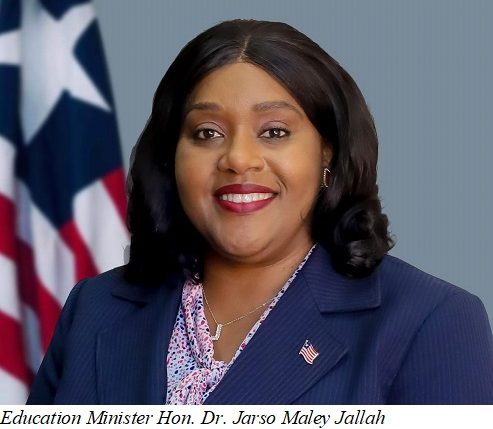
The announcement was formally made Friday by Education Minister Hon. Dr. Jarso Maley Jallah during a press conference held at the Ministry of Education in Monrovia, where officials framed the development as both an international endorsement of Liberia’s ongoing education reforms and an opportunity to deepen regional engagement on teacher professionalization and institutional accountability.
According to the Education Minister, Liberia’s successful bid to host the 2027 AFTRA Conference reflects increasing continental recognition of efforts underway to modernize teacher licensing systems, strengthen quality assurance mechanisms, and improve regulatory oversight within the country’s education sector.
“Liberia’s selection reflects increasing recognition of the work underway to strengthen teacher standards, school accreditation, and quality assurance within the education sector,” Dr. Jallah declared.
The announcement marks a significant symbolic moment for a country whose education system has for decades struggled under the combined weight of civil conflict, institutional disruption, infrastructure deficiencies, teacher shortages, and chronic concerns regarding educational quality and governance.
For many education stakeholders, Liberia’s elevation to host a continental education regulatory summit would have appeared improbable only a few years ago.
The country’s school system remains burdened by persistent structural challenges, including overcrowded classrooms, limited instructional materials, disparities between urban and rural education access, and questions surrounding teacher qualification standards. International learning assessments and domestic evaluations have repeatedly exposed weaknesses in literacy, numeracy, and institutional capacity across sections of the education sector.
Against that backdrop, Liberia’s selection to host AFTRA 2027 carries significance beyond ceremonial diplomacy.
Education analysts say the decision suggests that regional institutions are beginning to acknowledge Liberia’s recent attempts to build stronger education governance systems, particularly in the area of teacher regulation and accreditation oversight.
AFTRA itself serves as a major continental platform bringing together Ministries of Education, teacher regulatory bodies, policymakers, universities, development partners, and education experts from across Africa to address challenges affecting teacher standards, professional regulation, and educational quality.
In recent years, the organization has increasingly become a key driver of conversations surrounding professionalization of teaching across Africa, especially as governments confront mounting concerns over declining learning outcomes, inconsistent teacher preparation standards, and the growing demand for accountability within education systems.
The most recent AFTRA Conference and 15th Roundtable was held in Gaborone, Botswana, from May 4 to 9, 2026, under the theme, “Recasting Teaching as a Collaborative Profession: Implications for Africa.”
That gathering reportedly attracted representatives from approximately thirty-three African countries, including Ministers of Education, heads of teacher regulatory authorities, international education partners, and senior policymakers from across the continent.
Liberia’s delegation to Botswana included Deputy Minister for Instruction Hon. Amos Armah Fully, Center of Excellence for Teachers’ Licensing and School Accreditation Executive Director Leabah Brice Morwaker, and Africa Best Teacher awardee Allen A. Thomas.
According to the Ministry of Education, Liberia’s reform initiatives received significant attention and recognition during the conference proceedings. Dr. Jallah disclosed that she herself was honored with an AFTRA Fellowship in recognition of Liberia’s contributions toward strengthening teacher regulation and professional standards within the education sector.
Observers say the recognition represents an important reputational gain for Liberia’s education authorities, particularly at a time when governments across Africa are under increasing pressure to demonstrate measurable improvements in education quality and regulatory accountability.
Teacher licensing has emerged as one of the most politically sensitive and technically challenging aspects of Liberia’s broader education reform agenda.
Historically, Liberia’s education system has struggled with inconsistent qualification standards, uneven teacher preparation, and weak regulatory enforcement mechanisms. Many public schools, especially in rural regions, continue relying heavily on underqualified or volunteer teachers due to staffing shortages and resource limitations.
The Ministry of Education now argues that its licensing reforms are intended to gradually establish stronger professional standards and improve instructional quality nationwide.
According to Dr. Jallah, Liberia has already completed and officially launched its Teacher Licensing and School Accreditation Policy Framework, while approximately two thousand teachers have been profiled as part of the national licensing process.
The Ministry further disclosed that work is ongoing toward establishing a digital licensing platform designed to strengthen implementation and oversight within the education system.
That digital transition is viewed by education reform advocates as particularly important.
For years, Liberia’s education sector has suffered from weak data management systems, fragmented personnel records, and limited monitoring capacity. Officials believe digital licensing and accreditation systems could significantly improve transparency, teacher tracking, accountability, and policy planning.
Still, challenges remain substantial.
Education reform in Liberia has historically been slowed by limited funding, infrastructure deficits, inconsistent implementation, political turnover, and institutional capacity constraints. Rural schools remain disproportionately affected by teacher shortages and poor learning environments, while many educators continue demanding improved salaries, training opportunities, and working conditions.
Consequently, hosting AFTRA 2027 may bring not only prestige, but increased scrutiny.
Continental attention will likely place Liberia’s reform claims under closer examination from both international education stakeholders and domestic observers eager to assess whether announced reforms are translating into measurable improvements within classrooms.
Dr. Jallah nevertheless projected confidence that Liberia is prepared to play a more active role within Africa’s evolving education governance landscape.
“Hosting AFTRA 2027 places Liberia within an important continental conversation on education reform and teacher development,” she stated.
The conference, she said, will provide Liberia an opportunity to engage policymakers, researchers, development partners, diplomats, and regulatory institutions from across Africa while showcasing the country’s ongoing education reforms.
Government officials also appear to view the summit as an opportunity to elevate Liberia’s diplomatic and institutional visibility within regional education policy circles.
Delegates expected to attend the Monrovia conference include Ministers of Education, teacher regulatory authorities, international organizations, development agencies, and education experts from across the continent and beyond.
The scale of the event is already prompting extensive preparation planning within government.
Dr. Jallah announced that the Ministry of Education will establish a National Organizing Committee comprising several ministries, commissions, security agencies, and public institutions to coordinate preparations for the conference.
Institutions expected to participate include the Ministry of Foreign Affairs, Ministry of Transport, Ministry of Health, General Services Agency, Liberia National Police, Liberia Immigration Service, and the Ministry of Information.
The involvement of multiple agencies underscores the government’s intention to present AFTRA 2027 not simply as an education event, but as a broader national undertaking with diplomatic, institutional, and reputational implications.
Observers say successful hosting of the summit could improve Liberia’s standing among international education partners while opening additional opportunities for technical cooperation, donor engagement, and regional collaboration.
Beyond conference logistics, however, the announcement also reveals how central education reform has become within Liberia’s broader development narrative.
The Ministry of Education outlined several strategic priorities tied to the reform agenda, including strengthening teacher licensing systems, expanding school accreditation and quality assurance, improving teacher capacity development, advancing digital transformation in education, promoting safe learning environments, and deepening regional cooperation.
Those priorities align closely with wider continental and global education reform trends emphasizing accountability, professionalization, technological integration, and measurable learning outcomes.
Importantly, the Ministry framed teachers themselves as central to national development.
“Strong education systems depend on qualified and well supported teachers,” Dr. Jallah emphasized, adding that strengthening the teaching profession remains essential to Liberia’s national development priorities.
That assertion touches on a broader reality increasingly recognized across Africa: that educational reform cannot succeed solely through infrastructure expansion or policy declarations if teacher quality and institutional standards remain weak.
The Education Minister also used the occasion to thank the Government and people of Botswana, AFTRA leadership, development partners, and member states for the confidence placed in Liberia to host the conference.
She additionally acknowledged President Joseph Nyuma Boakai, Sr. for what she described as continued support to the education sector and the government’s commitment to improving educational outcomes for Liberian children.
As Liberia now prepares to welcome delegates from across Africa in 2027, the country faces both opportunity and expectation.
The AFTRA summit may ultimately become more than a conference. It could serve as a continental test of Liberia’s ability to convert reform rhetoric into sustained institutional transformation within one of the nation’s most strategically important sectors.
For a country still rebuilding many of its foundational systems after years of conflict and instability, the stakes surrounding education reform extend far beyond classrooms alone. They touch directly on governance capacity, economic competitiveness, national cohesion, and the future quality of Liberia’s leadership itself.
Comments are closed.