
Gongloe Challenges Liberia’s Prosecutorial Standards -Former Solicitor General warns against weak indictments
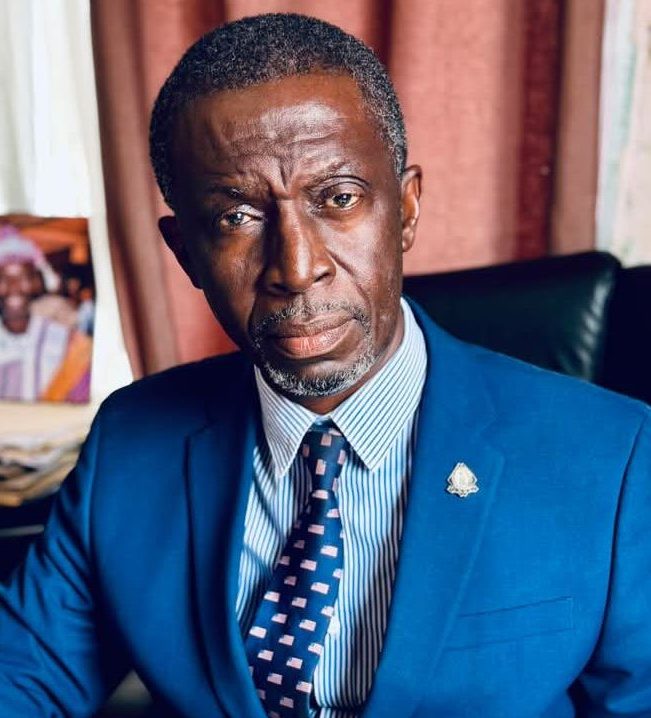
MONROVIA – At a time when Liberia’s anti-corruption campaign is being tested by politically explosive trials, contested verdicts, and rising public skepticism over prosecutorial competence, veteran lawyer and former Solicitor General Cllr. Tiawan Saye Gongloe has delivered one of the sharpest professional critiques yet of how corruption cases are investigated and prosecuted in the country. In a sweeping legal presentation grounded in criminal procedure, prosecutorial ethics, and courtroom strategy, Gongloe warned that weak indictments, politically driven prosecutions, poor investigations, and sensationalized legal tactics are undermining both justice and the broader fight against corruption. His intervention arrives amid growing national debate over whether Liberia’s justice system is strengthening accountability or unintentionally reinforcing impunity. THE ANALYST reports.
Former Solicitor General of Liberia Cllr. Tiawan Saye Gongloe has issued a sweeping and deeply consequential critique of the country’s prosecutorial culture, warning that weak indictments, poorly coordinated investigations, political pressure, and evidence deficiencies are seriously undermining Liberia’s anti-corruption fight and weakening public confidence in the justice system.
Delivering a major legal presentation titled “What Constitutes a Good Indictment Under Liberian Law? With Special Reference to Anti-Corruption Prosecutions,” Gongloe mounted an unusually direct intervention into ongoing national conversations surrounding corruption trials, prosecutorial competence, and the administration of justice in Liberia.
The address, delivered with the authority of a former Solicitor General, former President of the Liberia National Bar Association, criminal law lecturer, and veteran human rights lawyer, amounted to far more than a routine academic lecture. It emerged instead as a pointed institutional warning directed at prosecutors, investigators, anti-corruption institutions, and political actors increasingly caught in Liberia’s highly charged accountability battles.
Without naming any ongoing cases directly, Gongloe’s remarks landed at a politically sensitive moment when the country remains sharply divided over the handling of several major corruption prosecutions involving former senior government officials.
At the center of his presentation was a blunt assertion: many corruption prosecutions fail long before juries deliberate because the legal foundations of the cases are weak from inception.
“The greatest strength or weakness of a criminal prosecution often begins with the indictment,” Gongloe declared. “It is the foundation of the prosecution.”
According to him, even strong investigations can collapse if prosecutors draft legally defective indictments filled with ambiguity, unnecessary rhetoric, contradictions, or politically motivated language. Conversely, he argued, professionally disciplined indictments strengthen fairness, judicial efficiency, due process protections, and the overall integrity of the justice system.
Gongloe anchored much of his analysis in Section 14.3 of Liberia’s Criminal Procedure Law, which governs the legal requirements of indictments. Under that provision, indictments must identify the court, the parties, the offense charged, the violated statute, and provide what the law describes as “a plain, concise and definite statement of the essential facts constituting the offense.”
For Gongloe, those three words — “plain,” “concise,” and “definite” — represent the philosophical and constitutional core of criminal pleading.
“These words are not accidental,” he stressed. “They are the heart of good criminal pleading.”
In one of the most striking portions of his address, Gongloe criticized what he described as the growing tendency among some prosecutors to treat indictments as political documents rather than legal instruments.
“An indictment is not a newspaper article. It is not a political speech. It is not a campaign statement. It is not a social media post,” he declared.
Instead, he argued, indictments exist solely to provide the accused with clear legal notice regarding the specific conduct alleged, the laws violated, and the factual basis of the charges.
“The purpose is not to impress the public,” Gongloe warned. “The purpose is not to embarrass the accused. The purpose is plain, concise, clear, unambiguous and to give definite notice to the accused.”
The former Solicitor General cautioned prosecutors against the temptation to draft unnecessarily lengthy indictments in hopes of appearing aggressive or thorough. In reality, he said, excessively long indictments often become legally vulnerable because they introduce contradictions, surplus language, evidentiary confusion, and openings for defense attorneys to attack the prosecution’s theory.
“A good indictment therefore says enough, but not too much,” Gongloe explained. “The best indictments are precise, disciplined, and legally surgical.”
His comments are likely to resonate strongly within Liberia’s legal and political communities, particularly as prosecutors face growing scrutiny over the management of complex corruption cases involving public officials, financial crimes, and alleged abuse of state resources.
Gongloe devoted significant attention to corruption prosecutions specifically, describing them as among the most difficult criminal matters to prosecute because corruption is often hidden within documents, financial transactions, administrative procedures, and sophisticated conspiracies involving multiple actors.
For that reason, he argued, anti-corruption cases must be evidence-centered and transaction-driven rather than politically driven or slogan-based.
“Corruption cases must be document-driven, transaction-driven, evidence-driven, and law-driven,” he emphasized. “They must never be slogan-driven or based on speculations.”
According to Gongloe, a professionally competent corruption indictment must clearly identify the public office held by the accused, the fiduciary or statutory duties allegedly violated, the public money involved, the unlawful scheme, the approximate dates, locations, criminal intent, and the direct connection between the alleged facts and the statutory elements of the offense charged.
He insisted repeatedly that accusations alone are insufficient.
“A corruption indictment must not merely accuse,” he stated. “It must explain criminality with legal precision.”
The veteran lawyer then turned his focus toward evidence, describing it as the true lifeblood of corruption prosecutions.
“Public suspicion is not evidence. Media reports are not evidence. Political accusations are not evidence,” Gongloe declared in one of the speech’s strongest passages. “Only competent, admissible, credible evidence can sustain a criminal conviction.”
He outlined an extensive evidentiary framework prosecutors should pursue in corruption investigations, including payment vouchers, checks, procurement records, contracts, invoices, audit reports, payroll documents, tax records, communications, and official correspondence.
“In many corruption cases,” he observed, “documents do not lie, but people sometimes do.”
Gongloe repeatedly returned to what he described as the necessity of “following the money.”
According to him, prosecutors must establish the complete financial trail — where the money originated, who authorized transfers, who received funds, where they went, and how the accused allegedly benefited.
“The money trail is often the heart of the case,” he emphasized.
He also warned prosecutors against overreliance on a single witness, particularly cooperating witnesses or co-conspirators seeking leniency arrangements. Documentary corroboration, he argued, remains essential to protecting the credibility and integrity of corruption prosecutions.
Another major theme running throughout Gongloe’s address was the distinction between administrative incompetence and criminal corruption.
According to him, prosecutors frequently weaken cases by failing to distinguish between negligence, poor judgment, bureaucratic inefficiency, and actual criminal intent.
“The prosecution must prove intentional diversion, fraudulent concealment, unlawful enrichment, bribery, conspiracy, or deliberate abuse of office,” he stated. “Not every bad decision by a public official is a crime.”
Perhaps the most politically loaded section of the presentation came when Gongloe condemned politically motivated prosecutions.
Without directly referencing any administration or institution, he warned that corruption cases driven primarily by politics, media excitement, public pressure, or personal hostility can ultimately damage the anti-corruption struggle itself.
“Weak politically motivated prosecutions damage the credibility of the prosecution, public confidence, and the anti-corruption struggle itself,” he cautioned.
According to him, failed prosecutions can unintentionally strengthen corruption by turning accused officials into political martyrs and emboldening future offenders who begin to believe the justice system lacks the capacity to convict them.
“When prosecutors abandon professionalism for politics, both justice and the anti-corruption struggle suffer,” Gongloe warned.
The former Solicitor General also criticized institutional fragmentation between investigators and prosecutors, arguing that many criminal cases collapse because prosecutors are brought into investigations too late.
He urged close cooperation between investigators and prosecutors from the earliest stages of corruption inquiries, particularly regarding evidentiary sufficiency, financial tracing, witness preparation, admissibility issues, and chain-of-custody protections.
“A strong investigation produces a strong indictment,” Gongloe declared. “A weak investigation produces a weak indictment and obviously a weak prosecution.”
Drawing from his own professional experience, Gongloe referenced a 2011 Memorandum of Understanding developed between the Liberia National Police and the prosecution service under an Open Society Justice Initiative project designed to improve coordination between investigators and prosecutors.
He argued that the principles underlying that agreement remain critically relevant today, especially in complex corruption prosecutions requiring technical evidence management and strategic legal planning.
The veteran lawyer further framed prosecutorial ethics as central to the legitimacy of the justice system itself.
Citing Liberia’s Code of Ethics governing the legal profession, Gongloe reminded prosecutors that their role is not merely to secure convictions, headlines, or political applause.
“The prosecutor is a minister of justice,” he declared. “The duty of the prosecutor is to ensure that justice is done fairly, professionally, lawfully, and impartially.”
In closing, Gongloe offered a series of blunt practical warnings to state prosecutors: do not rush corruption cases for headlines, investigate thoroughly, organize evidence carefully, preserve chain of custody, trace financial movements, prepare witnesses properly, and draft precise indictments.
“The prosecutor’s greatest weapon is not publicity,” he concluded. “It is preparation.”
The significance of Gongloe’s intervention extends far beyond legal theory.
At a time when Liberia’s anti-corruption institutions are under intense public pressure to produce convictions in politically sensitive cases, his remarks amount to a broader warning that prosecutorial shortcuts, political overreach, evidentiary weaknesses, and poorly constructed indictments may ultimately undermine the very accountability agenda they seek to advance.
His address also exposed a deeper institutional dilemma facing Liberia’s justice system: whether the growing demand for visible anti-corruption action is being matched by the professional rigor, investigative discipline, and prosecutorial competence required to sustain convictions under the law.
For many within Liberia’s legal community, Gongloe’s remarks are likely to become one of the most consequential professional commentaries yet on the future direction of corruption prosecutions in the country.
Comments are closed.