
Dry Season, Heavy Rains-EPA warns Liberia is already feeling climate change impacts
MONROVIA – Unusual rainfall during what should be Liberia’s dry season has intensified public concern about the country’s vulnerability to climate change and the adequacy of national preparedness. From flooded neighborhoods in Monrovia to disrupted farming cycles in rural communities, the effects of unstable weather patterns are increasingly visible and costly. While climate change is a global phenomenon, its local consequences are being felt most sharply in countries with limited adaptive infrastructure and high dependence on natural rainfall. Against this backdrop, the Environmental Protection Agency has issued a detailed public briefing outlining the causes, risks, and national implications of Liberia’s shifting climate conditions. The statement places current weather disruptions within a broader scientific and policy context, highlighting emerging threats to agriculture, infrastructure, and coastal communities, as well as ongoing government efforts to build resilience. The Analyst reports.
The Environmental Protection Agency (EPA) of Liberia has warned that the country is already experiencing the direct and worsening impacts of climate change, marked by unstable rainfall patterns, increased flooding, and rising threats to agriculture, infrastructure, and coastal communities.
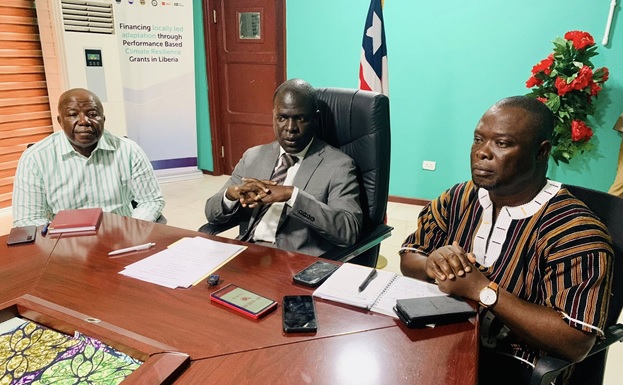
Speaking Thursday at the EPA headquarters, the Agency’s Executive Director, Dr. Emmanuel K. Urey Yarkpawolo, said Liberia’s traditionally predictable seasons have been significantly disrupted, with persistent and unusual rainfall now occurring during periods that were historically dry.
“For generations, Liberia’s rainy season ran from mid-April to mid-October, with the dry season lasting from mid-October to mid-April,” Dr. Yarkpawolo said. “That pattern has changed. In 2025 and now in early 2026, the country has experienced rainfall outside the normal season, accompanied by strong winds and flooding.”
According to the EPA, floods and storms over the past year displaced thousands of people, destroyed homes and properties, and worsened living conditions in Monrovia, surrounding communities, and other parts of the country. Heavy rains and strong winds have continued into the first days of January 2026, often occurring late at night and in the early morning hours.
Climate Change Identified as Primary Cause
Dr. Yarkpawolo attributed the changing weather patterns directly to climate change, stressing that it is no longer a distant or theoretical threat.
“Climate change is happening now, and Liberia is already feeling its effects,” he said, explaining that rising global temperatures are warming oceans and the atmosphere, increasing moisture levels and disrupting normal weather systems. “For Liberia, this translates into heavier rainfall, rainfall outside traditional seasons, stronger storms, and more frequent flooding.”
Major Threats: Sea-Level Rise and Rainfall Variability
The EPA identified two major climate-related threats facing Liberia. The first is sea-level rise, with scientific projections indicating an increase of between 0.6 meters and 1 meter by the year 2100. Liberia has more than 560 kilometers of coastline, and nearly60 percent of the population lives along or near coastal areas.
“If current trends continue, thousands of Liberians could lose their homes, and critical infrastructure such as roads, hospitals, and entire coastal communities will be placed at increasing risk,” Dr. Yarkpawolo warned.
The second major threat is the changing pattern and intensity of rainfall, which has become increasingly unpredictable and destructive. The EPA noted that agriculture—largely dependent on natural rainfall—has been severely affected.
“Rain no longer comes when it is expected, and when it does, it often comes in large and damaging volumes,” he said.
Local Practices Worsening Climate Impacts
While acknowledging that climate change is driven largely by global factors, the EPA cautioned that local environmental practices are worsening its impacts in Liberia. These include heavy reliance on charcoal and firewood, the growing number of old and fuel-inefficient vehicles, industrial emissions, deforestation, destruction of wetlands, poor waste management, and pollution of rivers and streams by mining activities.
“These practices weaken our natural defenses against flooding and extreme weather,” the EPA Executive Director said.
Development, Infrastructure, and Agriculture at Risk
The EPA warned that unstable rainfall and flooding are already affecting national development. Road construction projects are facing delays, maintenance costs are rising, feeder roads are being washed away, and urban flooding is becoming more severe.
Farmers are among the hardest hit, with unpredictable rainfall causing seeds to rot in waterlogged soils, crops to fail, and harvests to decline. The EPA noted that rice, cassava, vegetables, and tree crops are all affected, contributing to higher food prices and increased food insecurity.
“Development plans based on old climate assumptions are no longer effective,” Dr. Yarkpawolo stated.
Government Response and Climate Investments
The EPA said the Government of Liberia is actively responding to climate challenges through both domestic action and international engagement. Liberia continues to advocate globally for climate justice, adaptation financing, and loss-and-damage support for vulnerable countries.
The government, he said, is also advancing coastal defense projects aimed at protecting communities, roads, hospitals, and key economic assets from sea-level rise and storm surges.
According to him, in addition, Liberia has secured a US$10 million grantfrom theGlobal Environment Facility’s Least Developed Countries Fund to support climate-resilient agriculture, improved water management, and smallholder farmers.
Dr. Yarkpawolo further said: “Another US$10 million Climate Information and Early Warning Systems projectis being implemented to establish a modern meteorological center. The facility will improve rainfall prediction, provide early warnings, and help farmers make informed planting decisions.
Through collaboration with the International Atomic Energy Agency, Liberia is also applying advanced agricultural science to reduce rice production time from 120 days to 80 days, improving productivity and resilience, the EPA noted.
EPA Strengthening Environmental Governance
Dr. Yarkpawolo said the EPA is strengthening environmental governance by improving monitoring of mining activities, enforcing environmental laws, protecting forests and wetlands, regulating polluting industries, and promoting climate-smart agricultural practices such as agroforestry and conservation farming.
He said these efforts align with the ARREST Agenda for Inclusive Development, the Boakai administration’s national development roadmap.
Despite ongoing government interventions, the EPA stressed that public participation is critical.
“Government action alone is not enough,” Dr. Yarkpawolo said, urging Liberians and residents to protect forests and wetlands, stop unnecessary deforestation, keep communities clean, avoid blocking drainage systems, reduce pollution, and support sustainable farming practices.
“When we damage our environment, we increase flooding, disease, and suffering for ourselves and future generations,” he warned.
Dr. Yarkpawolo reaffirmed that climate change is real and already affecting daily life in Liberia, but said the country can adapt through science, planning, international partnerships, and responsible environmental stewardship.
“Together, let us protect our environment, support our farmers, safeguard our communities, and build a climate-resilient Liberia,” he said.
Comments are closed.