
Weah Returns, Monrovia Roars-Homecoming Collides With Liberia’s Drug Firestorm
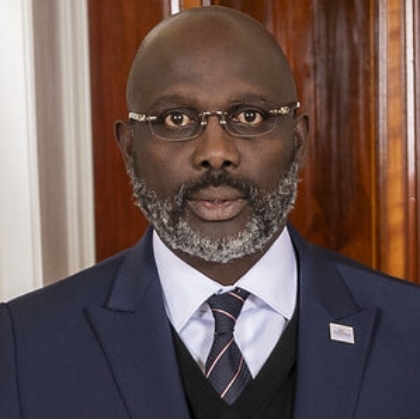
MONROVIA – George Manneh Weah returns to Liberia at a moment when the country’s drug crisis has broken through the walls of law enforcement and entered the centre of national politics. Two cocaine seizures, the implication of security officers and the prosecution of former Vice President Jewel Howard-Taylor have left the Boakai administration defending its political will against accusations of selective justice. Weah’s homecoming carries consequences beyond the welcome planned by his supporters. It places Liberia’s leading opposition figure on the ground as public distrust rises, the Unity Party confronts its own campaign promises, and opposition parties consider unity against what they describe as government excesses. The crowd will celebrate, but the country will be measuring power, as THE ANALYST reports.
MONROVIA — By late Tuesday afternoon, Monrovia no longer sounded like a city waiting for a former President. It sounded like campaign season had broken loose. Young men rode through crowded communities in pickup trucks carrying huge loudspeakers, calling residents to designated bus stops and repeating one message: George Manneh Weah is coming home. From Careysburg to Jacob Town, Duport Road, Rehab, Barnesville, Sinkor and West Point, the announcements rolled from one neighbourhood to another. Social media carried the mobilisation farther and faster, flooding Liberia’s online media traffic with posters, pickup schedules, live videos and appeals for supporters to turn out. Across Montserrado’s 17 electoral districts, and from parts of Margibi and Bomi, people prepared to move toward Roberts International Airport and then crowd the road into Monrovia.
The Loudspeakers Came First
Before the buses arrive and before Weah’s aircraft touches the runway today, Wednesday, September 2, the noise has already announced the size of the occasion. Pickup trucks fitted with speakers have become moving radio stations, crawling through communities where organisers call out meeting places and departure times while young supporters wave blue flags from the vehicles.
At street corners, market centres and motorbike terminals, the conversation is the same. Who is going to RIA? Which bus will pass through the community? At what time should supporters assemble, and along which road will the former President’s convoy travel after leaving the airport?
The CDC Special Steering Committee has designated pickup points across all 17 electoral districts of Montserrado. They include Careysburg Number Seven, Lonestar in Jacob Town, Parker Paint Junction, Carpet Field on Duport Road, the party headquarters at 72nd, Rehab Junction, Catholic Hospital Junction and other familiar community landmarks.
Additional groups are mobilising from Margibi and Bomi, feeding into what organisers hope will become a human corridor stretching from the airport toward Monrovia. The plan is larger than an airport reception: it is to fill the route, seize the national conversation and demonstrate that Weah’s political machinery remains alive.
A City Turns Blue
On Facebook, WhatsApp, TikTok and Liberia’s crowded network of online television pages, the homecoming has displaced nearly every other political subject. Videos of young people dancing around sound trucks compete with flyers listing pickup locations, while CDC auxiliaries, former officials and individual supporters issue their own calls for attendance.
Some messages carry the excitement of a reunion. Others openly frame the mobilisation as a warning to the Unity Party government that the opposition is organised, angry and capable of occupying the streets peacefully in numbers that cannot be ignored.
Blue shirts, caps and flags are appearing along major roads. Around community junctions, organisers are counting buses, checking fuel and urging supporters to assemble early. The mobilisation has spilled beyond formal party structures, drawing market women, motorcyclists, unemployed young people, former government workers and ordinary admirers of the football legend turned President.
It is this combination of affection, grievance and political expectation that makes today’s reception difficult to dismiss as mere ceremony. Weah is not returning quietly to private life; he is re-entering a national argument already at boiling point.
Homecoming With Heavy Baggage
Weah comes home after weeks on the international stage. During the 2026 FIFA World Cup period in the United States, he participated in FIFA’s campaign against racism and hate speech, continuing his work as honorary captain of the organisation’s 16-member Players’ Voice Panel.
The assignment carried personal meaning. Weah endured racism during his celebrated career in European football and has used his standing as Africa’s only Ballon d’Or winner to argue that the game must unite people rather than provide another arena for racial abuse.
From the United States, he travelled to Nigeria, where he delivered the keynote address at the Nigerian Bar Association’s 66th Annual General Conference in Port Harcourt. The August 21–28 gathering, held under the theme “Beyond Limits,” presented him as a football icon, humanitarian and African statesman whose concession after Liberia’s closely fought 2023 presidential election strengthened his democratic credentials.
But the international applause ends at the airport. Weah is returning to a country shaken by cocaine seizures, accusations of security-sector penetration, the imprisonment of his former Vice President and an increasingly bitter dispute over whether President Joseph Nyuma Boakai is fighting organised crime or using the crisis to weaken his political opponents.
Two drug Busts that Shake Liberia
The first major seizure came in June at Roberts International Airport, where security officers discovered 237.6 kilograms of cocaine concealed in six cargo boxes declared as Maggi seasoning cubes and lappas. The consignment, valued at more than US$19 million, was reportedly destined for Europe.
Then came the July 21 raid in Duazon. Joint security officers recovered 3,971 kilograms of cocaine—nearly four metric tonnes—with an estimated value of US$317.68 million. It was Liberia’s largest recorded drug seizure and about 17 times the quantity intercepted at RIA weeks earlier.
Police initially said they had not established a connection between the two operations and believed the drugs came from different sources. Together, however, their estimated value exceeded US$336 million, a figure so enormous that it transformed the issue from a successful police operation into a national-security emergency.
The quantities also unsettled a country that had long treated drug abuse largely as a tragedy of disadvantaged young people wandering through ghettos and abandoned buildings. The seizures revealed something far larger: international networks capable of moving or storing tonnes of cocaine, corrupting officials and using Liberia as a route to lucrative foreign markets.
Security Wall comes down Cracking
The deepest public shock came when the investigations entered the security establishment. Police, intelligence and airport-security personnel were questioned, suspended, dismissed, charged or named as persons of interest as investigators tried to reconstruct the movement of the shipments and identify those who may have protected the traffickers.
Those legal categories must not be confused. Being questioned or listed as a person of interest does not establish guilt, and every accused person retains the presumption of innocence. But the widening investigation exposed weaknesses inside institutions that were supposed to stop the cocaine before it entered a warehouse or reached an aircraft.
Justice Minister and Attorney General N. Oswald Tweh has said the network associated with the Duazon operation may have worked in Liberia for more than six years. If investigators prove that timeline, the cartel would have established itself under the CDC administration and continued operating after the Unity Party took power.
That possibility complicates the political blame game. It gives the Boakai government grounds to argue that it inherited an entrenched network, while leaving it to explain how such an operation continued under the watch of officials appointed to protect the country’s borders and strategic facilities.
Jewel Case Raises the Stakes
The arrest of former Vice President Jewel Howard-Taylor pushed the controversy into the heart of the opposition. Authorities stopped Taylor at RIA on August 19 and charged her with drug trafficking, money laundering and related offences as part of an investigation into an alleged transnational narcotics network.
Taylor has not been convicted. The charges remain allegations that the government must prove through admissible evidence before an impartial court, and her lawyers and supporters have challenged both the state’s case and her continued detention.
Politically, her imprisonment could hardly be more explosive. Taylor served as Weah’s Vice President throughout the six years of CDC rule. To many opposition supporters preparing to receive him today, her detention is no longer a separate courtroom matter; it has become evidence of what they describe as a campaign to humiliate and weaken the former ruling establishment.
The government rejects that charge. It says investigators acted on credible evidence and that political office, past or present, cannot place anyone beyond the reach of the law.
Unity Party’s Old Charge Returns
During the 2023 campaign, the Unity Party made Liberia’s drug epidemic part of its case against Weah. Its leaders blamed the CDC administration for failing to protect young people and promised that a Boakai presidency would confront traffickers, rescue drug users and restore seriousness to national law enforcement.
Those words now hang over the government. CDC supporters ask how the party that presented itself as the answer to Liberia’s drug problem can explain two record seizures, tonnes of cocaine stored near the capital and senior security officials caught in the expanding investigation.
Unity Party defenders offer the opposite interpretation. They say the interceptions, dismissals and prosecutions demonstrate political will because a government protecting traffickers would have concealed the drugs rather than seized and publicly destroyed them.
Both claims contain political convenience. A seizure proves that some part of the security system worked; penetration of that same system proves that other parts failed. The serious question is whether the investigations will identify the financiers, organisers, political protectors and money trail, or end with couriers and mid-level officers carrying the blame.
Selective Justice—or Political Will?
President Boakai has promised that the law will apply equally and that there will be no sacred cows. His administration has removed or investigated security personnel, changed the leadership of the Liberia Drug Enforcement Agency and sought international cooperation against trafficking and money laundering.
Critics remain unconvinced. They argue that opposition figures are exposed to dramatic arrests, imprisonment and public condemnation while officials linked to the governing establishment receive administrative suspensions, quiet investigations or the less damaging description of persons of interest.
That criticism cannot be defeated by speeches. Pundits maintain that the government must publish a coherent account of the evidence, prosecute every suspect under the same legal standard and permit the courts to work without political pressure. The opposition must also accept that equal justice includes investigating its leaders when credible evidence exists.
The outcome will determine whether the drug crackdown strengthens the Liberian state or deepens the belief that justice changes according to party color.
Arrest Rumour Fuels Anxiety
It was in this climate that social media reports claimed Weah would be arrested when he returned. Information Minister Jerolinmek Matthew Piah dismissed the reports as false and misleading, saying the government had no plan to detain the former President.
The denial has not entirely removed anxiety among CDC supporters. Taylor’s arrest, earlier confrontations between opposition partisans and state security, and the speed at which unverified reports move through online platforms have created an atmosphere in which rumours are readily believed.
The Liberia Airport Authority has consequently announced special security measures at RIA. Passengers have been advised to arrive early, while supporters are expected to gather around the designated public area near the RIA Public School. Only persons approved by Weah’s organising committee will be permitted beyond the established gathering point.
The restrictions reflect a genuine operational concern. RIA must receive a former head of state and a large political crowd without paralysing flights, endangering passengers or provoking the kind of confrontation that could turn celebration into crisis.
More Than an Airport Welcome
Weah’s supporters are treating the reception as proof of his enduring political capital. He lost the 2023 presidential runoff to Boakai by less than one percentage point, conceded without a prolonged dispute and remains the only opposition leader with an established nationwide following and a party structure capable of immediate mass mobilisation.
His return also comes days before a proposed roundtable of opposition political leaders at Jamaica Resort in Paynesville on Sunday, September 6. Weah has placed national affairs, opposition unity, solidarity and the way forward on the agenda, while Citizens Movement for Change Political Leader Musa Hassan Bility has accepted the invitation and promised frank engagement.
Weah has also called on opposition forces to unite and resist what he describes as the ruling party’s excesses. That message gives today’s procession a purpose beyond cheering: the route from RIA to Monrovia is being turned into the opening platform for his renewed political activities.
The crowd, however large, will not answer the questions before him. Liberians will listen for what he says about Taylor, the security officials under investigation, the alleged six-year life of the cartel and the need for an inquiry strong enough to follow evidence into both the CDC and Unity Party.
The Road From RIA
By the time the first buses leave the 17 Montserrado pickup points, they will join vehicles and supporters moving in from Margibi and Bomi. The sound trucks will lead some of them; social-media livestreams will carry the rest of the spectacle to Liberians who remain at home.
The road from RIA may become a river of blue. It will contain genuine affection for Weah, anger over Taylor’s detention, frustration with the government and the familiar excitement that follows Liberia’s greatest football name wherever he goes.
Yet the measure of this return will come after the speakers are switched off and the crowds disperse. Weah must convert personal popularity into a disciplined opposition programme, and the Boakai government must prove that its anti-drug campaign follows evidence rather than political identity.
For a few hours today, the loudspeakers, buses and marching supporters may give Weah command of Monrovia’s streets. The struggle for command of the national argument—over drugs, justice, opposition unity and Liberia’s political future—will last much longer.
Comments are closed.