

Tribal Governors Back War Crimes Court-Traditional leaders demand swift justice process
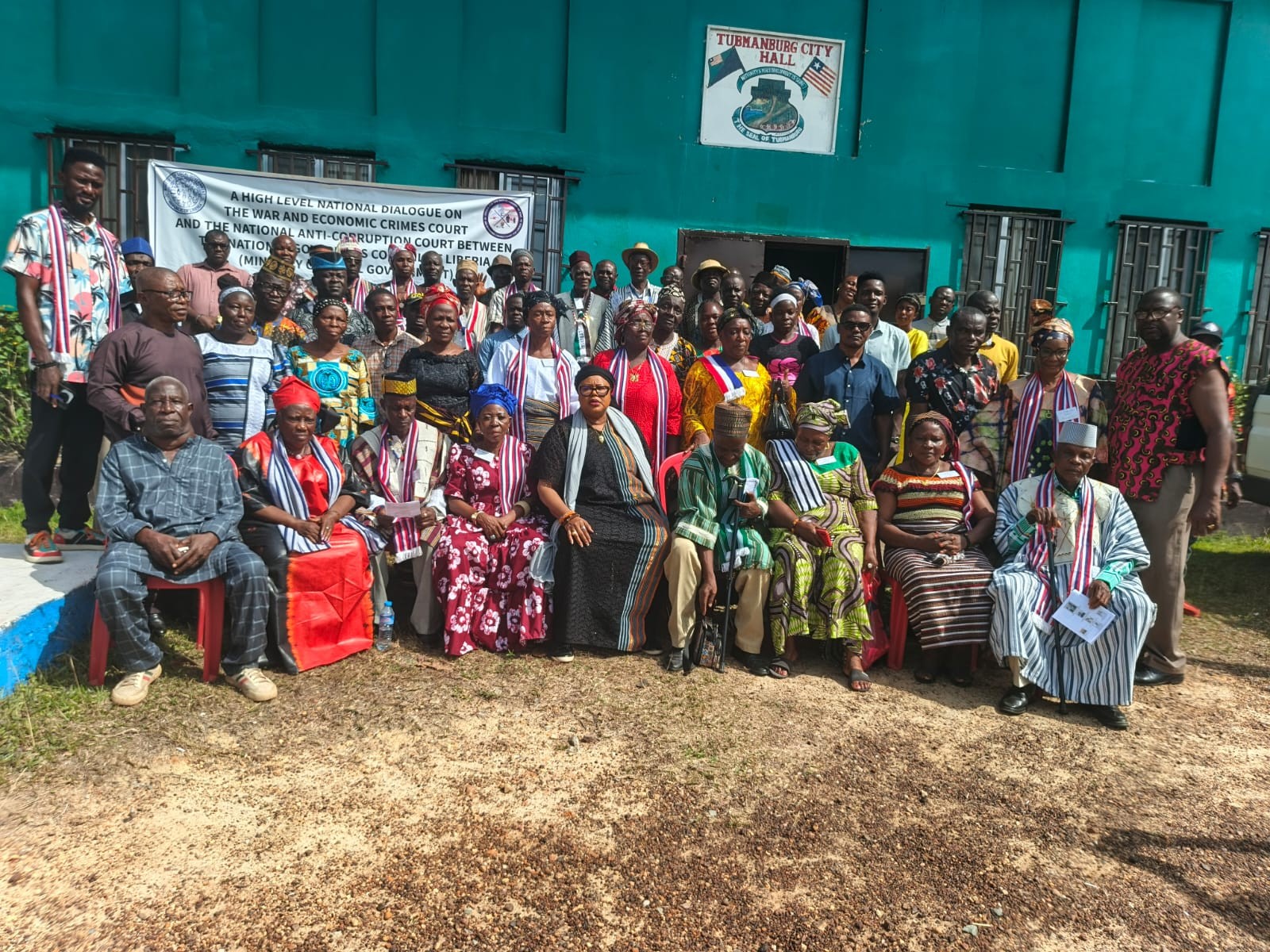
MONROVIA – Momentum appears to be building within Liberia’s traditional leadership structures for the establishment of accountability mechanisms long recommended by the country’s transitional justice process. In Tubmanburg, Bomi County, members of the National Tribal Governors Council—representing Liberia’s sixteen ethnic groupings—have formally declared support for the creation of both a War and Economic Crimes Court and a specialized Anti-Corruption Court. Their endorsement follows a similar position taken recently by the National Council of Chiefs, suggesting growing consensus among traditional authorities on confronting Liberia’s legacy of wartime atrocities and corruption. As THE ANALYST reports, observers say such backing from community leaders could play an important role in shaping public acceptance of the proposed courts.
Liberia’s traditional leadership has added its voice to growing calls for the establishment of accountability mechanisms aimed at addressing the country’s history of wartime abuses and corruption.
The National Tribal Governors Council of Liberia, representing the country’s sixteen ethnic groupings, has unanimously declared support for the creation of a War and Economic Crimes Court and a National Anti-Corruption Court, describing the proposed institutions as essential for justice, accountability, and national reconciliation.
The declaration followed a two-day high-level dialogue on understanding the creation of the two courts, held in Tubmanburg, Bomi County, and organized by the Office for the Establishment of War and Economic Crimes Court for Liberia (OWECC-L) in collaboration with the Ministry of Local Government.
In their unified position, the tribal governors emphasized that establishing the two courts would help address past atrocities, strengthen the rule of law, and restore public confidence in Liberia’s justice system.
The endorsement by the Tribal Governors Council comes only weeks after a similar statement of support from the National Council of Chiefs, signaling a growing consensus among Liberia’s traditional authorities on the need to confront the legacy of impunity and corruption.
Just a month earlier in Gbarnga, Bong County, the National Council of Chiefs—comprising 288 paramount, clan, and general town chiefs across Liberia—also declared support for the establishment of the two courts following a similar national dialogue.

Speaking on behalf of the Tribal Governors Council, Council Chairman Stephen Karmo stressed that Liberia’s long-standing quest for justice should not be delayed any longer.
According to him, establishing the courts would help provide closure to victims of Liberia’s civil conflicts while deterring future violations of the law.
The Tribal Governors Council acknowledged that Liberia’s civil wars left deep scars across communities throughout the country.
Many families lost loved ones, entire communities were displaced, and thousands of individuals suffered grave human rights abuses during the years of conflict.
The governors emphasized that those responsible for such crimes must be held accountable.
They noted that accountability is critical not only for justice but also for ensuring lasting peace and stability.
According to the governors, justice must be applied fairly and transparently in accordance with the laws of Liberia and internationally accepted standards.
They stressed that the process should not be selective or politically motivated.
The governors also expressed confidence that the proposed courts will operate independently and professionally in order to ensure credibility and fairness in the prosecution of cases.
The statement further welcomed the commitment of the Government of Liberia, through the Office for the Establishment of War and Economic Crimes Court, to advance the country’s transitional justice agenda.
They praised ongoing efforts aimed at implementing the recommendations of Liberia’s Truth and Reconciliation Commission (TRC), particularly those relating to criminal accountability for wartime atrocities and corruption.
According to the governors, the establishment of a War and Economic Crimes Court would demonstrate Liberia’s commitment to confronting its past while honoring the suffering endured by victims.
“At the same time, the establishment of an Anti-Corruption Court will strengthen the fight against corruption, which remains one of the major challenges undermining governance and development,” the governors’ statement said.
The governors observed that corruption has long hindered Liberia’s progress by diverting resources meant for national development, education, healthcare, and infrastructure.
They emphasized that a specialized Anti-Corruption Court could help ensure that individuals accused of corrupt practices are prosecuted swiftly and fairly.
The governors also stressed that justice and reconciliation must go hand in hand in Liberia’s post-conflict recovery.
As traditional leaders, they reaffirmed their commitment to maintaining peace and harmony within their communities while supporting national healing and reconciliation efforts.
They further underscored that accountability mechanisms are essential for preventing future conflicts and reinforcing the principle that no individual is above the law.
The governors also commended the Government of Liberia for steps already taken toward establishing the courts.
In their formal statement of support, the council congratulated the Liberian Legislature for passing Joint Resolution No. 001/2024, which laid the groundwork for establishing the War and Economic Crimes Court.
They also congratulated President Joseph Nyuma Boakai, Sr. for approving the joint resolution and for issuing Executive Order No. 131, which created the Office for the Establishment of War and Economic Crimes Court for Liberia, later replaced by Executive Order No. 148.
The council also acknowledged the government’s decision to provide funding support for the Office responsible for establishing the court.
They further thanked the international community, civil society organizations, and other Liberians who have supported the process.
According to the governors, the consultations conducted by the OWECC-L across the country have provided important opportunities for stakeholders to understand the proposed legislation and contribute ideas.
They noted that the dialogue in Tubmanburg provided participants with detailed insights into the draft laws intended to establish both the War and Economic Crimes Court and the National Anti-Corruption Court.
Through the discussions, the governors said they gained the knowledge and capacity needed to help educate their communities about the proposed courts.
“In view of the above, we, the undersigned, have voluntarily made the commitment to work fully with the Office for the Establishment of War and Economic Crimes Court,” the governors declared in their joint statement.
They affirmed their agreement with the draft laws and pledged to support their submission by the President to the Liberian Legislature for consideration and enactment.
Speaking during the dialogue on behalf of the Executive Director of OWECC-L, Dr. Cllr. Jallah A. Barbu, the Office’s Director of Anti-Corruption Division, Cllr. Asatu Bah Kenneth, described the governors’ endorsement as a reflection of broad public support for the process.
According to Cllr. Kenneth, the statement issued by the tribal governors should serve as a call for all stakeholders to unite behind the effort to establish the two courts.
She assured the traditional leaders that their trust in the process would yield results with the eventual establishment of the War and Economic Crimes Court and the National Anti-Corruption Court.
The two-day high-level dialogue in Tubmanburg brought together representatives from traditional leadership institutions, government agencies, civil society organizations, youth groups, the media, and victims’ groups.
Participants described the discussions as an important step in strengthening public understanding of Liberia’s transitional justice process and building consensus around the proposed courts.
By signing the statement of support, the sixteen tribal governors pledged to mobilize their communities in backing the process aimed at ensuring justice, accountability, and reconciliation across Liberia.
Comments are closed.