

LETTER FROM SACLEPEA WHEN TRIBALISM AND RELIGIOUS BIGOTRY RETURN TO OUR POLITICS
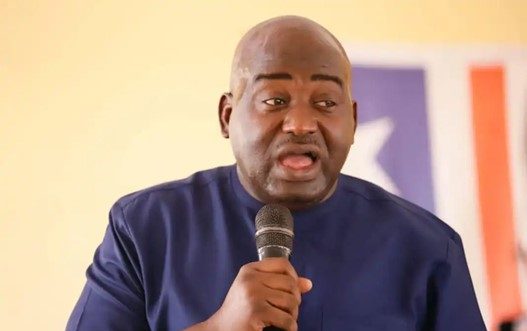
There are some lessons a nation must never forget, some roads a people must never travel again, and some wounds that must forever remind us of the terrible price of hatred and division. Liberia has walked that road before. We have buried our children, watched our mothers weep, seen communities destroyed, and witnessed generations robbed of their future. We have experienced the unimaginable horrors of civil war and continue to live with its painful consequences. If there is one lesson our history should have taught us, it is that tribalism and religious hatred have no winners. They only produce victims. Yet, as we approach another political season, I am becoming increasingly concerned about the ugly head of tribalism and religious bigotry creeping back into our national conversation. We must confront it before it becomes too late.
Certain political circles are increasingly trying to introduce religion and tribal identity into decisions about who should or should not lead Liberia. I find this deeply troubling. Liberian Muslims are increasingly and more visibly interested in politics, including those who may aspire to the highest offices in our country. And why shouldn’t there be? Are they not Liberians? Do they not pay taxes, raise families, build businesses, serve in government, and contribute to the development of this country? Have they not endured the same wars, poverty, and failures of leadership as every other Liberian? Why should their desire to participate more actively in the political leadership of their country suddenly become a threat?
Liberia’s Muslim community represents a significant part of our population and has contributed enormously to our political, economic, and social development. Throughout our democratic history, Muslims have supported presidents and presidential candidates from different religious and ethnic backgrounds. They have voted for Christians, supported different political parties, and made political choices not confined to their religion. Why, then, should the possibility of a Muslim becoming president suddenly become a national controversy? Why should a Mandingo seeking the presidency be treated differently from a Kpelle, Gio, Mano, Bassa, Kru, Grebo, or any other Liberian? This is not only dangerous; it is an insult to the very idea of Liberia.
I speak about this matter not merely as an observer, but as someone who has personally experienced the ugliness of identity-based politics. During the 2024 Deputy Speakership election and the 2025 Speakership contest, I became aware of efforts within the Legislature to discourage support for my candidacy because of my tribal and religious identity. I understood the calculations and knew that, for some, my ideas, qualifications, convictions, and commitment to institutional reform mattered less than where I came from and how I worshipped God. I remain convinced that the reform agenda we advanced could have strengthened legislative accountability, improved transparency, and saved the Liberian people millions of dollars. Instead, we continue to struggle with institutional dysfunction and a troubling lack of transparency. I do not suggest that everyone who opposed me did so because of my identity. Political competition is legitimate, but when tribal and religious considerations become instruments of political exclusion, democracy itself becomes the victim.
Sometimes I wonder whether those promoting these divisions understand the country they live in. Look around Liberia. Our children are dying from preventable diseases. Our mothers continue to die during childbirth. Our young women and girls remain vulnerable to rape and sexual violence. Our young people face unemployment, hopelessness, and the growing dangers of drugs. Our communities lack decent schools, functioning hospitals, safe drinking water, electricity, and roads. Corruption and incompetence continue to weaken our institutions, while the lives of ordinary Liberians remain painfully unchanged. These are the battles we should be fighting, not whether someone is Muslim or Christian, Mandingo or Kpelle. What does the religion of a president matter to a mother who cannot afford treatment for her dying child? What difference does the tribe of a minister make to a young graduate who cannot find employment? Poverty has no tribe. Hunger has no religion. Corruption does not discriminate between Muslims and Christians, and bad leadership punishes everyone.
Let me be clear. In 2029, a Mandingo candidate will be on the presidential ballot. A Muslim will seek the presidency alongside candidates from other religious and ethnic backgrounds. That is exactly how democracy should work. No Liberian should apologize for seeking the leadership of the country of their birth, and no citizen should be rejected simply because of their tribe or religion. Those who oppose a Muslim or Mandingo candidate are free to do so, but let that opposition be based on competence, character, policies, integrity, and record. Challenge their ideas, question their qualifications, examine their history, expose their failures, and debate their vision for Liberia. Use every legitimate democratic means to defeat them if you believe they are unfit to govern. That is politics. That is democracy. But declaring someone unfit simply because they are Muslim or Mandingo is not democracy. It is bigotry, and bigotry, when used as a political instrument, threatens the peace of an entire nation.
I also want to speak to my fellow Muslims, especially the younger generation. I have seen some reactions to the growing religious rhetoric in our politics. I understand the anger and frustration when people question your belonging in the country of your birth, but I urge you not to fall into the trap. Some would welcome an angry or confrontational response because it serves the very narrative they are trying to create. They want to portray you as different, isolate you from your fellow Liberians, and associate your religion with violence and intolerance. Do not give them that opportunity. Do not allow those who hate you to determine your behavior or your future. This is your country, and your citizenship is not a favor granted by another tribe or religious community. It is your birthright. The overwhelming majority of Liberians have lived, traded, studied, and worked together across religious and tribal lines. Do not allow a few voices of intolerance to convince you that an entire nation is against you. I am encouraged by those who have responded with maturity, restraint, and dignity. That is the path we must continue to follow.
To those in government, political parties, and positions of influence who may be tempted to exploit religious and tribal differences for political advantage, I offer this warning: You are playing with something far more dangerous than an election. You are playing with Liberia’s peace. Our history should have taught us that once political leaders legitimize hatred, it becomes difficult to control. Prejudices whispered in political meetings can become the hostility we see openly in our communities. The divisions cultivated to defeat one political opponent can eventually consume an entire country. No election is worth that price. If your candidate is better, prove it. If your policies are stronger, defend them. If your record is superior, present it. But do not hide corruption, incompetence, weak leadership, and failed governance behind religious prejudice.
And let us be equally clear about another important truth. Being Muslim does not make anyone a better leader, just as being Christian does not make anyone more qualified. Being Mandingo does not make anyone more competent than being Kpelle, Gio, Mano, or Bassa. A corrupt Muslim is no better than a corrupt Christian, and an incompetent Mandingo is no better than an incompetent person from any other tribe. Every candidate must face the same scrutiny. What have you done? What do you believe? What are your plans? How have you handled responsibility when it was entrusted to you? Can you unite this country and improve the lives of ordinary Liberians? These are the questions that matter. We must never replace religious exclusion with religious entitlement. No one deserves the presidency because of their religion, and no one should be denied it because of their religion. The presidency belongs to neither Christians nor Muslims, nor to one tribe or another. It belongs to the Liberian people.
I have spent much of my political life arguing that Liberia needs a different direction, away from the endless recycling of failed leadership, corruption disguised as political loyalty, and the dangerous practice of dividing ordinary citizens so that political elites can continue to enjoy power. I remain committed to that struggle. I will not allow my political convictions to be reduced to my religion or tribe, nor will I be drawn into a religious confrontation. Liberia needs leadership that can lift our people out of poverty, restore confidence in our institutions, confront corruption, and rebuild the moral foundation of our republic. That leadership may come from a Christian, a Muslim, or any tribe in Liberia. What matters is not where the leader comes from, but where that leader intends to take our country.
As we approach 2029, I appeal to every Liberian of goodwill to reject the creeping normalization of tribalism and religious bigotry. Let us remember the graves of those we lost, the communities destroyed by hatred, and the terrible consequences of allowing political differences to become ethnic hostility. Our enemies are not those who worship differently from us. Our enemies are poverty, corruption, ignorance, injustice, disease, and failed leadership. Those are the enemies we must defeat. Let us judge those seeking power by their character, competence, integrity, and capacity to deliver a better Liberia.
We have already lost too much to division, and we must not lose our future to it as well. Liberia must never again become a battlefield of tribes and religions. Our diversity is not our weakness; our failure to respect it is. History will not forgive us if, after everything we have endured, we allow the same hatred that once destroyed our country to determine its future.
Have a pleasant week
Comments are closed.