

LETTER FROM SACLEPEA -Special Birthday Edition
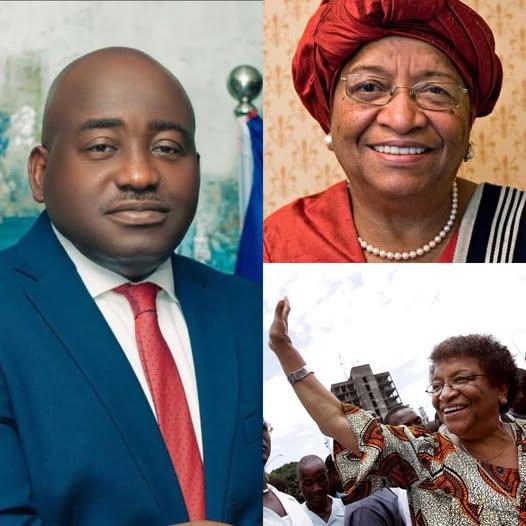
A TRIBUTE TO A MENTOR: THE WOMAN WHO GAVE LIBERIA BACK ITS DIGNITY
October 29, 2026
There are people who pass through history, and there are people who change its direction. There are leaders who occupy offices, and there are leaders whose lives become inseparable from the destiny of their nations.
Today, as we celebrate the birthday of former President Ellen Johnson Sirleaf, I find myself reflecting not simply on the life of a former president, but on the extraordinary journey of a woman who stood against the storms of history, endured the cruelty of politics, challenged the prejudices of her time, and helped lift a broken nation from the ruins of war into the promise of democracy.
For me, this is more than a birthday tribute. It is personal. It is a tribute to a mentor, a woman I have admired, challenged, disagreed with, learned from, and come to respect even more deeply with the passage of time.
Madam Ellen Johnson Sirleaf did not inherit an easy path to greatness. Her story was written through struggle, sacrifice, disappointment, rejection, courage, and an almost stubborn refusal to surrender.
Long before she became Africa’s first democratically elected female president, she was a woman standing against powerful men and powerful institutions. She challenged authority when silence would have been safer. She spoke when speaking carried consequences. She endured imprisonment, political persecution, exile, and the uncertainty of a future that offered no guarantee of victory.
And yet, she continued.
She lived through the darkest chapters of our country’s history. She saw Liberia descend into the madness of civil war, watched our institutions collapse, and witnessed the destruction of the very nation she had spent her life hoping to serve.
Like many political figures of that troubled period, she was not spared controversy. There were serious accusations concerning her early support for Charles Taylor’s rebellion, a matter that remains part of the historical record and which she herself later acknowledged as a grave mistake.
But the remarkable thing about her journey is that she did not allow the mistakes, accusations, disappointments, or judgments of others to become the final definition of her life.
She continued to seek a different future for Liberia.
She joined other Liberians in the difficult search for peace. She sat among powerful men, some of whom questioned her place, her ambition, and her leadership. She experienced rejection. She confronted a political culture in which women were too often expected to support the ambitions of men rather than pursue their own.
And what an irony history would eventually reveal.
Many of the men who questioned her capacity to lead, and some who condemned her political past, would themselves fail to provide the leadership Liberia so desperately needed.
Yet she persevered. She returned to the political battlefield, contested the presidency, suffered defeat, and refused to disappear. She believed that Liberia could rise again, and that the country deserved something better than the endless cycle of war, revenge, fear, and political domination.
Then came 2005.
A country exhausted by war, a people searching for hope, and a woman who dared to ask Liberians to believe again.
I remember those days. I remember the campaign trail. I remember her passion, her determination, and the extraordinary conviction with which she spoke about the Liberia she wanted to build.
She did not promise that the journey would be easy. But she offered something that was almost absent from our national life at the time: hope.
And the Liberian people gave her their mandate.
When Ellen Johnson Sirleaf became president in January 2006, she inherited more than a damaged government. She inherited a wounded country, a broken economy, shattered institutions, divided communities, and a generation of Liberians who had almost forgotten what normal life looked like.
She understood that rebuilding Liberia required more than constructing roads, restoring electricity, or reopening schools. It required rebuilding confidence in ourselves and restoring the dignity of our country before the world.
She understood something that many leaders never learn: a president must lead not only those who voted for her, but also those who stood against her.
And this is where my admiration for her leadership becomes deeply personal. I remember the woman who would listen.
Madam President, I remember the many occasions when I came to you to debate issues of national importance. Sometimes our disagreements were strong. Sometimes you disagreed entirely with my position, and sometimes I could not accept yours.
But you listened.
You allowed me to make my argument. You heard the other side. You did not mistake disagreement for disloyalty, nor did you consider criticism an act of hostility.
You understood that a democracy cannot survive when its leaders demand agreement as the price of citizenship.
That lesson has remained with me. You taught me, sometimes without intending to, that the strength of leadership is not measured by how effectively one silences opponents, but by how confidently one allows them to speak.
I remember another extraordinary moment that revealed something about the woman behind the presidency.
There was a confrontation involving angry members of our armed forces, men who felt aggrieved by the treatment they were receiving. The situation was tense. Security concerns were real. The natural instinct of those responsible for protecting the president was to keep her away.
But she would not be kept away.
Against the caution of those around her, she went down to meet them.
And in that moment, something remarkable happened. Those men did not simply see the Commander in Chief of the Armed Forces of Liberia. They saw a mother.
A mother who was willing to listen. A mother who understood their pain. A mother who did not need the distance of presidential authority to establish her dignity.
She did not walk among them because she was president.
She walked among them because she was a mother.
There are moments in leadership that no speech can adequately explain. That was one of them.
Her presidency also changed the possibilities for women in Liberia.
For generations, Liberian women had carried the burdens of our society while too often being denied the opportunity to shape its direction. They raised families, sustained communities, organized for peace, and held our country together when its institutions had collapsed.
President Sirleaf recognized their strength.
She appointed competent women to positions of extraordinary responsibility. Women served on the Supreme Court bench, led ministries, managed major institutions, and occupied offices that had long been treated as the exclusive preserve of men.
She did not merely speak about women’s empowerment. She demonstrated that women could lead at the highest levels of national life.
For every young Liberian girl who once believed that her dreams had limits, Ellen Johnson Sirleaf expanded the horizon of possibility.
And that achievement belongs not only to Liberia, but to Africa and the world.
Yet, perhaps one of her greatest contributions was the political environment she helped nurture.
She understood that democracy is not simply the holding of elections. It is the willingness of those in power to accept that others have an equal right to compete for power.
I remember her efforts to build confidence in the electoral process. I remember the consultations involving the major opposition parties, including the Liberty Party and the Congress for Democratic Change, and her willingness to accommodate opposition input in the composition of the National Elections Commission.
That spirit of consultation mattered.
It sent a message that the institutions of democracy should not be treated as the private property of the government of the day.
She also understood the importance of reconciliation. In one of the most significant gestures of her presidency, she entrusted George Manneh Weah, her principal opponent in the 2005 presidential election, with an important role in the national peace and reconciliation effort.
Imagine the political significance of that decision.
The man who had competed against her for the highest office in the land was invited to help heal the nation.
That was not political weakness. It was an acknowledgment that Liberia belonged to all Liberians, including those who had voted against her.
She made efforts to balance her government, to recognize our ethnic and regional diversity, and to bring different political voices into the national conversation.
Was she always successful? Certainly not.
Was her government perfect? Absolutely not.
There were shortcomings. There were controversies. There were officials who failed the standards expected of them. Corruption remained a serious national challenge. Some promises went unfulfilled, and some decisions deserved criticism.
I would do a disservice to her legacy if I pretended otherwise.
But greatness does not require perfection.
It requires the courage to confront difficult circumstances, the humility to recognize that no individual possesses all the answers, and the determination to leave a country better than one found it.
And by that measure, Ellen Johnson Sirleaf’s place in our history is secure.
She restored Liberia’s standing in the international community. She helped rebuild relationships that years of conflict had destroyed. She understood that the image of our country mattered, that the Liberian passport mattered, that our national reputation mattered, and that our people deserved to hold their heads high wherever they traveled.
I remember seeing her undertake journeys that demonstrated her remarkable personal courage.
One memory that has never left me is the sight of her traveling by canoe across waters between Liberia and Guinea, alongside fellow presidents, without the elaborate protection and ceremony that we often associate with high office.
I watched in amazement.
Here was a president who understood that leadership sometimes required stepping beyond comfort, beyond protocol, and beyond fear.
She was not merely performing the duties of her office. She was living her commitment to the country.
And when the time came to leave power, she did something that deserves to be remembered by every generation of Liberians.
She left.
After two constitutional terms, she presided over a political transition in which power passed peacefully from one elected president to another in 2018.
For a country whose history had been scarred by coups, assassinations, civil wars, and the violent struggle for power, that moment was profound.
She had spent much of her life fighting for democracy. And when democracy required her to surrender power, she respected its demand.
That, to me, remains one of the defining achievements of her presidency.
Madam President, today I think about the Liberia you inherited and the Liberia you handed over. I think about the hope that returned to our people, the confidence that returned to our institutions, and the pride that returned to our national identity.
I think about the Liberia in which opposition parties could organize, criticize, compete, and challenge the government. I think about the spirited national debates, the political disagreements, and the many occasions when citizens spoke forcefully against your administration.
You did not always enjoy the criticism. No leader does.
But you understood that the right to criticize was part of the democracy you had fought to restore.
That is a lesson our country must never forget.
Today, as Liberia continues its difficult democratic journey, I find myself wishing that we would return to some of those fundamental principles: consultation instead of confrontation, inclusion instead of exclusion, respect instead of intimidation, and the understanding that political opponents are not enemies of the state.
The democracy we enjoy today did not emerge from nowhere. It was paid for through the suffering of generations of Liberians, through the sacrifices of peace advocates, through the courage of ordinary citizens, and through the work of leaders who understood that the nation must always be greater than the individual.
Ellen Johnson Sirleaf was one of the principal custodians of that democratic rebirth.
And whatever our political differences, whatever our individual judgments of her administration, that contribution must never be diminished.
Madam President, you have lived a remarkable life.
You have been imprisoned, rejected, criticized, celebrated, honored, and challenged. You have known defeat and victory. You have seen the worst of Liberia and helped the country rediscover its better possibilities.
You have stood before the world as a symbol of what African women can achieve. You have carried our flag into rooms where Liberia was once discussed only in the language of war and destruction.
And you helped change that conversation.
But beyond the international recognition, beyond the Nobel Peace Prize, beyond the historic distinction of becoming Africa’s first democratically elected female president, I will remember something more personal.
I will remember the woman who listened.
The woman who could disagree with me and still respect me.
The woman who understood that political leadership must leave room for independent voices.
The woman who could stand before angry soldiers and allow them to see not merely the power of the presidency, but the compassion of a mother.
The woman who helped restore to Liberia something that war had almost taken away: the belief that tomorrow could be better than yesterday.
Today, as you celebrate another year of life, I offer you more than birthday wishes. I offer you my gratitude.
Thank you for your courage.
Thank you for your sacrifices.
Thank you for the doors you opened for Liberian women.
Thank you for the democratic foundations you helped strengthen.
Thank you for showing that leadership can be firm without being cruel, powerful without being arrogant, and principled without being unwilling to listen.
And thank you, personally, for the lessons you taught me through our many conversations and disagreements.
I pray that the Almighty grants you many more years of good health, peace, strength, and happiness.
I pray that your voice will continue to speak for good governance, accountability, transparency, reconciliation, and the preservation of our democracy.
And above all, I pray that Liberia will rediscover the spirit of national purpose that inspired so many of us in 2005, when a weary nation decided that, after so much suffering, it was finally time to believe again.
Madam President, history will debate your decisions, as it should. Scholars will examine your achievements and shortcomings. Politicians will continue to argue over your legacy.
But there is one truth that no honest account of Liberia’s modern history can erase.
When our country was broken, you helped it stand again.
When our people had lost hope, you helped them believe again.
And when the world had almost given up on Liberia, you helped restore our dignity.
Happy birthday, Madam President.
You have earned your place in the history of our nation, not because you were perfect, but because you dared to lead when Liberia needed leadership most.
And for me, you will always be more than a former president.
You will always be a mentor.
With admiration, gratitude, and profound respect.
Musa Hassan Bility
Letter from Saclepea
Special Edition: A Tribute to a Mentor
Comments are closed.