

CSO Consortium Presses Boakai Administration -National groups demand overdue justice legislation
President Joseph Boakai approaches Liberia’s December Security Council presidency with unfinished justice business threatening the country’s international credibility. A coalition of civil society institutions wants enabling laws passed for two long promised courts. The demand links war crimes accountability, anti-corruption enforcement and Liberia’s standing abroad. The timing matters. Nearly three years into Boakai’s term, preliminary executive and legislative actions have not produced operational institutions. Survivors still await remedies, while corruption continues draining resources from basic services. The consortium’s intervention therefore turns diplomatic prestige into a domestic test. It asks whether Liberia can champion human rights internationally while delaying them at home. The answer now rests with the President and the 55th Legislature before December arrives. THE ANALYST reports.
MONROVIA, LIBERIA — The National Civil Society Consortium for Transitional Justice has expressed deep concern over continuing delays by President Joseph Nyuma Boakai’s administration in securing legislation to establish Liberia’s War and Economic Crimes Court (WECC) and Specialized National Anti-Corruption Court (NACC). In a statement issued Tuesday, September 8, 2026, the consortium noted that nearly three years, or 36 months, had passed since the administration assumed state power in January 2024.
The consortium applauded the 55th Legislature for passing a joint resolution in April 2024 to establish the WECC. It also acknowledged Boakai’s creation of the Office for the Establishment of War and Economic Crimes Court for Liberia (OWECC) and his subsequent submission of draft bills for the two courts.
Those initial actions are insufficient without enabling statutes, the coalition maintained. It urged the government to complete the process, adequately fund the courts and make them fully operational.
Global Role Meets Domestic Test
The consortium stated that Liberia’s election to the United Nations Security Council for the 2026–2027 term reflected international confidence in the country’s transition from conflict to peace and its growing role in international peace and security. Liberia campaigned for the seat on commitments to conflict prevention and peacebuilding; human-rights protection, justice and accountability; and the Women, Peace and Security (WPS) and youth agendas, the statement noted.
As Liberia prepares to assume the presidency of the Security Council in December 2026, the coalition argued that the country must demonstrate at home the values and priorities it intends to champion internationally. It warned that the absence of decisive action on the WECC and NACC risks weakening Liberia’s credibility and moral authority on the international stage.
Survivors Still Await Justice
Women, children and other victims and survivors of Liberia’s civil wars have waited far too long for justice, the consortium declared. It stated that the absence of a WECC perpetuates impunity, denies closure and weakens reconciliation more than two decades after armed conflicts subjected women and girls to conflict-related sexual and gender-based violence, displacement, lost livelihoods and other serious human-rights abuses.
The coalition linked the proposed court to Liberia’s implementation of the Women, Peace and Security agenda under United Nations Security Council Resolution 1325. It noted that the broader WPS framework requires women’s meaningful participation, protection, accountability, access to justice and measures preventing recurrence.
A credible, victim-centered and gender-responsive WECC would translate those commitments into concrete justice for survivors, the statement maintained. Such a court would treat women, children and other victims as rights-holders entitled to truth, justice, remedy and guarantees of non-recurrence, rather than merely as symbols of Liberia’s peace story.
The consortium also argued that entrenched impunity for corruption and misuse of public resources undermines democratic governance, breeds distrust, deepens poverty and inequality and violates human rights. It stated that corruption limits citizens’ access to adequate, inclusive and gender-responsive health care, education, electricity and other basic social services.
When established, adequately funded and fully functional, the specialized NACC would help end impunity for corruption, safeguard public resources and assets and foster inclusive, sustainable economic development, the coalition asserted. It described both courts as indispensable parts of Liberia’s accountability framework.
Courts Must Meet Standards
The coalition reminded the government and public that establishing the WECC and NACC is non-negotiable because the courts respond to Liberia’s obligations under international human-rights law, international humanitarian law, the United Nations rule-of-law framework and principles governing accountability and effective remedies for serious violations. It urged authorities to design and operate both courts in line with international standards.
Those standards include judicial independence, equality before the law, due process, fair-trial guarantees, protection for victims and witnesses and meaningful victim participation, the statement explained. Together, the courts would strengthen the rule of law, public confidence, economic and social justice, reconciliation and healing for victims and survivors.
The consortium further maintained that effective courts would deter corruption and other abuses, affirm that no person is above the law and reinforce Liberia’s standing on anti-corruption reforms, peacebuilding, WPS and human-rights accountability. It added that credible institutions would place Liberia in a stronger position to mobilize international technical, diplomatic and financial support.
Despite repeated commitments, the Boakai administration has not secured swift passage of enabling legislation expected to meet constitutional requirements and international human-rights standards, the coalition observed. Continued delay, it warned, risks frustrating Liberians’ aspirations for justice and widening the gap between principles promoted abroad and actions taken at home.
The consortium emphasized that Liberia’s Security Council leadership must be matched by concrete domestic reforms. It argued that the country cannot credibly advocate civilian protection, women’s participation in peace and security, sanctions against corruption, accountability for serious human-rights violations, respect for international law and stronger institutions abroad while leaving critical reforms unfinished at home.
Coalition Sets Seven Demands
The consortium called on Boakai to engage leaders and members of the Senate and House of Representatives to secure timely passage of both court bills and their eventual establishment. It also urged the President to include allocations for both institutions in the 2027 National Budget as evidence of leadership on financial sustainability while mobilizing international support.
It pressed legislative leaders and members to deliberate upon and pass the bills without further delay. Recalling earlier legislative delay tactics undertaken in the name of constituency engagement on the 2009 findings and recommendations of the former Truth and Reconciliation Commission (TRC), the coalition cautioned lawmakers against using consultation as an excuse for inaction.
The President and Legislature must ensure that the courts are adequately resourced, financially and operationally independent, impartial, transparent, victim-centered, gender-responsive and consistent with constitutional, international human-rights and fair-trial standards, the statement urged. It further called for alignment between Liberia’s domestic justice and anti-corruption agenda and its international commitments on human rights, peace and security, transitional justice and WPS, including Resolution 1325 and subsequent resolutions.
The government should use Liberia’s December 2026 Security Council presidency to demonstrate leadership by advancing accountability and WPS internationally while taking concrete steps to institutionalize justice at home, the coalition stated. It also urged the United Nations, European Union, United States Government and other partners to continue supporting Liberians’ accountability campaign and demanding adequate financing and operationalization of the courts.
Finally, the consortium called on OWECC to strengthen collaboration with stakeholders and engage constructively with the Office of the President, relevant executive agencies, the Legislature, Judiciary and other partners. The coalition reaffirmed its readiness to work with national institutions and international partners so that both courts are established and sustained in support of transitional justice, anti-corruption reforms and good governance.
“Justice delayed is justice denied. And justice denied is a recipe for human rights violations, impunity, violence, poverty and underdevelopment,” the consortium declared. It added: “The Boakai administration must act now!”
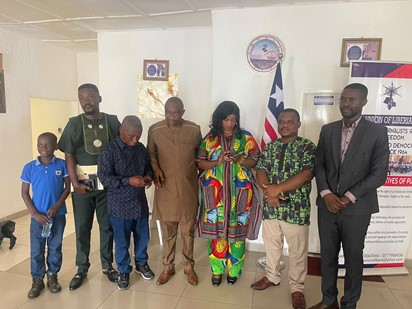
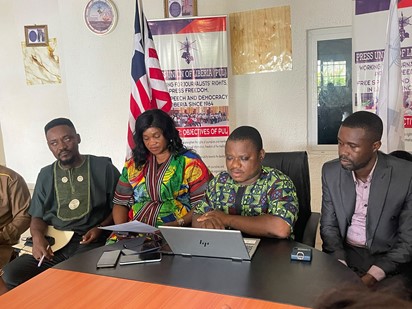
The statement was signed by the Press Union of Liberia (PUL), Center for Transparency and Accountability (CENTAL), Women’s NGO Secretariat of Liberia (WONGOSOL), Association of Female Lawyers of Liberia (AFELL), National Muslim Council of Liberia (NMCL) and Liberia Council of Churches (LCC). The six organizations issued the appeal collectively through the National Civil Society Consortium for Transitional Justice.
Comments are closed.