

CMC Debunks Boakai’s SONA Claims-Political Leader Demands Proof Beyond Applause
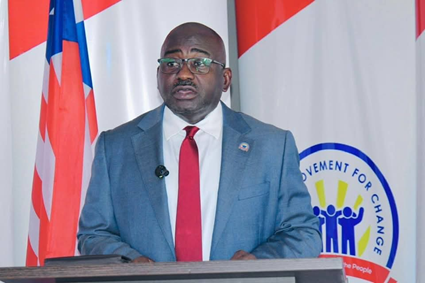
MONROVIA – With President Joseph Nyuma Boakai’s third State of the Nation Address now delivered, opposition responses are moving quickly from ceremony to scrutiny. The Citizens Movement for Change (CMC), through its political leader, Nimba lawmaker Musa Hassan Bility, says the national conversation must shift from rhetoric to measurable relief for ordinary Liberians. In a statement described as “constructive critique,” CMC questions the administration’s claims on investments, revenue growth, inflation, job creation, and basic services, arguing that headline figures do not match lived realities across communities. The movement also disputes the scale of key concession-related investments and warns that tax policy shifts may be inflating revenue gains while deepening burdens on households. As THE ANALYST reports, CMC is urging a reset toward accountability, inclusion, and results.
The Citizens Movement for Change (CMC) has issued a sharp assessment of President Joseph Nyuma Boakai’s 2026 State of the Nation Address (SONA), disputing what it described as an overly celebratory account of economic and governance progress and urging the administration to confront what it called the “urgent realities” of poverty, unemployment, weak social services, and fragile institutions.
In an official response delivered by CMC political leader and Nimba County Representative Musa Hassan Bility, the movement said it was engaging the President’s address not as an “adversarial rebuttal,” but as a critique intended to stimulate national dialogue and demand measurable outcomes.
CMC argued that Liberia’s political culture has become accustomed to grand speeches and long lists of accomplishments, while basic indicators of quality of life remain stubbornly low. “We must be forthright about the pressing issues, critical shortcomings, and missed opportunities that demand collective action and bold leadership,” Bility said.
“A Discussion Beyond Words”
Before addressing the President’s legislative agenda and the economy, CMC said it was necessary to “set the stage” for an honest national conversation that goes beyond what it called “platitudes and celebration” over roadwork and broad policy frameworks.
The movement said Liberia’s development debate should focus on the conditions of ordinary citizens and the scale of national deprivation, not on incremental improvements presented as transformation.
“Liberia is in its 179th year of independence,” Bility said, contending that a country with Liberia’s resources and strategic location should not still rank among the world’s poorest nations.
CMC cited human development and poverty indicators to question the administration’s narrative of progress. It asked why, after years of peace, international support, foreign direct investment commitments, and export activity led by multinational corporations, the average Liberian still lives on less than two dollars a day.
Basic Services: Electricity, Water, and Life Expectancy
In one of the movement’s most sweeping critiques, CMC said the country’s structural deprivation remains visible in access to electricity and safe drinking water.
Bility asserted that only a small share of Liberians have electricity and that access to pipe-borne water remains extremely limited, forcing many communities to depend on streams and rivers. He linked the situation to poor health outcomes and low life expectancy, arguing that poverty and weak public health systems continue to shorten lives and deepen vulnerability.
CMC also claimed that more than half of the population goes to bed hungry daily, adding that the persistence of hunger and preventable illness should temper claims of national progress.
The movement framed these realities as the ultimate test of any administration’s performance, asking bluntly whether Liberia has used its resources and human capital to produce meaningful improvement for citizens. “The answer is a resounding NO,” Bility declared.
Fiscal Discipline: Claims Without Clear Updates
President Boakai’s SONA highlighted growth, improvements in fiscal discipline, and renewed efforts to attract domestic and foreign investment. But CMC argued that the administration did not provide sufficient detail on how fiscal management systems have been overhauled or how reforms have translated into savings and better services.
Bility said the government must answer what new measures have been put in place, what wastage has been eliminated, and what concrete improvements citizens can attribute to fiscal reforms.
CMC argued that there has been no meaningful movement in curtailing public spending and that job creation and poverty reduction have not matched the scale of need.
Investment Claims Disputed: ArcelorMittal, Rail, Oil Blocks
The movement challenged what it described as inflated investment figures cited in the President’s address, focusing on concession agreements named as part of a US$4 billion investment portfolio.
CMC described the US$4 billion figure as exaggerated, particularly in relation to the proposed ArcelorMittal Liberia arrangement. Bility said preliminary reviews by experts suggest ArcelorMittal’s investment projections—spread over several years—may be far below the figure implied in the speech, arguing that the upper bound could be closer to hundreds of millions rather than billions.
CMC also disputed claims related to petroleum sector production sharing agreements, questioning the technical capacity of at least one operator and citing past concerns about concession practices, including the flipping of blocks in earlier years.
Bility alleged that some petroleum allocations could be structured in ways that benefit “hidden” interests, warning that such concessions, if not transparent and technically sound, risk undermining national confidence and long-term returns.
VAT vs. GST: Revenue Rise or Household Burden?
A major element of CMC’s critique centered on the President’s emphasis on rising domestic revenue as a sign of fiscal independence.
CMC argued that a significant portion of the revenue increase is tied to the transition from the General Sales Tax (GST) to Value Added Tax (VAT), warning that the shift, by design, may raise costs for ordinary citizens without necessarily broadening the tax base.
Bility said VAT may increase the tax burden on consumers, making revenue growth appear stronger on paper while deepening pressure on household purchasing power. The movement contended that the concentration of new collections in VAT-affected sectors suggests revenue gains may be policy-induced rather than the result of organic economic expansion or broad-based compliance improvements.
Business Climate and Private Sector: “No Update”
While the President referenced investment attraction and development strategy, CMC argued the business environment remains constrained by bureaucracy and inconsistent policy implementation, limiting private sector dynamism.
The movement said promised efforts to modernize agriculture and support small enterprises have not translated into wide-scale transformation, and it questioned whether the administration has articulated a serious private-sector expansion agenda.
Bility described the absence of a clear update on private sector development in the President’s address as “a clear indicator” that the issue is not being treated as a priority at the highest level of government.
Growth, Inflation, and “Selective” Data
CMC argued that the President’s presentation of economic progress requires contextual scrutiny.
It said reported GDP growth—while positive—remains heavily driven by mining and primary commodities, leaving Liberia exposed to external shocks and commodity price volatility. Such growth, the movement argued, does not automatically translate into improved living standards or job creation.
On inflation, CMC questioned whether reported declines are fully reflective of national reality, citing concerns about the scope of consumer price measurement and the relevance of the current CPI basket. The movement argued that price conditions in rural Liberia, where the majority of citizens live, are shaped by transportation costs and supply chains not adequately captured by urban-focused indices.
CMC also warned that favorable external conditions—such as commodity price swings—can temporarily improve reserves and currency stability without representing deep structural reform. Without diversification and domestic production, it said, such stability may be short-lived.
Aid Dependence and Vulnerability
While acknowledging improvements in revenue collection and budget expansion, CMC argued that Liberia’s continued reliance on loans and donor commitments demonstrates fragile fiscal resilience.
The movement referenced the 2025 donor funding disruption as evidence of how external financing shocks can quickly translate into job losses and hardship. It contended that many losses from that period remain unresolved and highlight the need for stronger domestic economic foundations.
Infrastructure and Energy: Progress, But Limited
CMC acknowledged that road paving and expanded electricity connections represent progress but argued that the scale remains limited relative to the country’s needs. It said many initiatives are incomplete, delayed, or heavily dependent on external financing, while energy service delivery continues to face outages and inefficiency.
The movement also described reported job creation figures as exaggerated and characterized many jobs as temporary, arguing that employment claims must be assessed based on sustainability, not raw totals.
Social Sectors: Incremental, Not Transformative
CMC argued that improvements cited in education, health, and digital transformation—such as payroll cleanups, immunization gains, and expanded digital finance—address long-standing deficits but do not represent breakthroughs.
Bility said poor regulation of schools and health facilities continues to produce low educational outcomes and weak workforce readiness. He argued that this feeds allegations that Liberians lack qualifications for higher-level positions, creating a cycle that locks citizens out of opportunities.
On health, CMC challenged what it called celebratory framing of outcomes, asserting that maternal mortality and neonatal deaths remain a serious national concern and should be treated as urgent rather than “victorious.”
Call for Reset: Inclusion, Accountability, Action
In closing, CMC urged the Boakai administration to adopt a governance posture grounded in broader inclusion, stronger transparency, and effective execution.
Bility called for constructive engagement with opposition and civil society, a culture of accountability, and priority reforms that directly address poverty, jobs, sanitation, service delivery, and public trust.
“Liberia’s future depends on our collective resolve to confront uncomfortable truths and pursue solutions that serve all citizens,” the movement said. “The time for action is now.”
CMC ended its response with a call for national seriousness and urgency, insisting that the country cannot afford another cycle where speeches outpace results and expectations rise faster than relief.
Comments are closed.