

Boakai Says Country Turning Corner -Reports Growth, Gains; Promises Acceleration
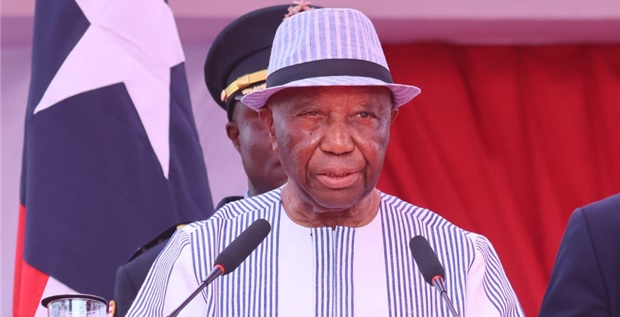
MONROVIA – President Joseph Nyuma Boakai’s third State of the Nation Address comes at a moment when Liberia’s economy is showing early signs of stabilization but citizens remain deeply impatient for relief from everyday hardship. After two years of fiscal tightening, institutional reform, and policy recalibration under the ARREST Agenda for Inclusive Development, the central question facing the administration is whether macroeconomic gains are now translating into improvements felt at the household level. Inflation has eased, domestic revenue has risen, and growth projections have improved, yet the lived reality of high food prices, unemployment, and limited purchasing power continues to shape public sentiment. Against the backdrop, President Boakai used his January 26 address to argue that the foundations for recovery have been laid—and that disciplined execution, not rhetoric, will define the next phase of economic governance.
President Joseph Nyuma Boakai, Sr. on Monday declared that Liberia’s economy has entered a phase of measurable recovery, citing sustained growth, falling inflation, rising domestic revenue, and expanded investment as evidence that his Administration’s ARREST Agenda for Inclusive Development is beginning to deliver tangible results for citizens.
Delivering his third State of the Nation Address at the Capitol Hill complex, President Boakai framed the speech under the theme “From Resolve to Results: Building on Progress and Delivering for the Liberian People,” arguing that disciplined fiscal management and structural reforms have started to reverse years of economic fragility .
According to the President, Liberia’s economy grew by 5.1 percent in 2025, exceeding both the 4.6 percent forecast and the 4.0 percent growth recorded in 2024. The expansion, he said, was driven largely by strong performance in mining, agriculture, fisheries, and services, with mining alone recording 17 percent growth, while exports increased by 31.5 percent to approximately US$2.1 billion.
Boakai reported that inflation declined sharply to 4 percent by December 2025, the lowest level in over two decades, down from approximately 10 percent when his Administration took office. He attributed the decline to sound monetary coordination, fiscal discipline, and easing import costs, noting that currency stability had helped restore confidence in the Liberian dollar.
The President disclosed that gross international reserves rose from US$475 million in 2024 to US$576 million in 2025, while net international reserves exceeded IMF targets, signaling improved external sector performance. Liberia, he said, met nearly all IMF Performance Criteria in June 2025 under the Extended Credit Facility, reinforcing confidence among international partners.
At the center of the Administration’s economic narrative was domestic revenue mobilization. Boakai told lawmakers that domestic revenue reached US$847.7 million in 2025, surpassing the target by US$43.1 million and marking the highest domestic revenue performance in Liberia’s history. Total revenue amounted to US$885.8 million, exceeding projections.
“These gains are not accidental,” the President said, crediting digitalization, stronger tax compliance, tightened exemptions, and institutional reforms at the Liberia Revenue Authority. Over two years, domestic revenue increased by US$235.7 million, the largest cumulative gain recorded by any Liberian administration.
The President linked the revenue performance to the approval of a US$1.2 billion FY2026 national budget, the largest in the country’s history, and announced that a supplemental budget—rare in recent years—will be submitted to the Legislature due to the strong fiscal position.
Boakai also addressed cost-of-living concerns, pointing to reductions in the prices of staple commodities. A 25-kilogram bag of parboiled rice now retails at US$14.50, while flour prices dropped to US$35 per 100-pound bag. Fuel prices stabilized at approximately US$4 per gallon, supported by expanded fuel storage capacity and improved quality controls at the Liberia Petroleum Refining Company.
On employment, the President said more than 70,000 short- and medium-term jobs were created across infrastructure, agriculture, social protection, and small businesses. He highlighted the Youth Entrepreneurship and Investment Bank, launched in 2025, which aims to support 30,000 youth-led businesses and generate over 120,000 direct and indirect jobs.
Boakai underscored agriculture as the backbone of the ARREST Agenda, reporting that 198,000 farmers received government support in 2025, contributing to expanded rice and cocoa production and improved aquaculture output. Infrastructure investments, including 166 kilometers of feeder roads, helped move 33,755 Liberians from food insecurity to food security.
Looking ahead, the President pledged to scale mechanization, operationalize the One County–One Priority Commodity program, expand agribusiness financing, and deepen value addition through processing and marketing reforms.
On infrastructure, Boakai reported that Liberia’s paved road network increased from under 12 percent to approximately 20 percent, with more than 780 kilometers of major routes maintained. Several strategic corridors—including Saclepea–Tappita, Ganta–Saclepea, and Sanniquellie–Logatuo—have recorded significant progress, while the Kelipo–Fish Town road is now fully paved.
Energy expansion featured prominently in the address. The President said 63,000 new electricity connections were made in 2025, electrifying 124 villages across multiple counties, while tariffs were reduced to ease household burdens. Over 17,000 households gained first-time access to power, supported by grid expansion and renewable energy investments.
Boakai reaffirmed the Administration’s commitment to structural reforms, including the planned introduction of a Value-Added Tax by 2027, expanded e-procurement, and strengthened anti-corruption laws targeting illicit enrichment and statute-of-limitations loopholes.
In concluding the economic portion of his address, the President acknowledged external shocks, including a temporary donor funding shortfall in 2025, but argued that the government’s response demonstrated resilience and policy maturity.
“The gains we have recorded are not an end in themselves,” Boakai said. “They are proof that purposeful leadership, anchored in service, can deliver results.”
Rule of Law Anchors Boakai Agenda: He Cites Reforms, Diplomacy
He also spoke of stern efforts in projecting Liberia as a country regaining institutional stability, international credibility, and moral authority, asserting that governance reforms, rule of law enforcement, and diplomatic re-engagement are restoring confidence at home and abroad.
He described the nation as “stronger than when we last stood here,” despite political tensions, economic constraints, and unresolved governance legacies .
The President opened by reaffirming his Administration’s commitment to constitutional order, referencing the unresolved arson attack on the Capitol Building and warning that democracy would not be intimidated by acts driven by “narrow personal interests.” He assured Liberians that accountability for the attack remains a priority and that justice would be pursued impartially.
At the core of Boakai’s governance message was the Rule of Law, which he described as foundational to the ARREST Agenda. He reported that his Administration submitted four amendments to anti-corruption laws, including provisions on illicit enrichment and the removal of statutes of limitations on corruption cases.
Working with the Liberia Anti-Corruption Commission, Boakai said the government secured 11 indictments, obtained two convictions, and pursued additional cases, while enforcing administrative sanctions against officials implicated in misconduct. Asset declaration rules were strengthened, and ethics education introduced in schools.
The President highlighted progress at the General Auditing Commission, which completed 94 of 105 audits, including a landmark system audit of the House of Representatives covering 2021–2024. Compliance with audit recommendations rose from 13 percent in 2024 to 37 percent in 2025, signaling improved accountability.
On civil service reform, Boakai reported that 3,400 long-serving volunteers in health and education were placed on the payroll, while salaries were increased for over 23,000 frontline workers. A Civil Service Testing Center was established to reinforce merit-based recruitment, and performance contracts introduced for heads of institutions.
Justice and security reforms also featured prominently. The President said law enforcement agencies seized nearly 10 metric tons of illicit drugs in 2025, arrested more than 550 suspects, and expanded border security. Correctional and judicial facilities were upgraded, and emergency response strengthened through the Liberia National Fire Service.
Boakai devoted a significant portion of his address to reconciliation, describing it as essential for national healing. He referenced the reburial of former Presidents William R. Tolbert, Jr. and Samuel K. Doe, Sr., as well as the State’s formal apology for past wrongs, calling them “necessary steps toward closure.”
The Administration, he said, has established the Office for the War and Economic Crimes Court, with draft legislation prepared for legislative consideration, while emphasizing that reconciliation must include justice.
On foreign policy, President Boakai declared that Liberia’s international standing has been restored through principled engagement, multilateralism, and economic diplomacy. He cited Liberia’s election to a non-permanent seat on the United Nations Security Council for 2026–2027, winning 181 of 193 votes, as a defining achievement.
The President reported strengthened relations with the United States, including the extension of B1/B2 visa validity for Liberians from 12 to 36 months and a US$124 million health partnership. Liberia’s eligibility for a second Millennium Challenge Corporation Compact was reaffirmed in December 2025, with energy and job creation as focal areas.
Boakai also detailed expanded relations with the European Union, China, Morocco, the UAE, and regional bodies such as ECOWAS and the African Union, while shifting Liberia’s diplomatic posture from aid dependence toward trade and investment.
Economic diplomacy, he said, has attracted over US$4 billion in committed investments, including agreements in mining, rail infrastructure, hydrocarbons, and port development. Liberia also secured eight new petroleum agreements and advanced plans for ship recycling and a domestic airline.
In closing, President Boakai framed leadership as service rather than privilege, warning that history—not applause—would judge the choices made today.
“We are here to serve the Liberian people, not ourselves,” he said, urging lawmakers, judges, and public servants to govern in the supreme national interest.
Unity, Welfare, Human Dignity, Social Sectors Take Center Stage
For many Liberians listening to President Joseph Nyuma Boakai’s third State of the Nation Address on January 26, the speech was less about statistics and declarations than about recognition—recognition of the daily struggle to pay school fees, access healthcare, find work, and live with dignity.
Against this backdrop, the President framed his address as a reaffirmation of the social contract between the state and its people, placing education, health, sanitation, social protection, and national unity at the heart of his ARREST Agenda for Inclusive Development. Speaking to a nation weary of promises but still hopeful for relief, Boakai sought to reposition governance as a human-centered obligation—one measured not only by economic indicators, but by whether government actions ease hardship, restore trust, and strengthen social cohesion in the lives of ordinary citizens.
the President told lawmakers, members of the diplomatic corps, and the Liberian public that while his administration has focused on stabilizing the economy and strengthening state institutions, equal priority must be given to education, healthcare, sanitation, and social protection if the ARREST Agenda for Inclusive Development is to deliver lasting impact.
“Development must be felt in the classroom, the clinic, the marketplace, and the home,” Boakai declared, framing social services as the front line of national renewal rather than secondary policy concerns.
Education as National Investment
Education featured prominently in the address, with President Boakai describing human capital development as Liberia’s most reliable long-term asset. He acknowledged persistent challenges in teacher deployment, learning outcomes, and infrastructure, particularly in rural counties, but reaffirmed his administration’s commitment to reforming the sector.
According to the President, the government is prioritizing teacher training, curriculum relevance, and technical and vocational education to better align learning with labor market needs. He emphasized that education reform under the ARREST Agenda is not merely about access, but about quality and economic relevance.
Boakai stressed that public universities and community colleges must be strengthened to serve as engines of national skills development, warning that without targeted investment in education, Liberia risks perpetuating cycles of unemployment and underemployment among its youth.
Health and Sanitation: From Survival to Resilience
On healthcare, the President acknowledged the structural weaknesses exposed by years of underinvestment and compounded by public health crises. He said his administration is shifting focus from emergency response to system strengthening, particularly in primary healthcare delivery.
The President outlined ongoing efforts to improve rural clinics, expand access to essential medicines, and train health professionals, noting that health outcomes are central to productivity and national resilience.
Sanitation and access to clean water were also highlighted as public health priorities. Boakai warned that preventable diseases linked to poor sanitation continue to undermine quality of life and economic productivity, especially among vulnerable populations.
He called for coordinated action across ministries and local governments to address waste management, clean water access, and environmental health, describing sanitation as “a dignity issue, not a luxury.”
Social Protection and Inclusion
President Boakai also addressed social protection, stating that inclusive development requires deliberate support for the elderly, persons with disabilities, women, and extremely poor households.
He said the ARREST Agenda’s inclusive development pillar obliges government to ensure that economic growth does not bypass vulnerable populations. The President referenced ongoing social assistance programs and pledged to improve targeting, transparency, and sustainability.
Youth empowerment featured strongly in this section of the address. Boakai acknowledged frustration among young people over limited job opportunities and access to decision-making spaces, urging patience while reaffirming the government’s commitment to skills development, employment creation, and constructive youth engagement.
“Young people must be partners in nation-building, not spectators,” the President said, cautioning that disengaged youth populations pose risks to social stability.
National Unity and Political Temperance
Beyond sectoral policy, President Boakai used the address to call for restraint, dialogue, and national unity, warning against deepening political polarization.
He acknowledged Liberia’s history of division and conflict, stressing that governance must be anchored in reconciliation rather than revenge. The President appealed to political actors, civil society, and citizens to prioritize national interest over partisan confrontation.
“Differences of opinion are natural in a democracy,” Boakai said. “But when division becomes destructive, development stalls.”
He urged Liberians to measure progress not by political victories but by improvements in living conditions, emphasizing that unity remains Liberia’s most valuable development asset.
A Moral Framing of Leadership
Throughout the address, President Boakai repeatedly framed leadership as a moral obligation rather than a political entitlement. He said reform requires discipline, patience, and sacrifice—particularly from those in positions of authority.
The President cautioned against viewing governance solely through the lens of announcements and declarations, insisting that credibility depends on implementation and consistency.
“We must build institutions that outlast individuals,” he said, underscoring his administration’s emphasis on systems over personalities.
Public Expectations and the Road Ahead
Analysts note that while the President’s focus on social sectors and unity struck a conciliatory tone, public expectations remain high. Citizens continue to grapple with unemployment, rising costs, and limited access to services, intensifying pressure on the government to deliver visible improvements.
The administration’s challenge, observers say, will be translating commitments into measurable outcomes—particularly in education, health, sanitation, and youth employment—areas where progress is most immediately felt.
As Liberia moves deeper into President Boakai’s term, the social dimension of the ARREST Agenda is likely to become a central benchmark for public trust. Whether the administration can sustain unity, expand opportunity, and protect dignity will shape not only political fortunes, but national stability itself.
In closing his address, President Boakai reiterated that development is a collective endeavor, calling on citizens to participate actively while holding government accountable.
“Our success as a nation,” he said, “will be measured not only by growth figures, but by how well we care for one another.”
Comments are closed.