
Bishops Deepen Methodist Mission -United Methodists strengthen continental church partnerships
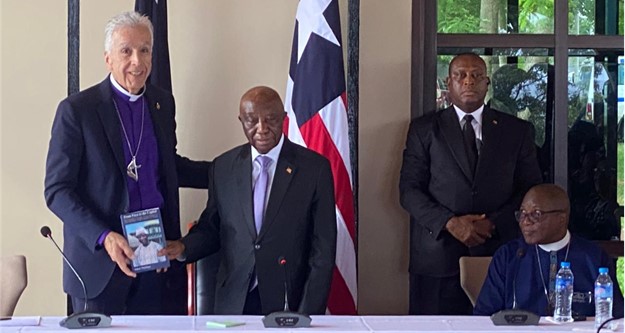
MONROVIA – The Africa College of Bishops’ first Liberia meeting placed the country at the center of United Methodist planning across the continent. Beyond fellowship, the gathering linked church unity with practical commitments in education, health, agriculture, peacebuilding and institutional sustainability. President Joseph Nyuma Boakai Sr. received assurances that Methodist institutions would support priorities his government considers central to national development. Former President Ellen Johnson Sirleaf widened that appeal, urging churches, governments and civil society to share responsibility for peace and opportunity. Those pledges matter because Liberia’s longstanding Methodist network already reaches communities through schools, clinics, congregations and humanitarian programs. As The Analyst reports, the test is whether continental cooperation produces measurable services after the bishops leave Monrovia and return home.
MONROVIA, Liberia — The 2026 Africa College of Bishops Meeting of The United Methodist Church (UMC) concluded in Liberia following several days of prayer, fellowship, reflection, dialogue and strategic engagement on the future of the Church and its mission across Africa. The Liberia Episcopal Area hosted the gathering for the first time.
The meeting brought together active and retired United Methodist bishops and church leaders from across Africa. Bishop Ruben Saenz Jr., president of the Council of Bishops, also attended with staff members of the General Board of Global Ministries (GBGM) and ecumenical partners.
The gathering was held under the theme, “Deepening Ecumenical Engagement, Expanding Continental Influence and Strengthening Institutional Sustainability.” Its biblical text, drawn from Isaiah 54:2, carried the call: “Enlarge the Space of Your Tent.”
CONTINENTAL MISSION AND LEADERSHIP
During the meeting, the bishops reflected on the growing role of the African Church within global Christianity and the United Methodist connection. Their discussions focused on strengthening episcopal leadership, expanding the Church’s mission, developing sustainable institutions, deepening ecumenical relationships and empowering young people and women.
The bishops also considered ways to enhance the Church’s contribution to healthcare, education, agriculture, peacebuilding and community development. The gathering allowed them to strengthen relationships among episcopal areas and prayerfully consider the opportunities and challenges facing The United Methodist Church in Africa.
The deliberations reaffirmed the importance of unity, collaboration, contextual ministry and faithful Christian witness. The bishops presented those priorities as essential responses to Africa’s rapidly changing social and spiritual landscape.
CHURCH PLEDGES LIBERIA PARTNERSHIP
During their stay, United Methodist bishops from Africa and the United States met President Joseph Nyuma Boakai Sr. at the Executive Mansion. They reaffirmed the Church’s commitment to supporting Liberia’s development agenda.
The bishops pledged continued partnership with the Liberian government in education, healthcare, agriculture, food security, the rule of law and other critical sectors intended to improve Liberians’ lives. Saenz assured Boakai that the Church was willing to work alongside the government in advancing national development.
“If this government invests in agriculture, we will invest with you. If you invest in health, we will invest with you,” Saenz stated. “If you invest in the rule of law and education, we will invest with you.”
Saenz described The United Methodist Church’s relationship with Liberia as a partnership in service to the people. He stressed the importance of government and faith-based institutions working together to address the country’s most pressing challenges.
Bishop Samuel J. Quire Jr., president of the West Africa Regional Conference and resident bishop of the Liberia Episcopal Area, also reaffirmed the Church’s commitment to Liberia and its institutions. Quire noted that The United Methodist Church in Liberia would continue to uphold the rule of law and respect the laws of the land.
Quire assured Boakai that the Church would continue to support government efforts to provide essential services, particularly through its longstanding programs in health, education, agriculture and humanitarian assistance. The meeting underscored the longstanding partnership between The United Methodist Church and Liberia and the Church’s role as a development partner.
SIRLEAF CALLS FOR COLLABORATION
At a dinner held in honor of the Africa College of Bishops, former President Ellen Johnson Sirleaf welcomed the bishops and recognized The United Methodist Church’s historic contribution to Liberia’s development. She cited the Church’s work in education, healthcare, agriculture, community development and the spiritual formation of Liberians.
Sirleaf noted that the Church’s schools, health facilities and congregations had served Liberians and provided hope, particularly during some of the country’s most difficult periods. She also emphasized collaboration among governments, churches and civil society in addressing Africa’s development challenges.
“Governments cannot do it alone. Churches cannot do it alone. Civil society cannot do it alone. We must work together,” Sirleaf declared. She challenged African church leaders to use their influence to promote peace, reconciliation, human dignity and opportunities for young people.
“Liberia knows the value of peace,” Sirleaf stated. “We have experienced conflict, but we have also demonstrated that reconciliation is possible.”
Sirleaf stressed that peace must go beyond the absence of conflict. “Peace is not simply the absence of war; peace must be built through justice, inclusion, dialogue, and opportunity,” she stated.
She encouraged the Africa College of Bishops to continue using the Church’s influence to build bridges across communities and nations. The engagement also allowed the bishops to express solidarity with Liberians and encourage continued collaboration among government, religious institutions and development partners.
LIBERIA HOSTING DRAWS PRAISE
Quire described the successful hosting of the gathering as a significant moment for Liberia and The United Methodist Church. He noted that it demonstrated Liberia’s continued contribution to the life and mission of the Church in Africa.
The Liberia Annual Conference expressed gratitude to the president of the Africa College of Bishops, the president of the Council of Bishops, all bishops and delegates, ecumenical leaders, government officials, partners, clergy, laity and Liberian Church members for their participation and support. It also thanked the government and people of Liberia for welcoming the visiting bishops and participants.
The conference stated that the gathering had strengthened Liberia’s place as a platform for Christian fellowship, dialogue, reconciliation and continental engagement. It called on United Methodists across Africa to translate the meeting’s spirit and lessons into renewed action, stronger partnerships and greater service as the bishops returned to their episcopal areas.
The Liberia Annual Conference declared that the 2026 Africa College of Bishops Meeting had renewed the Church’s commitment to enlarge its tent and strengthen its witness. It added that the Church would deepen its partnerships and expand its service to Africa and the world.

Comments are closed.